



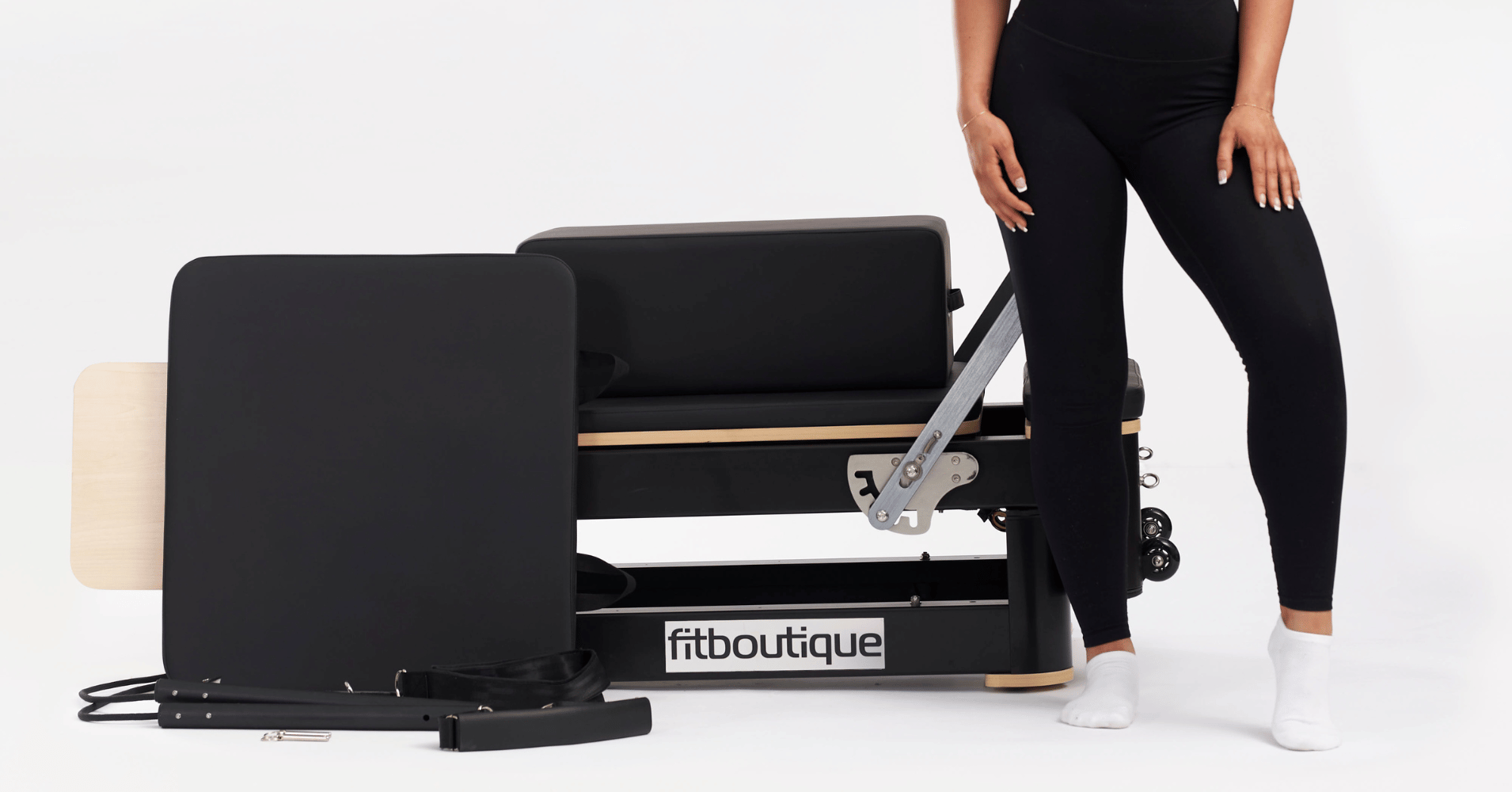
Common Reformer Parts and Their Purpose
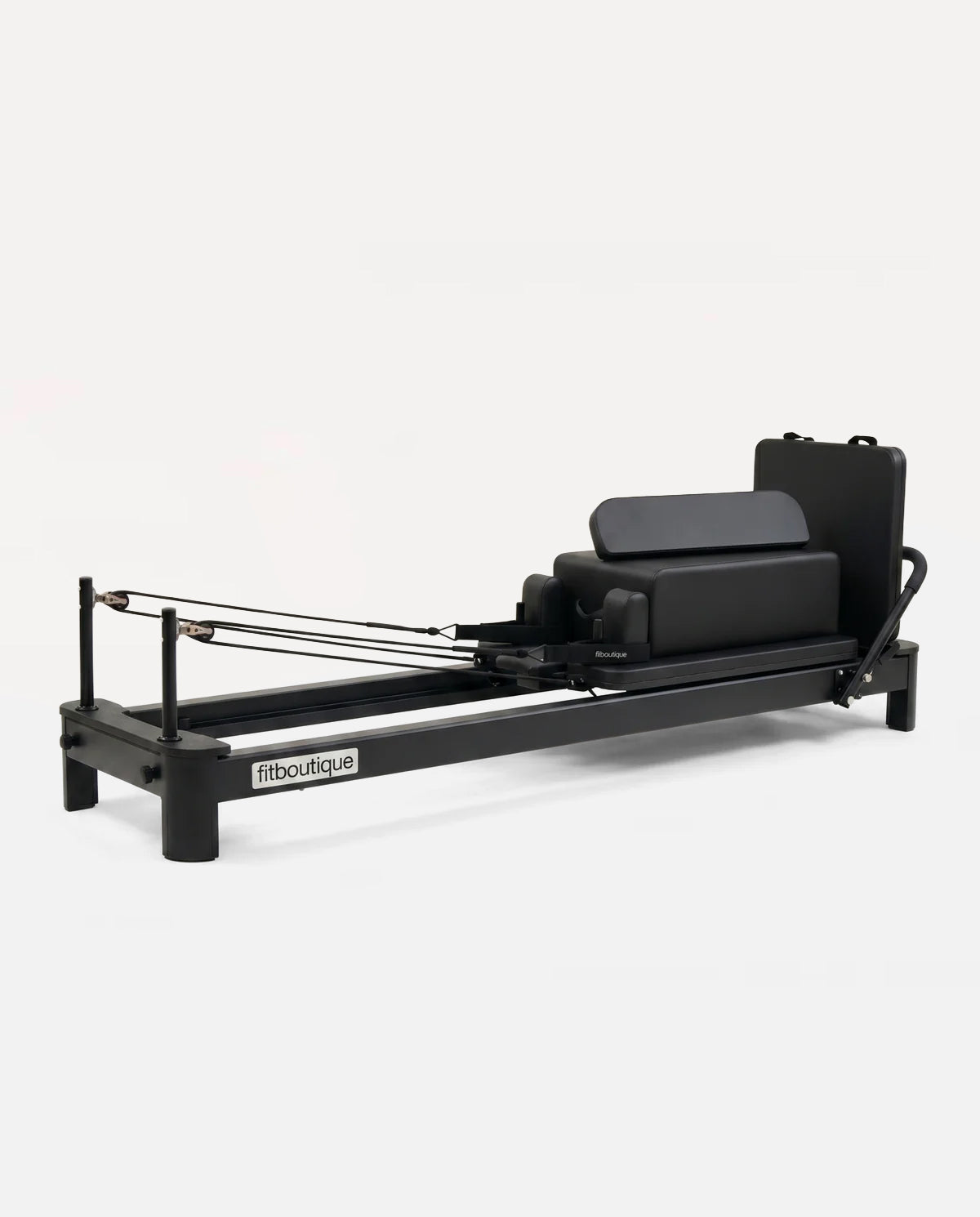
Most people learn reformer parts the awkward way, which is standing in a class while an instructor says something like bring the pulleys down and quietly wondering which bit that is. So here is the whole machine, named properly, in the order you actually meet it. I am going to walk you round it the way I would if you were standing next to one with me, and I will tell you which parts matter, which ones wear out, and the two that almost everybody uses incorrectly.
In this article
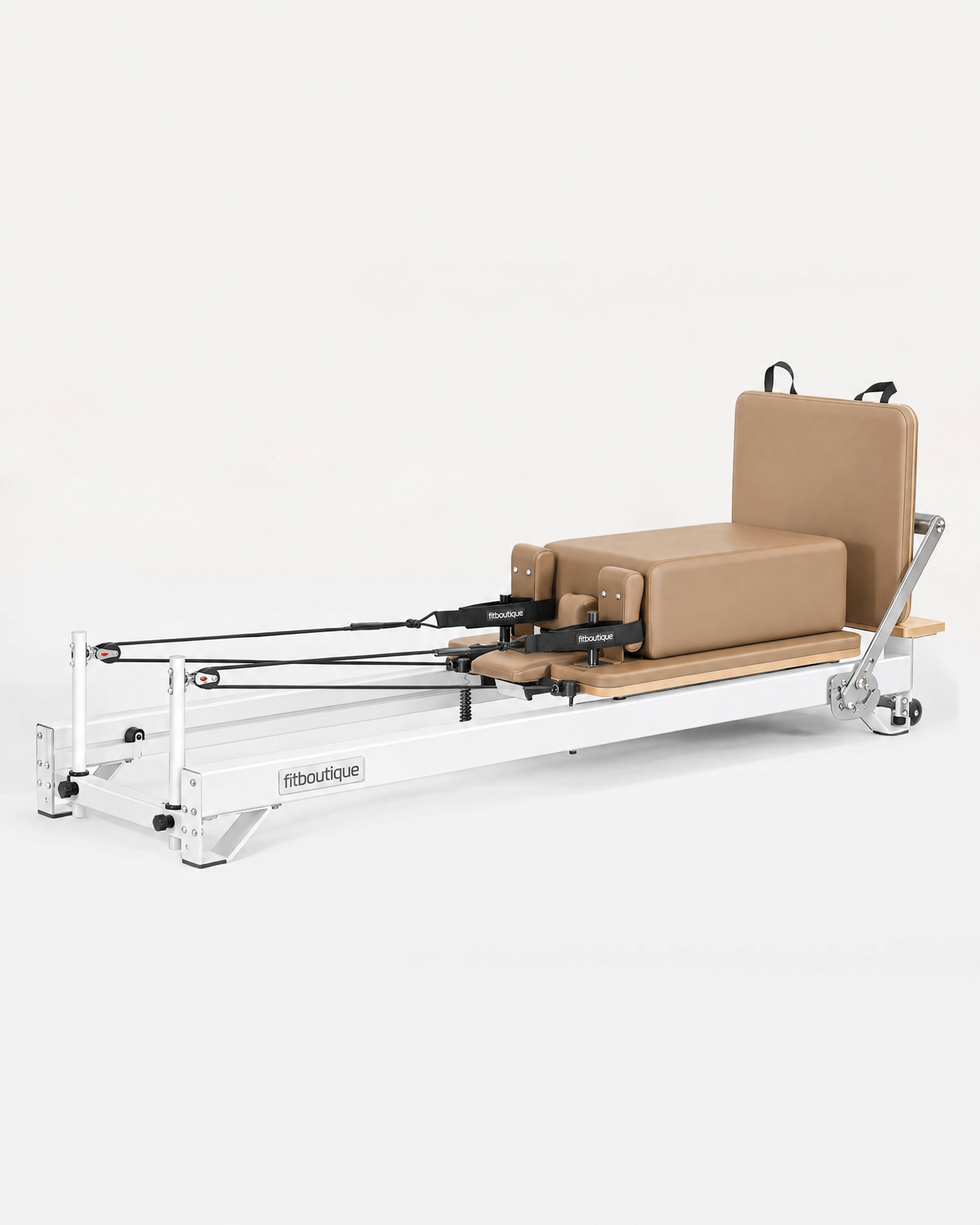
The frame and the rails
The frame is everything the machine is built on, and the rails are the two tracks running along the top of it that the carriage travels on.
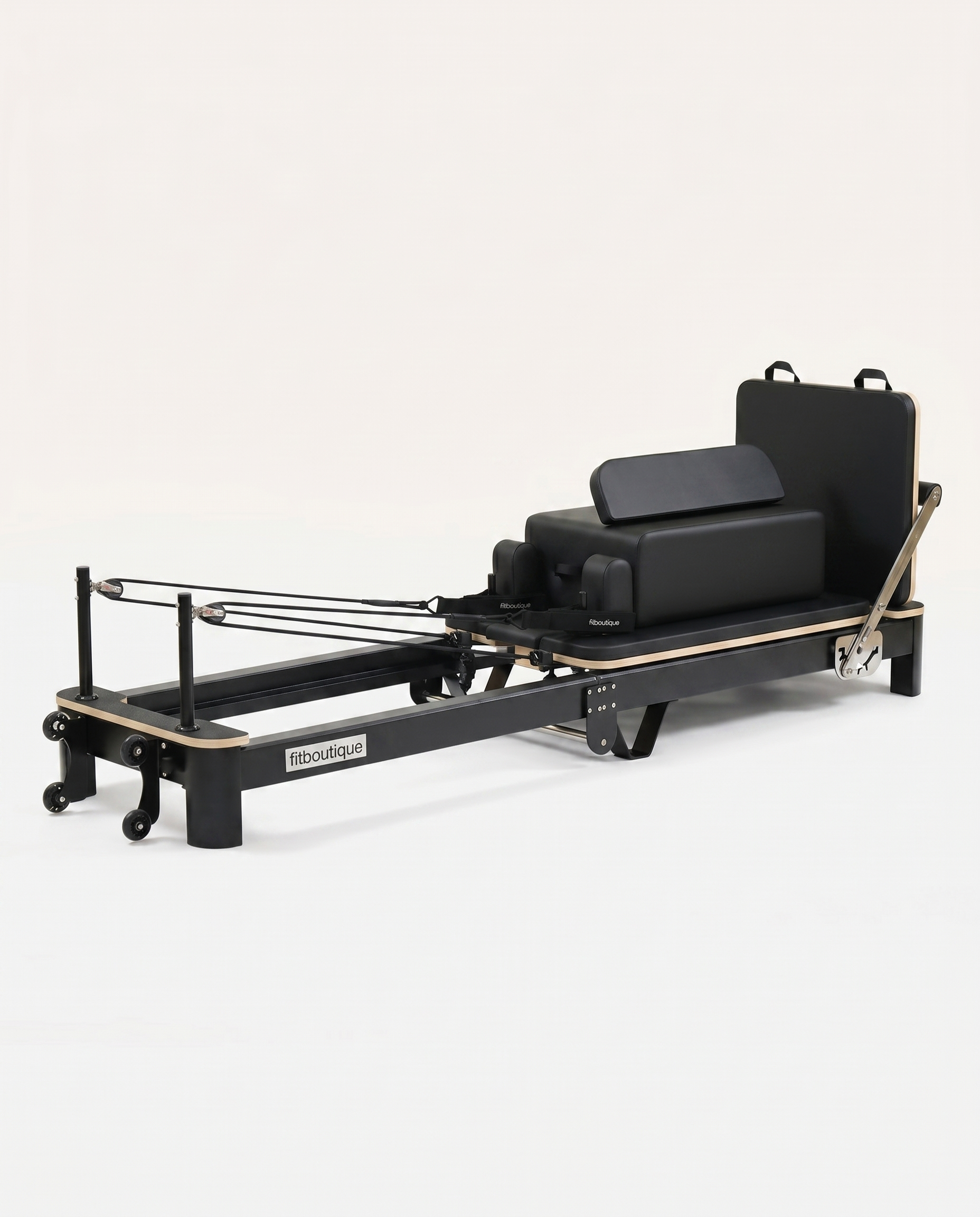
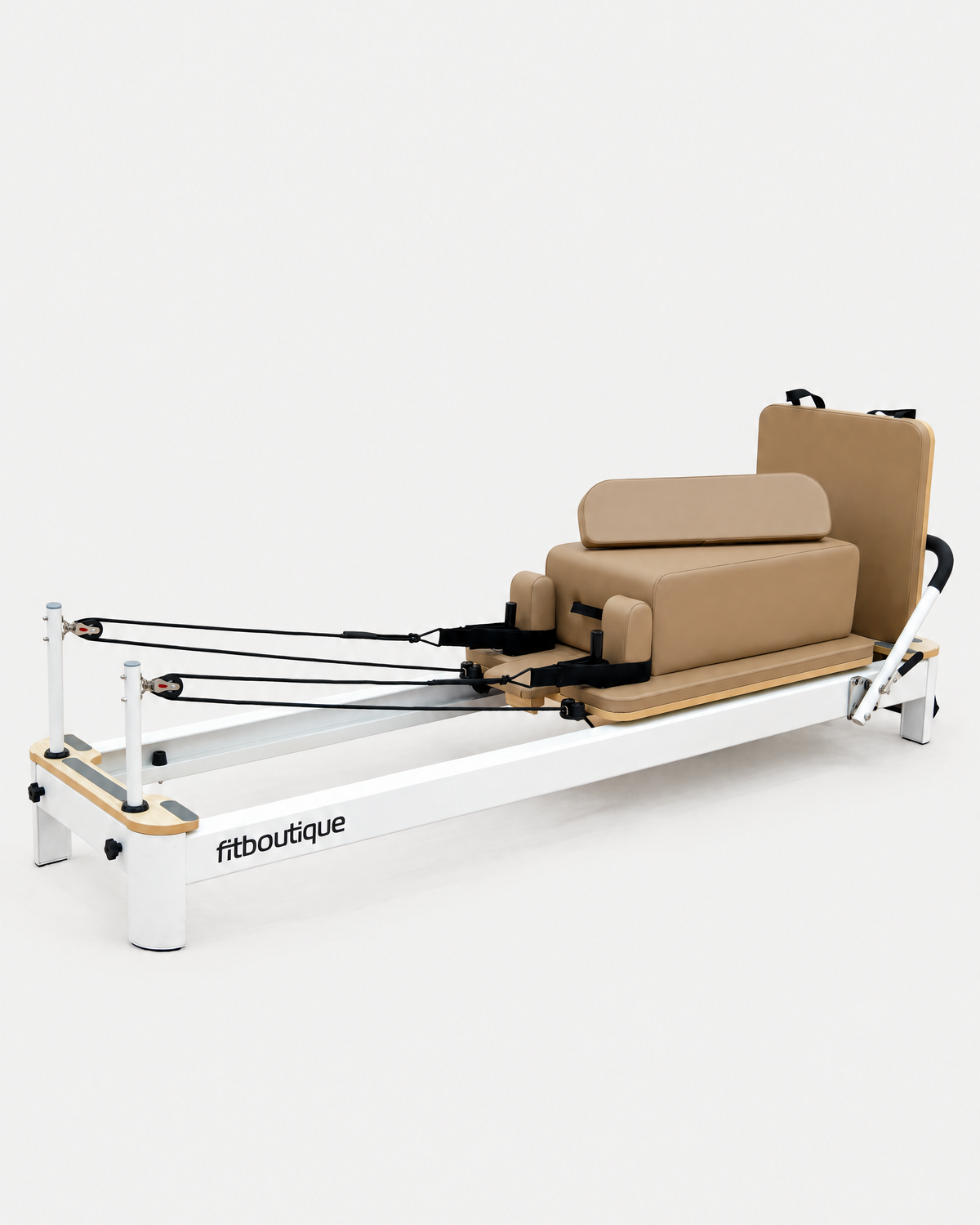
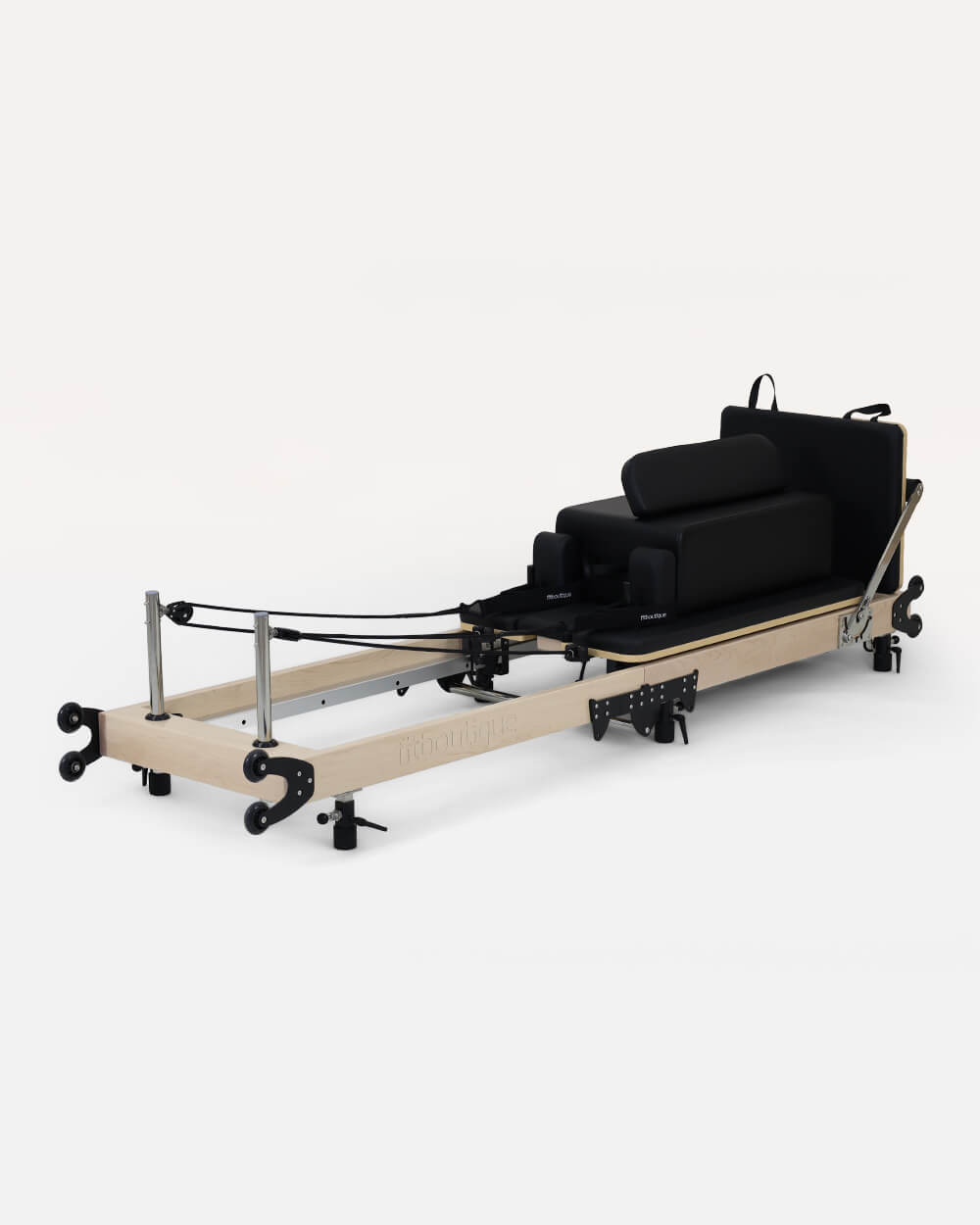
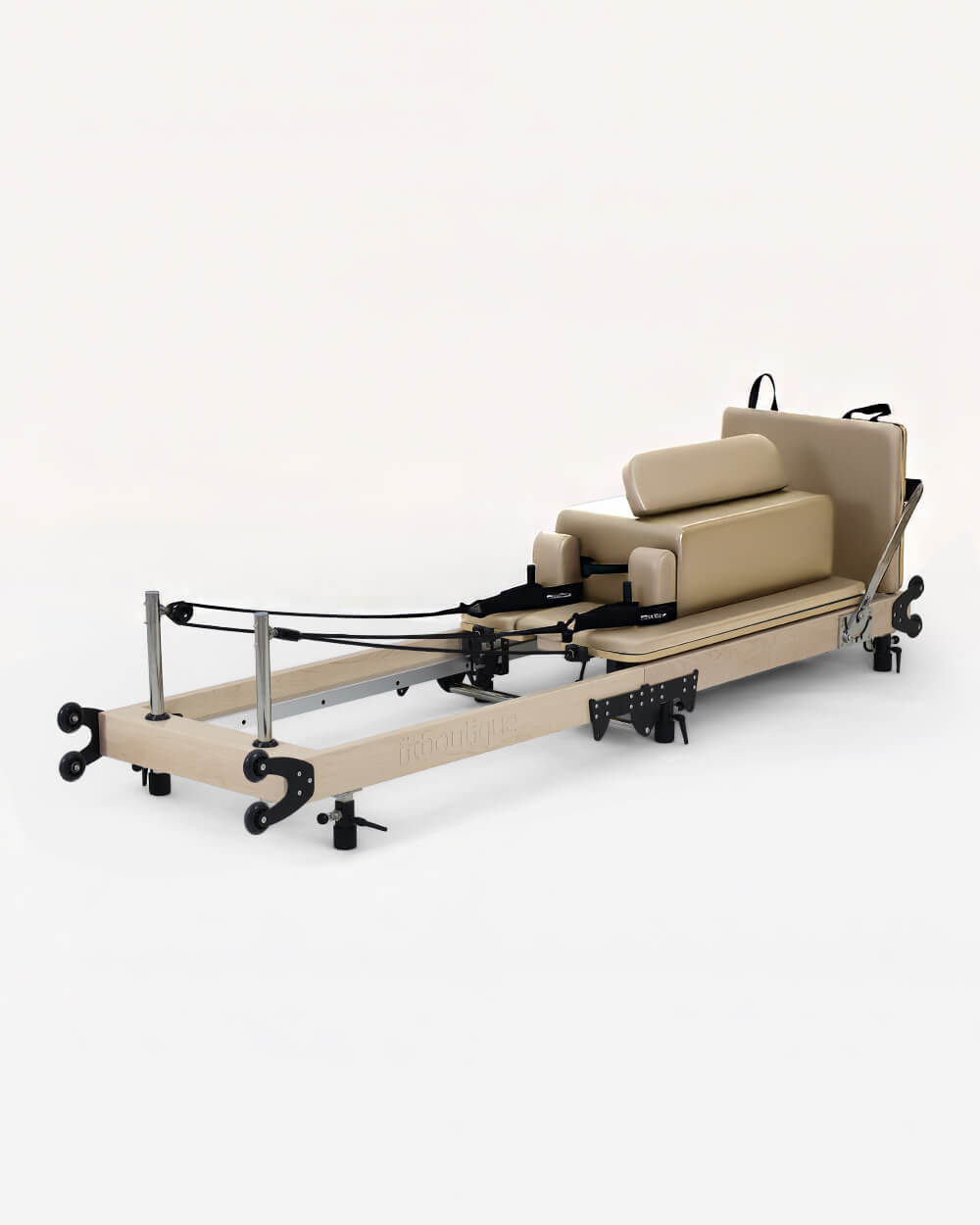
The frame decides whether the machine stays true. Under load it should not flex, twist or creak, and a frame that moves even slightly makes every other part feel worse than it is. Ours are commercial grade aluminium or solid timber, and you can see the difference in finish across the aluminium range and the maple wood range.
The rails matter more than people realise, and they are the single most overlooked component on any reformer. They are what the carriage wheels run along, so any imperfection in them becomes something you feel on every repetition. If you are inspecting a machine, run the carriage slowly from one end to the other with no springs on. It should be silent and even the whole way.
The carriage
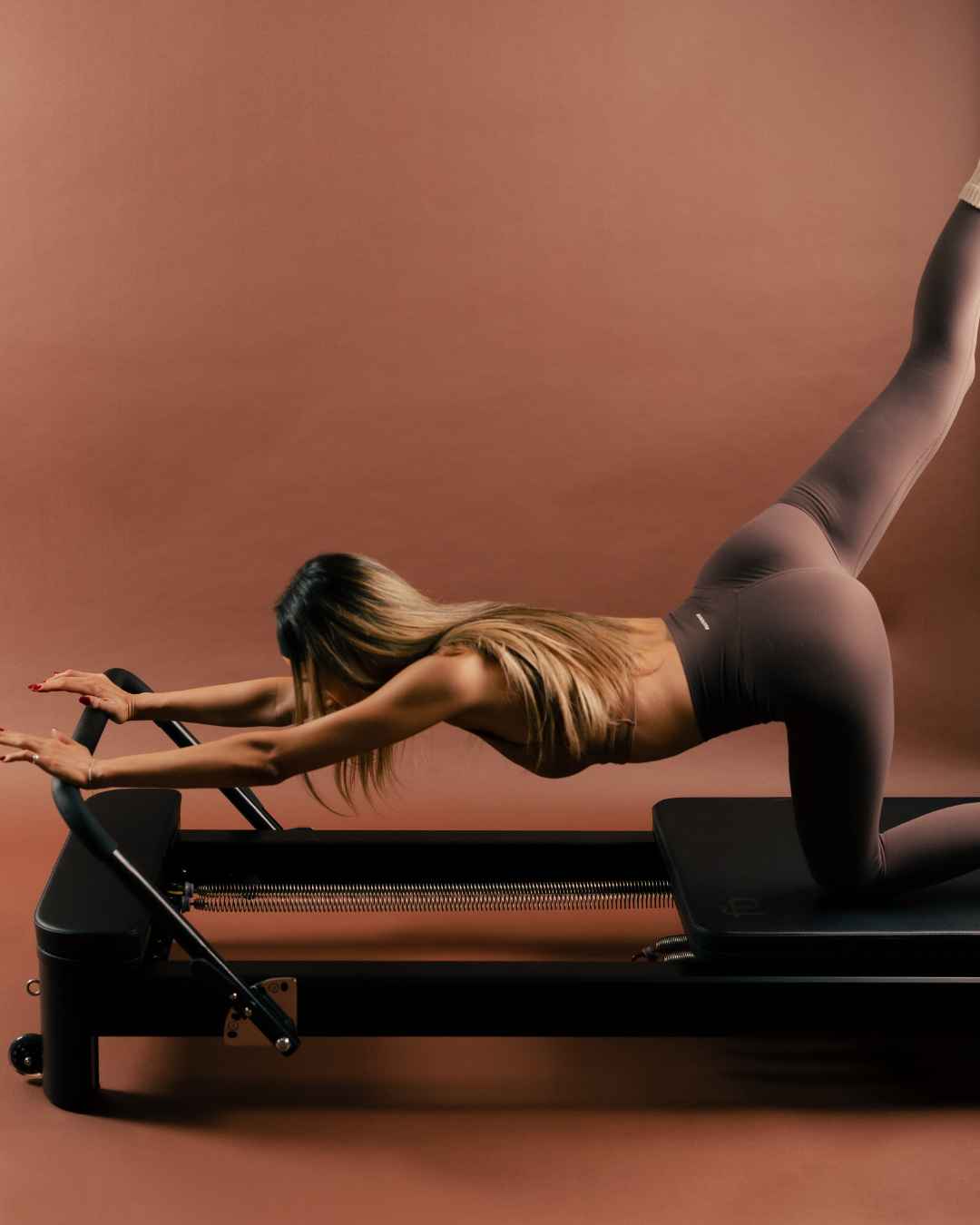
The carriage is the padded platform that moves. You lie on it, kneel on it, sit on it and stand on it, and its travel is what creates almost every exercise on the machine.
Underneath it sit the wheels that run along the rails. Those wheels are the part nobody asks about and the part that most often separates a good machine from a bad one. A carriage should glide, decelerate smoothly and stop where you decide, not where its momentum takes it.
The travel distance is worth knowing for your own machine. On ours the carriage travels 101cm, which is what allows full extension on the long stretch and leg work without running out of track.

The springs and the spring bar
The springs are the resistance. They connect the carriage to the frame, and the spring bar is the fitting at the end of the machine where you attach and detach them.
Ours run a 6 spring German made system, colour coded so you can set resistance at a glance. Two heavy in red, two medium in blue, two light in yellow. Worth saying clearly, colour coding is not standardised across the industry, so red on one brand is not necessarily red on another. Learn your own machine rather than assuming.
The spring bar on our machines is two tiered, which gives you more resistance combinations than a single row, and matters once you progress past the obvious settings.
The counterintuitive part, and I say this constantly, is that lighter springs are frequently harder. A heavy spring partly stabilises the carriage for you. A light one hands that job entirely to your own body, which is why instructors sometimes describe the light springs as the honest ones.
Springs are a consumable. They lose tension gradually over years of use, and because it happens slowly you tend not to notice until the machine feels vague. Replacements live in our reformer parts, and Pro Springs are the upgrade option if you want a heavier top end.
The footbar
The footbar is the padded bar at the front of the machine that you push against with your feet in footwork, or hold with your hands in plank and stretch work.
Ours is an automatic padded seven position footbar, and those positions are not decoration. Footbar height changes the angle your legs work through completely, so the correct position depends on your leg length and on the exercise. In a studio where ten different people use one machine, adjustability is doing real work every single class.
If you take one practical thing from this section, it is that a lot of people never move the footbar from wherever they found it. If footwork feels cramped or your heels keep lifting, the bar height is the first thing to change.
Shoulder rests and headrest
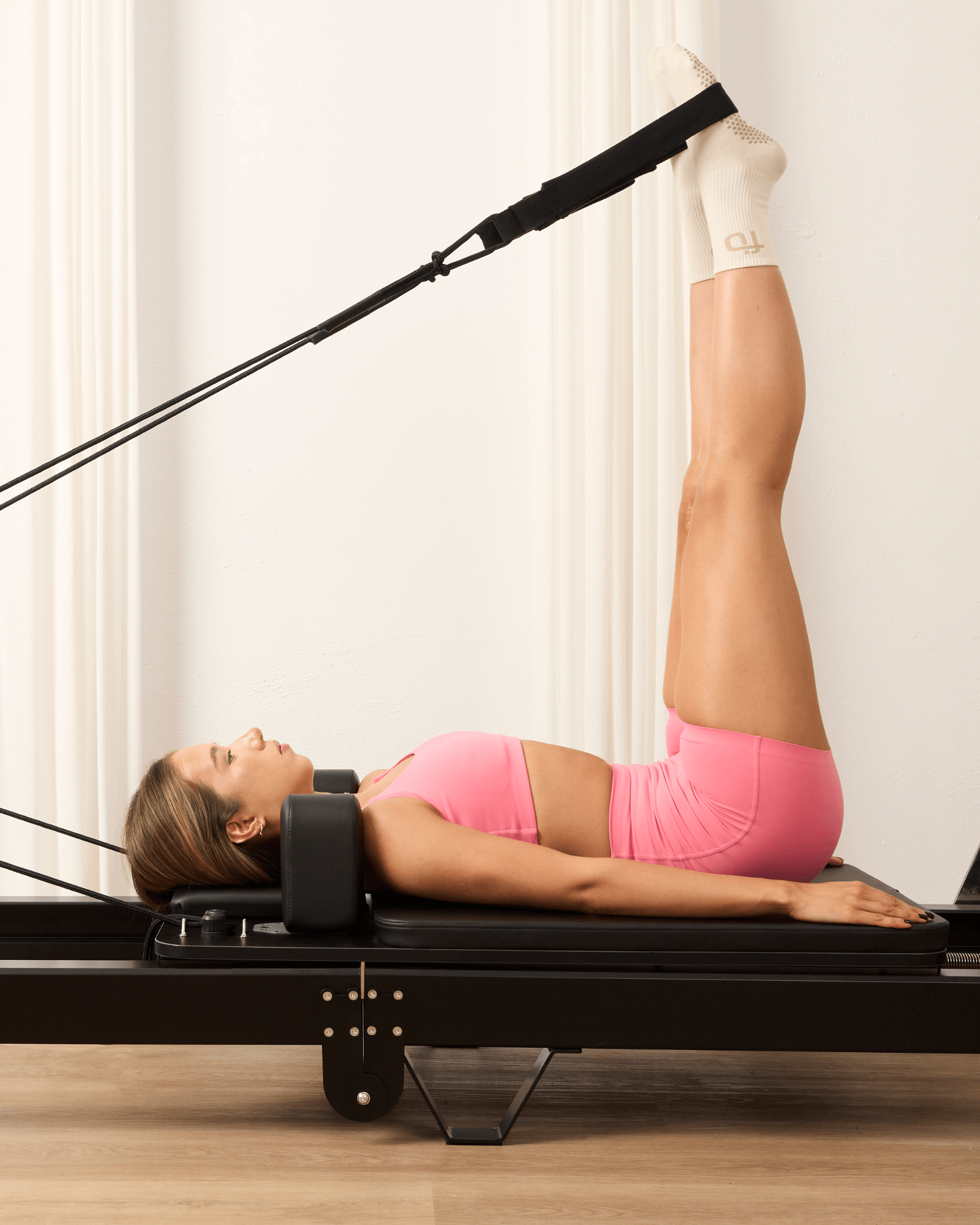
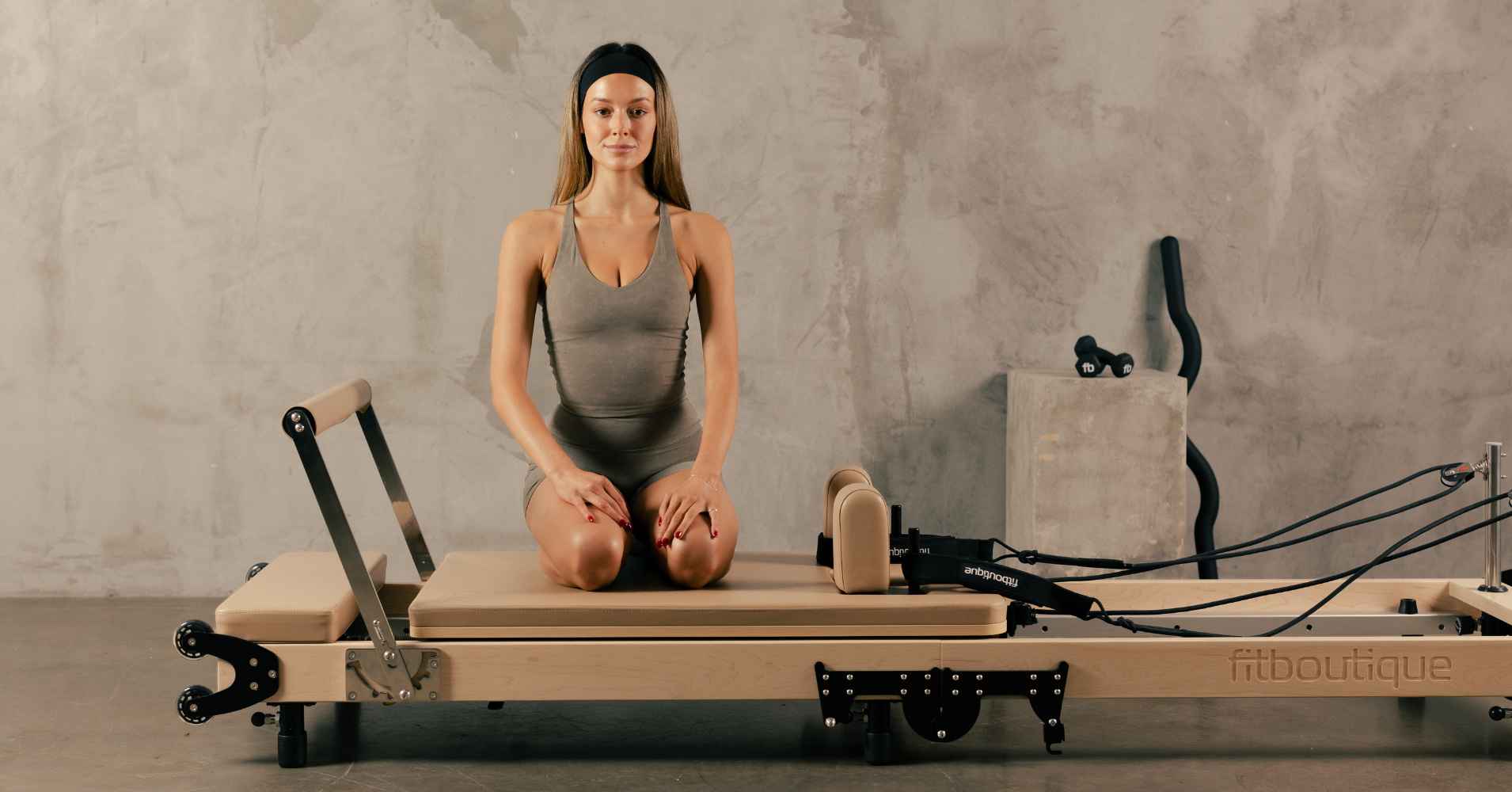
The shoulder rests are the two padded blocks at the top of the carriage. The headrest is the adjustable section above them that your head sits on.
The shoulder rests exist to stop you sliding up the carriage as it moves. That is their entire job, and it is worth being precise about it, because how people use them is the subject of the note further down this article.
The headrest usually adjusts through two or three positions and it is the most ignored control on the machine. Flat is right for most supine work if your neck is comfortable. Raised helps if you have a rounder upper back or if you feel strain in your neck during abdominal work. If your neck aches after sessions, adjust this before you conclude anything about your core.

Ropes, pulleys, straps and handles
This is the system that lets you work your arms and legs against the springs, and it has four named parts people tend to blur together.
The ropes run from the carriage up over the pulleys. The pulleys are the wheels mounted on the vertical risers, and on most machines they adjust up and down. The straps are the loops the ropes connect to, and the handles are what you hold.
Rope length is the adjustment that changes an exercise most and gets checked least. Too long and you lose tension at the start of the movement, so the first part of every repetition does nothing. Too short and you cannot get into position properly. Set it so there is tension the moment you begin, not three centimetres in.
Pulley height changes the angle the resistance pulls from, which is what makes the same exercise feel different for a tall person and a short one. Straps and handles are wearing parts and are stocked in the parts range.
The standing platform
The standing platform is the fixed section at the front of the machine, just behind the footbar, that does not move with the carriage.
You stand on it for lunges, split work and anything where one foot stays still while the other travels. Because it is a small fixed surface that you load unevenly, grip is what matters most, which is where grip socks genuinely earn their place rather than being an upsell.
If you want more standing surface for split work, a Platform Extender widens it.
Attachments, the jumpboard and box
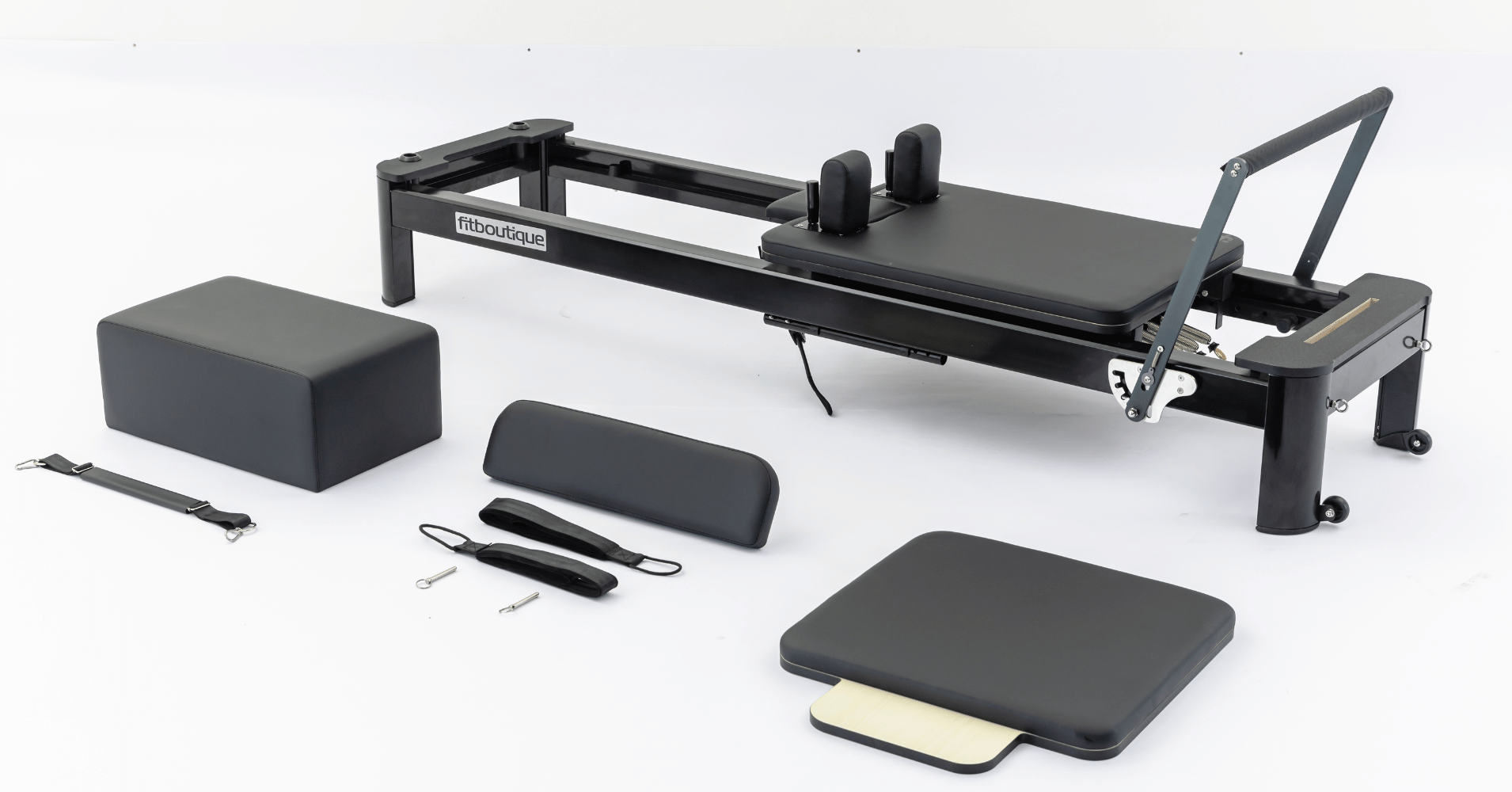
Two attachments come with every machine we make, and both change what the reformer can do rather than just adding variety.
The jumpboard is a flat padded board that replaces the footbar. You lie on the carriage and jump against it, which gives you genuine cardio with no landing impact, since you are horizontal and the springs absorb the return. It is the single most underused piece of equipment in home Pilates.
The box is a padded rectangular box that sits on the carriage, either long ways or across, and it opens up a whole category of seated and prone work. Ours measures 69cm by 41cm by 23.5cm. The jumpboard and box are included with every reformer in our range, so you have both from day one.
Which parts actually wear out
People inspecting a machine tend to look hardest at the frame, which is the part least likely to give you trouble. Here is the real order.
Springs go first, gradually, over years. Ropes and straps are next, and they show it visibly through fraying or stretch, so they are easy to catch. Upholstery wears where it is loaded most, which is the carriage and the shoulder rests. Wheels are the least likely to fail but the most disruptive when they do, because a flat spot on a wheel makes the carriage catch at the same point on every stroke.
None of that is a problem if parts are available. It becomes a problem when they are not, and that is the actual difference between a machine you own for a decade and one you replace. Ours are held in Melbourne rather than shipped from overseas, and everything above is in the parts range.
A Note From Ayrah
Here is the mistake I mentioned earlier, and once you see it you will notice it in every class you take.
The shoulder rests are a stop, not a starting block. They are there to prevent you sliding up the carriage. They are not there to push from.
Almost everybody pushes from them. You brace your shoulders hard against the blocks, drive with your legs, and the carriage goes out beautifully. It feels strong and it looks correct. What is actually happening is that your legs and your upper traps are doing the work, and the deep abdominals that are supposed to be holding your ribcage down have been taken out of the exercise entirely.
I worked this out from the upholstery, not from an instructor. I noticed the padding on my shoulder rests was visibly compressed while the carriage padding was barely marked, which for the amount of footwork I do made no sense. I had been jamming into them for two years.
The fix is uncomfortable at first. Make light contact with the shoulder rests instead of pressure, and if you slide up the carriage during a push, that is the information. It means the movement was being driven by your legs against the blocks rather than controlled by your middle. On a light spring, try footwork keeping only a whisper of contact and you will find out very quickly how much you have been leaning on them.
Frequently Asked Questions
What are the parts of a reformer called?
The main parts are the frame, the rails, the carriage, the springs and spring bar, the footbar, the shoulder rests, the headrest, the ropes, pulleys, straps and handles, and the standing platform. Most machines also come with attachments, usually a jumpboard and a box. Each one is covered in order above.
What is the carriage on a reformer?
The padded platform that slides along the rails. You lie, kneel, sit or stand on it, and its movement against the springs creates almost every exercise on the machine. A good carriage glides silently and stops where you decide rather than where its momentum takes it.
What do the different spring colours mean?
On our machines, red is heavy, blue is medium and yellow is light, with two of each in a 6 spring system. Colour coding is not standardised across the industry, so a colour on one brand will not necessarily mean the same tension on another. Always learn the machine you are actually using.
Are lighter springs easier?
Usually not. A heavy spring partly stabilises the carriage for you, while a light one leaves that stabilising entirely to your own body. That is why plenty of exercises are considerably harder on light springs, and why slow work on minimal resistance is often the most demanding session in the room.
How often do reformer springs need replacing?
Springs are a consumable and lose tension gradually over years rather than failing suddenly. Because the change is slow you tend not to notice until the machine feels vague or inconsistent between springs of the same colour. Studios running daily classes replace them far more often than home users.
What is the difference between the footbar and the jumpboard?
The footbar is the adjustable padded bar you push against for footwork and hold for plank work. The jumpboard is a flat board that replaces it, letting you jump against a surface while lying down, which gives you cardio without landing impact. Both attach at the same end of the machine.
Why does my carriage feel rough or noisy?
Most often it is the wheels or the rails rather than the springs. Run the carriage slowly end to end with no springs attached and listen for a catch at the same point each pass, which usually indicates a flat spot on a wheel. Debris on the rails is the other common cause and is worth checking first.
Can I replace reformer parts myself?
Springs, ropes, straps and handles are straightforward to replace yourself. Wheels and anything structural are worth talking to us about first. We hold spare parts in Melbourne rather than shipping from overseas, so getting the right component is usually quick.
Are reformer parts interchangeable between brands?
Generally no. Spring gauges, rail dimensions, footbar fittings and rope lengths vary between manufacturers, so a part from one brand rarely fits another correctly. Always source parts for your specific machine, since a spring with the wrong tension changes every exercise you do on it.
Parts Held In Melbourne, Not Overseas
Commercial grade reformers with a 6 spring German made system, a jumpboard and box included, free delivery Australia wide and a 5 year warranty.
Compare Every Reformer
Written by Ayrah Yuso
I'm part of the FitBoutique team and have a solid passion (and love) for all things exercise related, including Reformer Pilates

















Leave a comment