




Article: How To Structure A Reformer Pilates Workout
How To Structure A Reformer Pilates Workout
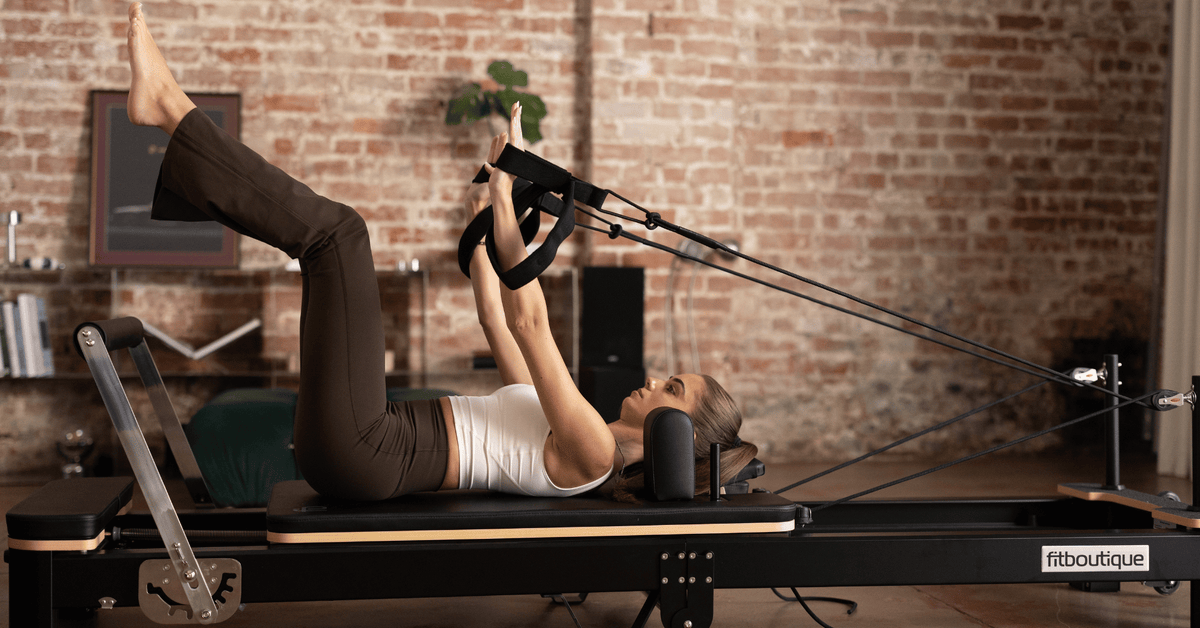
Knowing a lot of reformer exercises is not the same as knowing how to put them together. Most people training at home end up with a session that is really just a list: a few favourites, done in whatever order they come to mind, with a lot of time spent climbing on and off the carriage in between.
A well structured reformer workout warms you up properly, works the whole body in a sensible order, keeps transitions to a minimum and finishes with you feeling better than when you started. Here is how to build one, at any length, with a sample session you can use today.
In this article
Why structure matters
Structure is what turns a set of exercises into a workout. It does 3 jobs.
It keeps you safe. Working from gentle to demanding means your muscles and joints are warm before you load them. Jumping straight into heavy springs or deep range on a cold body is how niggles start.
It keeps you balanced. Without a plan, most people drift towards the exercises they like and away from the ones they need. That is usually a lot of ab work and very little upper back.
It keeps you moving. A session that flows from one position to the next spends more time working and less time adjusting straps, springs and bodies. On a home reformer with nobody to set things up for you, this makes a big difference.

The 7 building blocks of a reformer session
Almost every well built reformer class, whether it is 20 minutes or an hour, is made from the same 7 blocks. You can shrink or stretch each one, but try not to leave any out completely.
1. Breathing and warm up. A few minutes lying on the carriage to find your breath, your neutral spine and your pelvis. Pelvic tilts, gentle bridges and arm movements are enough. Our reformer Pilates warm up covers this in detail.
2. Footwork. The foundation of most reformer sessions. It warms the legs, lines up your hips, knees and ankles, and lets you check your alignment before anything harder. Our reformer footwork guide explains each position.
3. Core. The hundred, ab curls, coordination and similar work. Placed early, while you are fresh, so your form holds.
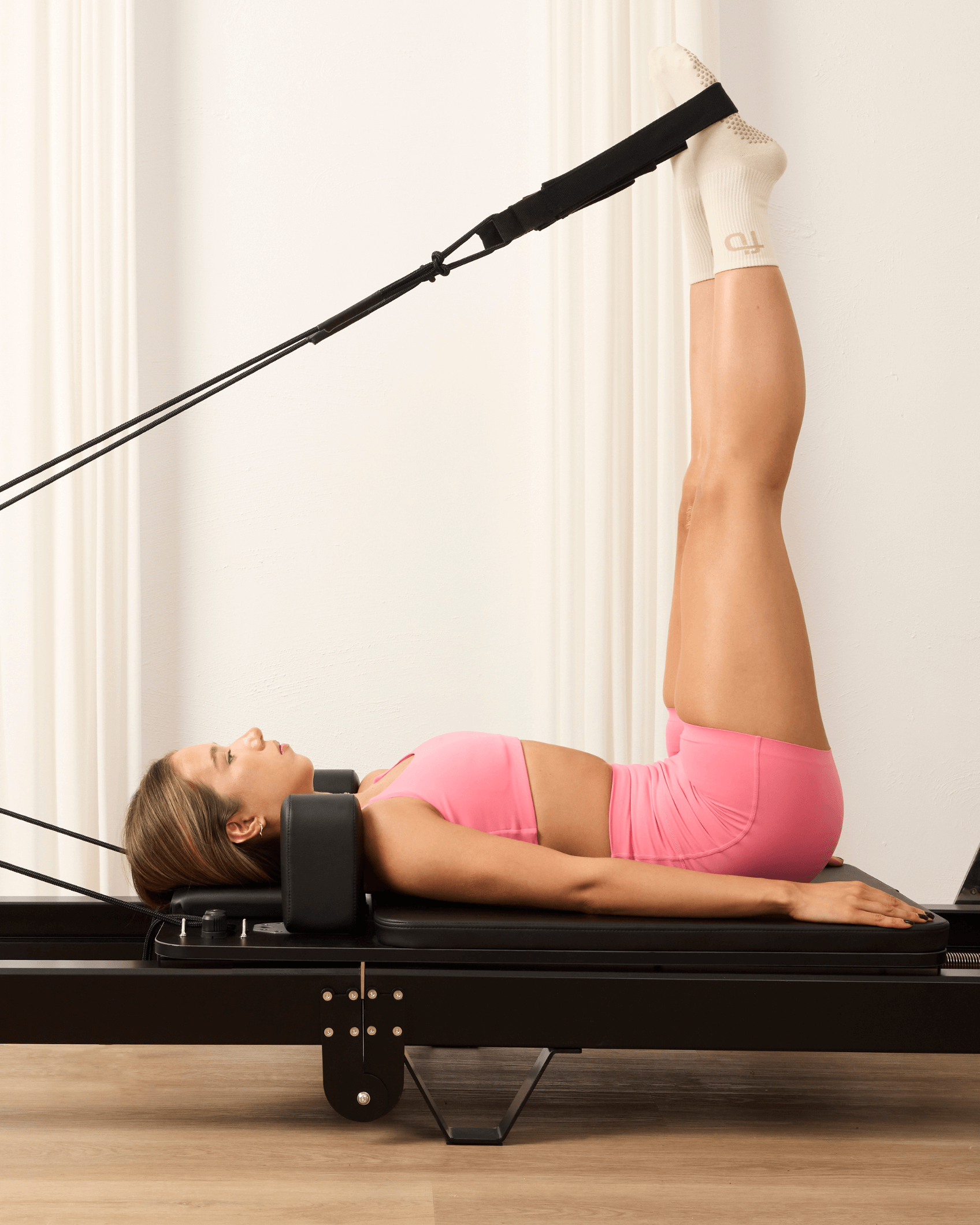
4. Lower body. Feet in straps, bridging on the footbar, side lying leg work. Glutes, hamstrings and inner thighs.
5. Upper body. Arm work in the straps, lying or seated, plus rowing. This is the block most often skipped at home, and the one that does the most for posture.
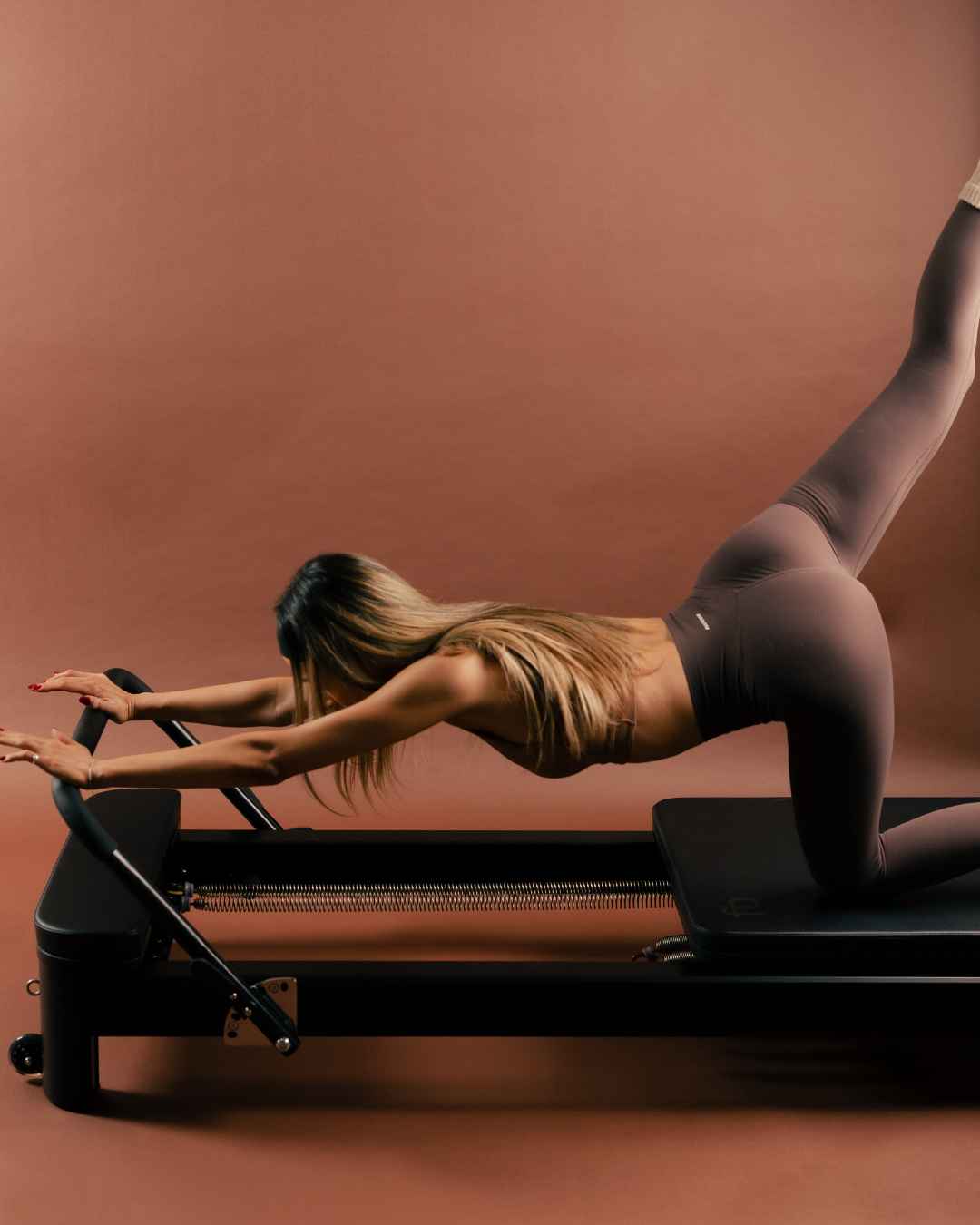
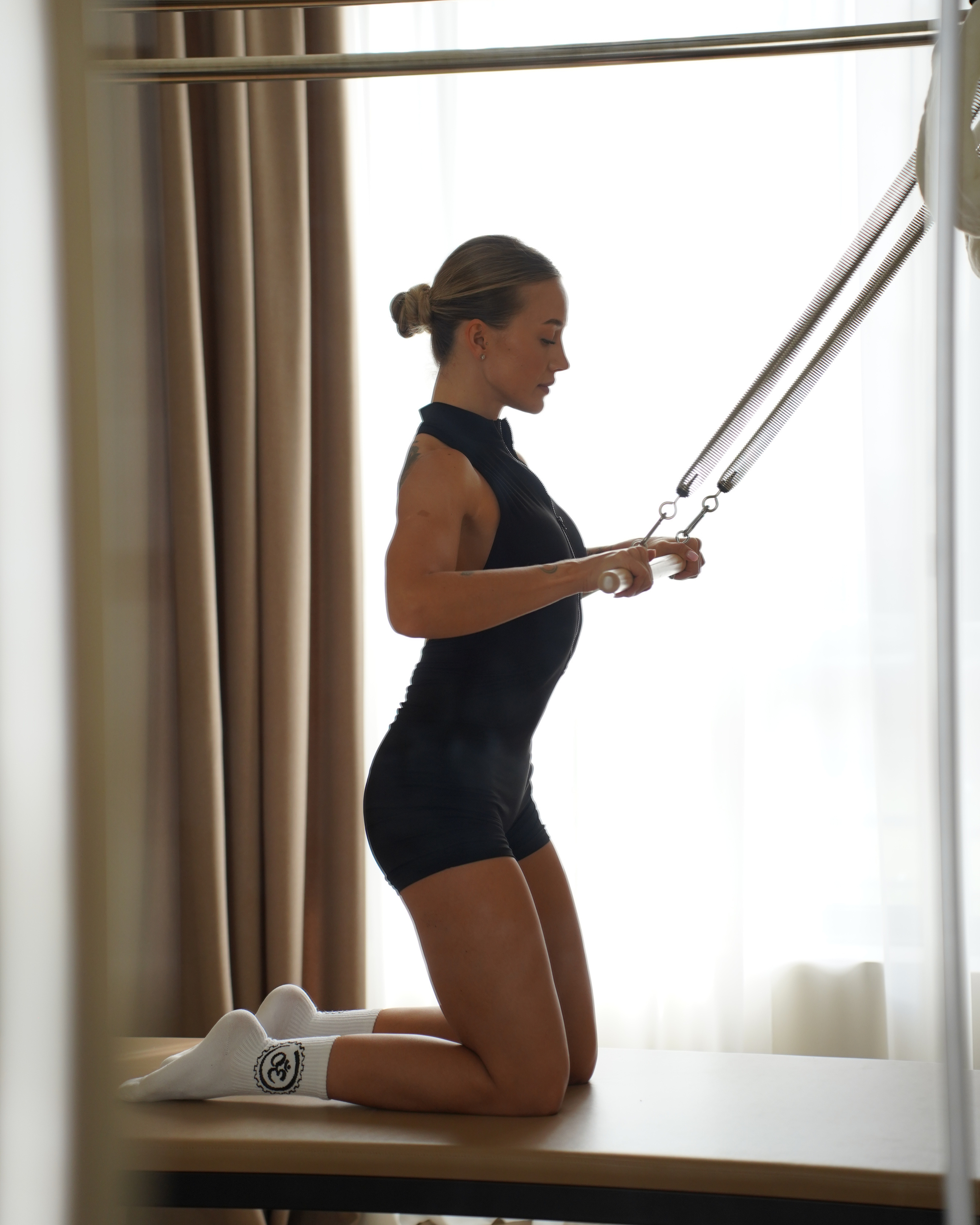
6. Full body and standing work. Kneeling, standing and plank based exercises that ask everything to work together. This is usually the most demanding part of the session.
7. Stretch and cool down. A few minutes of lengthening work to finish. Seated side stretches, hamstring stretches on the footbar and a slow roll down bring the heart rate down and leave you feeling looser than when you started.
Order your session by position
The single biggest improvement you can make to a home session is to order it by position on the machine. Do everything lying down, then everything seated, then kneeling, then standing.
Every time you climb on or off the carriage or turn around, you lose time and focus. A session that goes lying, kneeling, lying, standing, lying spends half its length on transitions. A session that moves through the positions once flows from start to finish.
It also tends to put things in a sensible order naturally. Lying down work is the most supported and suits warming up and core. Kneeling and standing work demand the most balance and control, so they belong later once you are warm.
Plan your springs the same way. Group the exercises that use similar settings together so you are not changing springs between every set. If you want to understand what each setting does, our guide to Pilates reformer spring settings breaks it down.
How to split your time
The 7 blocks scale to any length. Here is roughly how I would split them.
20 minutes. 2 minutes warm up, 4 minutes footwork, 3 minutes core, 4 minutes lower body, 3 minutes upper body, 2 minutes full body, 2 minutes stretch.
30 minutes. 3 minutes warm up, 5 minutes footwork, 5 minutes core, 6 minutes lower body, 5 minutes upper body, 3 minutes full body, 3 minutes stretch.
45 minutes. 4 minutes warm up, 6 minutes footwork, 7 minutes core, 9 minutes lower body, 7 minutes upper body, 8 minutes full body, 4 minutes stretch.
For anything under 20 minutes, pick 3 blocks rather than squeezing all 7. Warm up, one main block and a stretch is a perfectly good short session, and our 15 minute reformer Pilates workout shows how.
A sample 30 minute session
This session follows the 7 blocks and moves through the positions in order. Use springs that let you finish each set with control but make the last 2 reps genuinely hard.
- Warm up, lying. Breathing with pelvic tilts, then 8 slow bridges rolling through the spine.
- Footwork, lying. 10 reps each of parallel heels, parallel toes, small V on the toes and wide heels, then 10 slow heel raises and lowers.
- Core, lying. The hundred, then 8 ab curls with the hands behind the head, then 6 rounds of coordination.
- Lower body, lying. Feet in straps for 10 frogs, 8 leg circles each direction and 10 openings. Then bridging with feet on the footbar for 10 reps.
- Upper body, lying and seated. Lying arm pulls in the straps for 10 reps, then sit up facing the back of the machine for 10 rows.
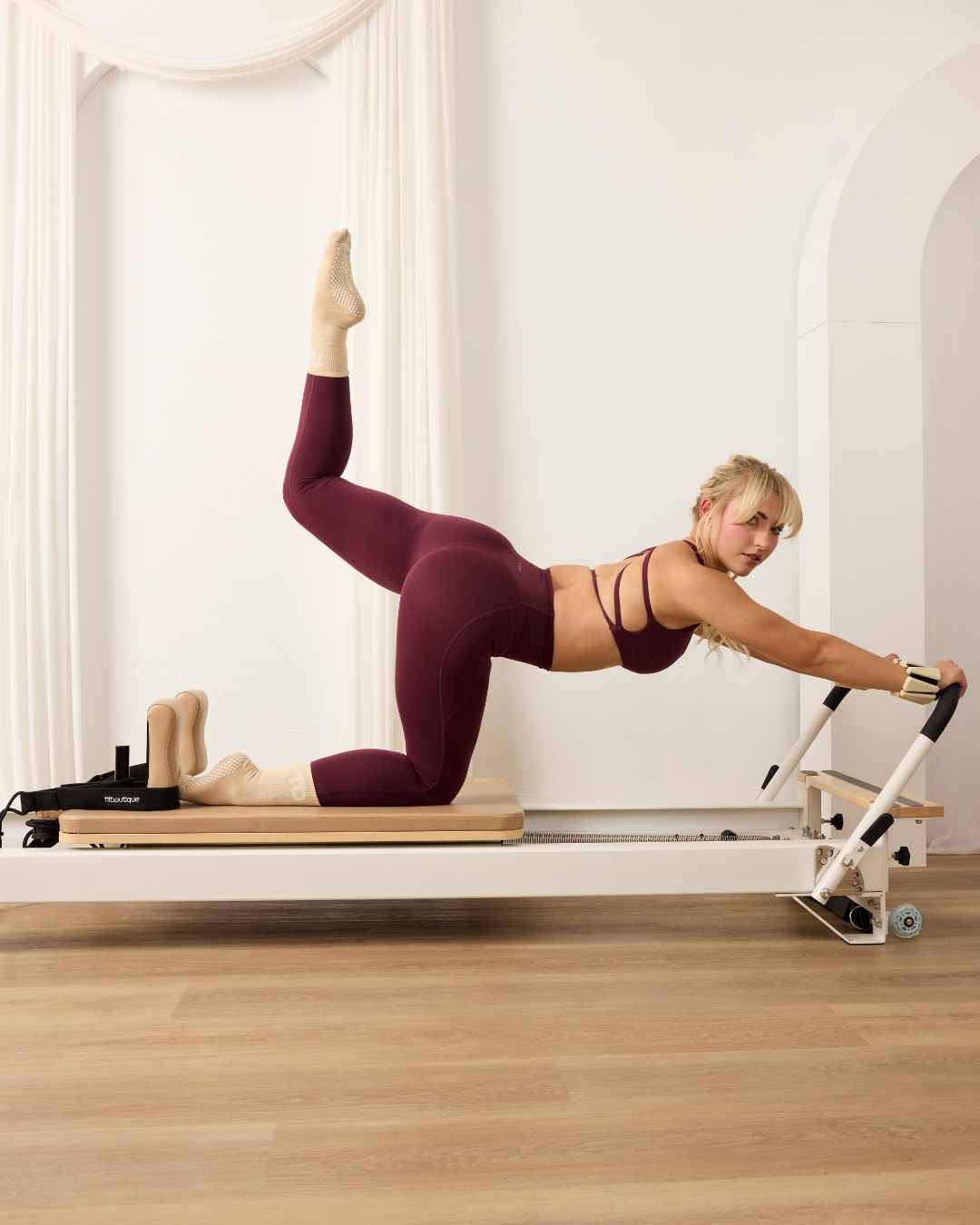
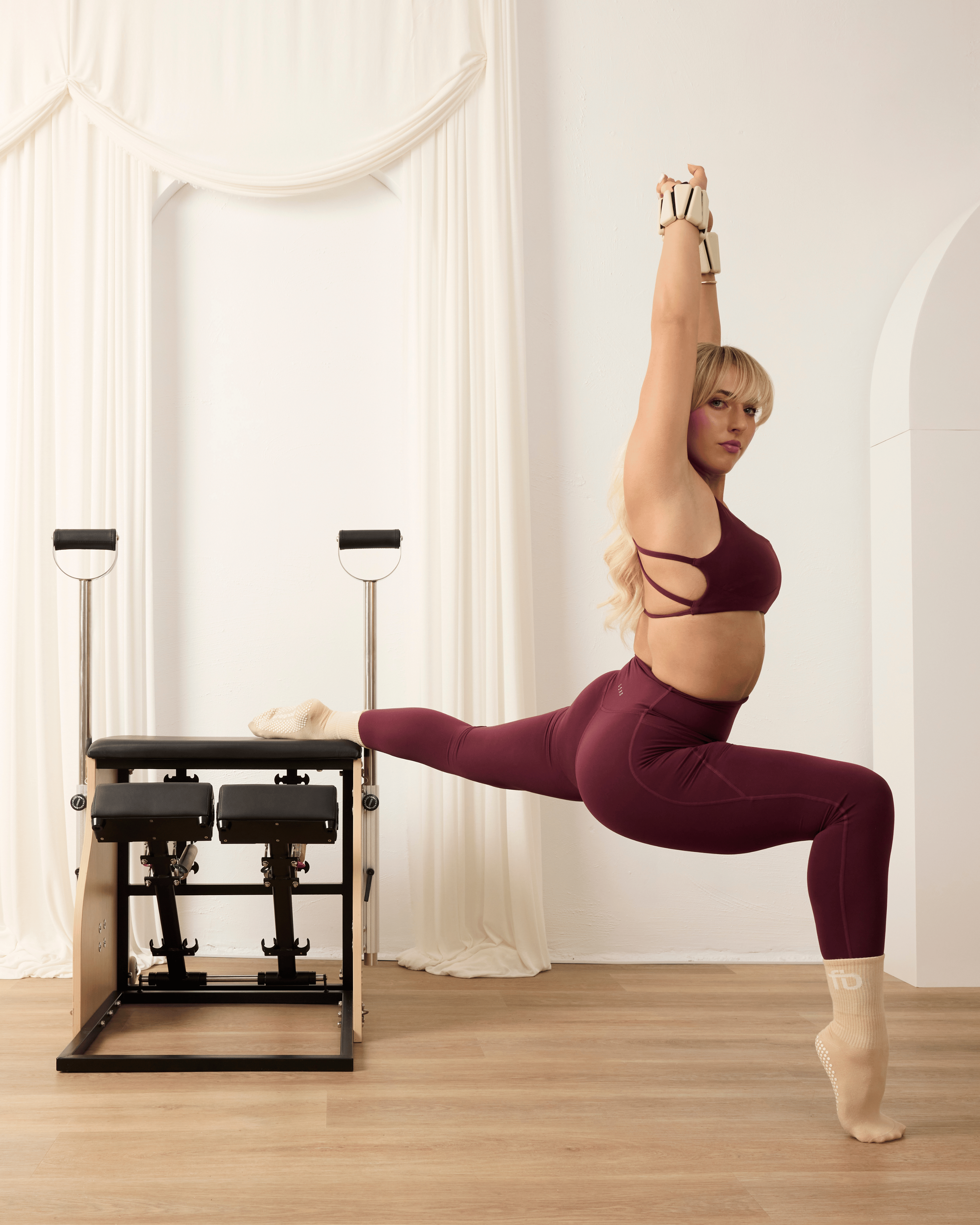
- Full body, kneeling and standing. Kneeling arm work facing the back for 10 reps, then 8 controlled standing side splits if you are comfortable, or a kneeling plank on the footbar if not.
- Stretch, seated and standing. A seated side stretch each way, then a hamstring stretch with one heel on the footbar, finishing with a slow roll down to standing.
Repeat this same session for a couple of weeks before you change it. You will learn the transitions, and you will see the progress, because the springs will start to feel lighter.
Structuring your week, not just your session
Once your sessions are well built, the next level is to give each one a slightly different emphasis across the week. One leaning towards lower body, one towards core and upper body, one full body. Every session still includes all 7 blocks, you just give more time to one of them.
That way nothing gets neglected and nothing gets overworked, and it is easier to train 3 or 4 times a week without the same muscles being sore every day. Our weekly reformer Pilates routine gives you a full week laid out, and our progressions guide shows how to make each block harder over time.
Fit by FitBoutique
Every class already structured for you
If you would rather follow than plan, the Fit app does the structuring for you. Reformer classes are built by real instructors who cue every movement and spring change, sorted into Full Body Reformer, Glutes, Core and Lower Body, from 10 minute resets to full length sessions. You can set your own workouts for the week too. Try every class free for 7 days.
Start Your Free Trial

Common structure mistakes
Skipping the warm up. It feels like wasted time when you only have half an hour. It is not. It is the part that makes the rest of the session safe and effective.
Too much core, not enough back. Ab work is satisfying and easy to add. Upper back work is less exciting and easy to skip. Over time that imbalance shows up in your posture.
Too many transitions. Jumping between lying, standing and kneeling makes a session feel busy without making it harder. Order by position.
Finishing on the hardest thing. Always leave a few minutes to stretch and bring the heart rate down. Ending mid effort leaves you tight and less likely to look forward to the next one.
Changing the session every time. Variety is nice, but repetition is how you see progress. Keep a session for a few weeks, then change it.
A Note From Ayrah
Whatever exercise you most want to get better at, put it straight after your footwork, not at the end.
For months I was trying to improve my standing side splits and I always left them until last. By then my legs were tired, my focus was gone, and half the time I skipped them because I was running out of time.
When I moved them to the start of the session, while I was warm but still fresh, they improved within a couple of weeks. The exercise had not changed. I had just stopped attempting it on empty.
The order of a session is not only about safety. It also decides which exercises get your best effort.
Frequently Asked Questions
How do you structure a reformer Pilates workout?
Start with breathing and a warm up, then footwork, core, lower body, upper body, full body and standing work, and finish with a stretch. Order the exercises by position on the machine, lying then seated then kneeling then standing, so you spend less time on transitions.
What order should reformer exercises go in?
From the most supported positions to the least. Lying down work like footwork and core first, then seated, then kneeling and standing work, which need the most balance and control, then a stretch to finish.
How long should a reformer Pilates workout be?
Anywhere from 15 to 60 minutes works. 30 to 45 minutes gives you time to cover every block properly. Under 20 minutes, pick a warm up, one main block and a stretch rather than trying to squeeze everything in.
Should I start a reformer workout with footwork?
After a short breathing and warm up, yes. Footwork warms the legs, lines up your hips, knees and ankles, and lets you check your alignment before anything more demanding.
How often should I change my reformer routine?
Every few weeks. Repeating a session lets you learn the transitions and notice your progress. Change it once it starts to feel comfortable at heavier springs.
Do I need a different workout every day?
No. Give each session a different emphasis across the week, such as lower body, core and upper body, and full body, but keep the same 7 block structure every time.
Let Someone Else Plan It
Structured reformer, mat and yoga classes from real instructors, on your phone, tablet or TV. Start with 7 days free.
Start Your Free Trial
Written by Ayrah Yuso
I'm part of the FitBoutique team and have a solid passion (and love) for all things exercise related, including Reformer Pilates

















Leave a comment