


Is Reformer Harder Than Pilates?
My honest answer to this has changed twice, which is why I want to write it out properly rather than give the usual line about how they are just different.
For about a year I would have told you the reformer was clearly harder. Then I spent a stretch doing mat work while travelling and came back convinced it was the other way round. Now I think the question has a real answer, and it is that the reformer is harder for the person you will be in 6 months and easier for the person you are today. Which is a slightly annoying answer, so let me explain what I actually mean.
In this article
What the springs are really doing
The assumption almost everyone arrives with is that the machine helps you, so the machine must be easier. That is half right in a way that leads people badly astray.
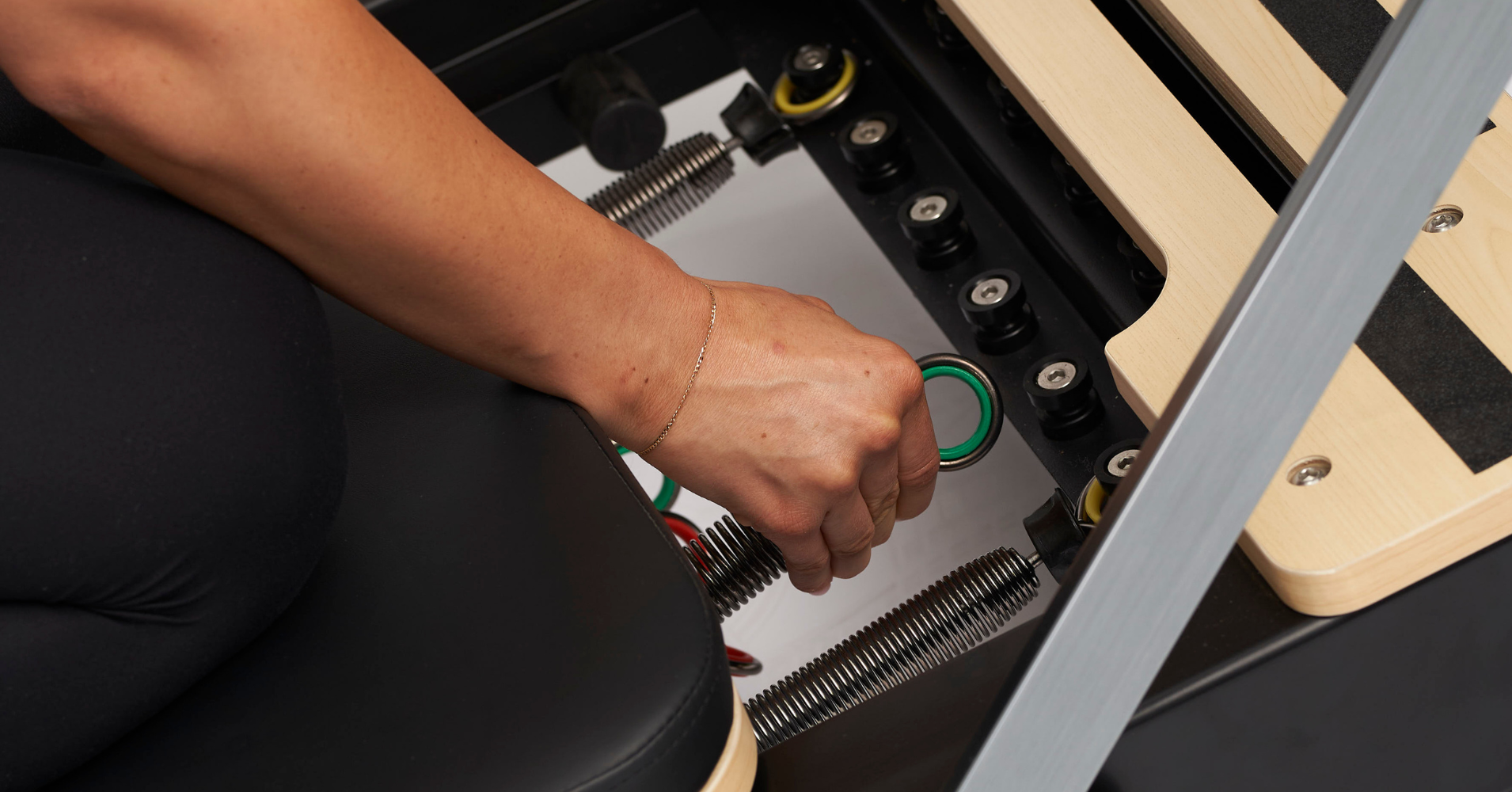
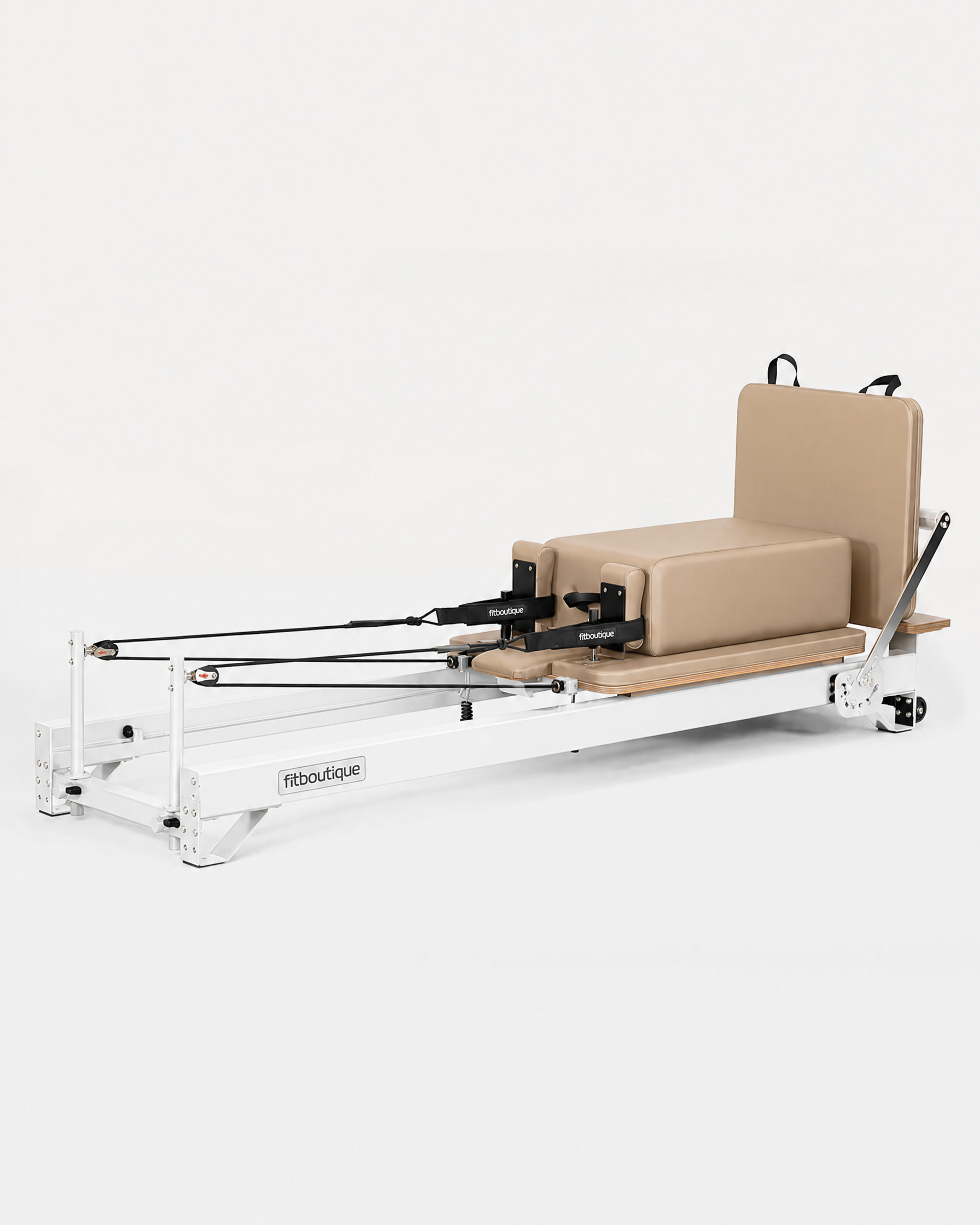
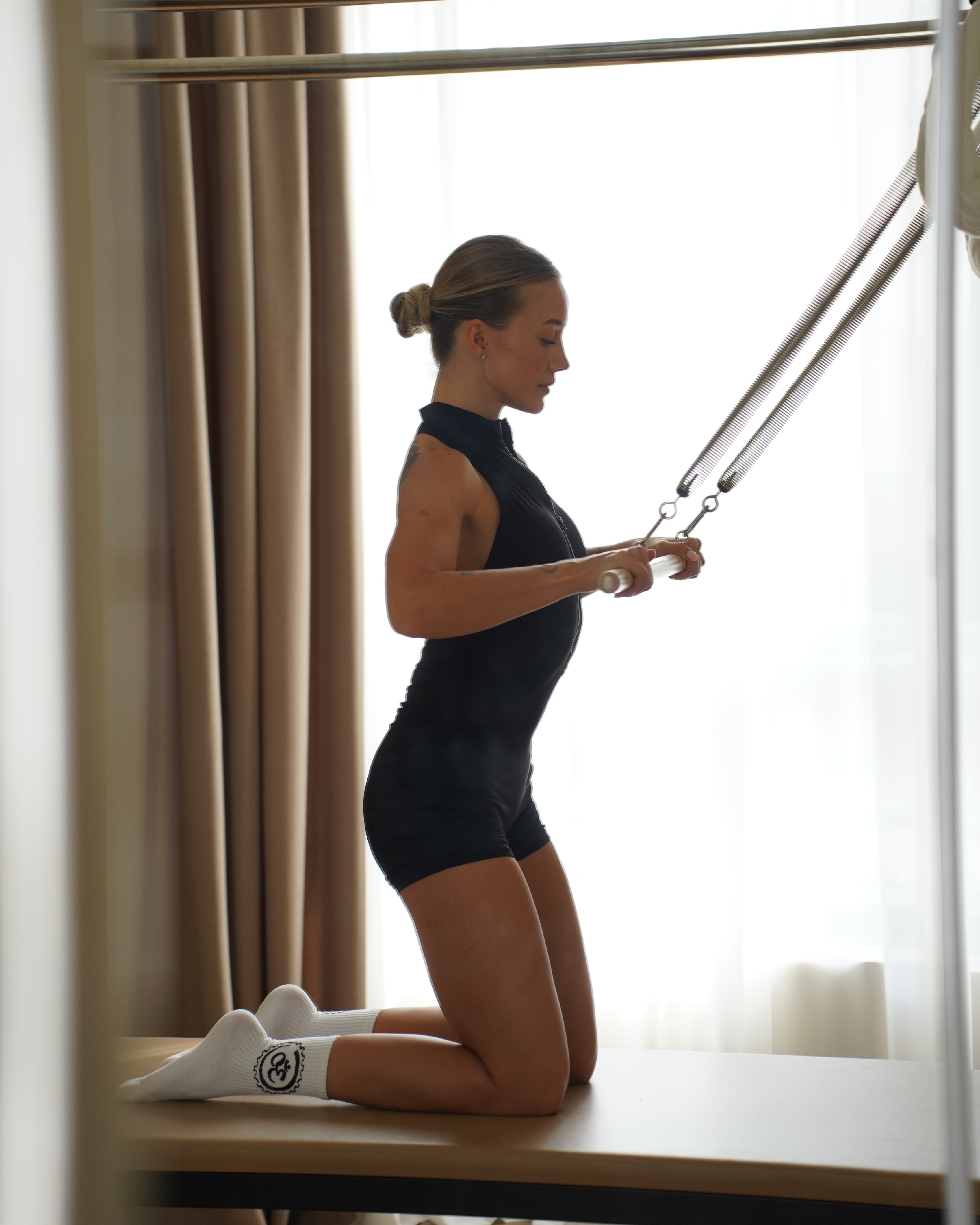
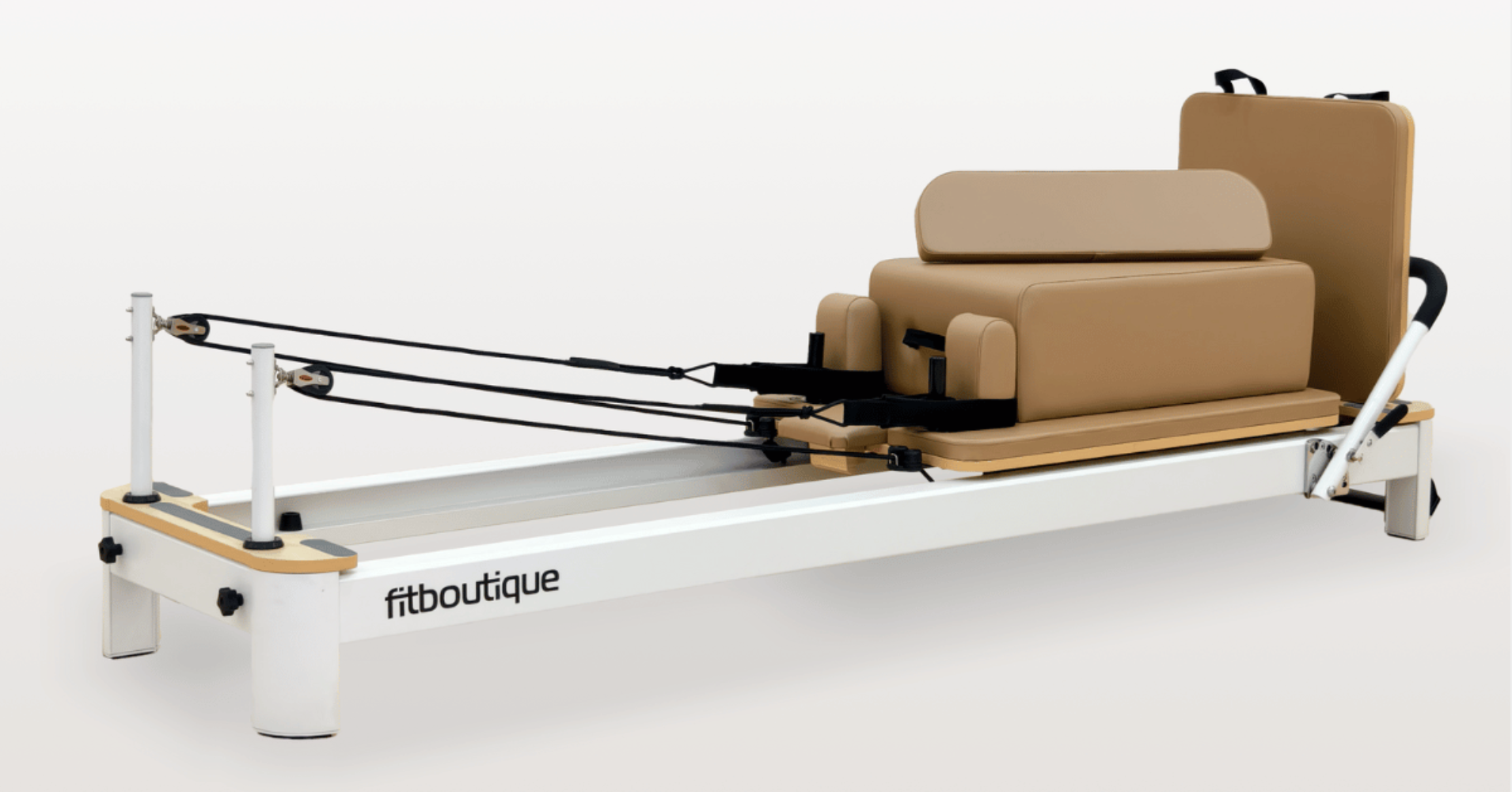
A spring on a reformer does 2 jobs depending on which direction you are working. When you push the carriage away, the spring resists you and it is load. When the carriage comes back towards you, the same spring is now assisting, and your job is to stop it snapping home. Most exercises use both halves, which is why a movement can feel supported and brutal within the same repetition.
Mat Pilates has one setting, which is your body weight, and it never changes. The reformer has a dial. That is the whole difference, and a dial can be turned in either direction.
For a beginner, mat is harder
I will say this plainly because the marketing never does. If you have never done Pilates and you walk into a mat class, you are going to struggle more than you would on a reformer.
Mat work gives you nothing. There is no spring holding your leg up while you find the right muscle, no strap telling your arm where the line of the movement is, no carriage giving you feedback when you lose your alignment. A hundred is genuinely hard when nothing is helping, and teaser is close to impossible for most people for a long time.
The reformer supports you into positions your body cannot yet hold on its own, and that support is not cheating. It is how you learn what the shape is meant to feel like before you have the strength to make it yourself. That is also why physiotherapists reach for reformers so often, and why so many people who found mat classes demoralising get on with reformer work immediately.
Once you can move well, the reformer wins
Here is where it flips, and it flips harder than people expect.
Mat Pilates has a ceiling. Once you can hold the positions, your body weight is a fixed load and the only variables left are tempo and how long you stay there. Those are real, but they run out.
The reformer has no ceiling, because you can keep taking the help away. You go from 3 springs to 2, from 2 to 1, and every step makes the same exercise a different exercise. Then you start adding instability, working on one leg, standing on the carriage, and the machine becomes considerably more demanding than anything you can do on a mat.
The other thing that arrives with experience is that you stop being able to hide. Early on, a wobble is just a wobble. Later, you can feel the carriage telling you that your left side is doing less work than your right, and knowing that makes every set harder because you can no longer pretend. If you want the wider picture on this, I compared the styles properly in my piece on what is the hardest type of Pilates.
The real difference nobody mentions
Forget difficulty for a second and think about escapability, because I am convinced this is what people are actually feeling when they say the reformer is harder.
In a mat class you can rest without deciding to rest. You come down out of a shape half a second early, you take an extra breath between repetitions, you shave the range slightly on the last few. Nobody is stopping you and you will barely notice you did it.
On a reformer, the spring is pulling the carriage home the entire time. If you stop working, the carriage moves. There is no neutral position to quietly hover in, so the exercise keeps going whether you have decided to keep going or not. The tension is continuous in a way that body weight simply is not.
That is not harder in a strength sense. It is harder in an attention sense, and over 45 minutes attention is the thing that runs out first.
Why you are more sore after reformer
Almost everyone reports being more sore after their first few reformer sessions than after mat classes, and it is worth understanding why, because it is not a measure of how hard the workout was.
Most reformer exercises have a long, controlled return. You are working while the muscle lengthens under load, which is exactly the pattern that produces soreness a day or 2 later. Mat work has far less of it, because there is nothing pulling against you on the way back.
So being wrecked after reformer is a signal about the type of loading, not the amount. It fades within a few weeks as your body adapts, and if it does not, you are probably on heavier springs than you need.
Lighter springs are harder, not easier
This one catches out nearly every person who buys a machine for home, so it is worth its own section.
Heavy springs are the beginner setting. On footwork the extra tension gives you something solid to push into, and on anything where the carriage is coming back at you, more spring means more help holding it. Take springs off and the machine stops steadying you, so your own control has to fill the gap.
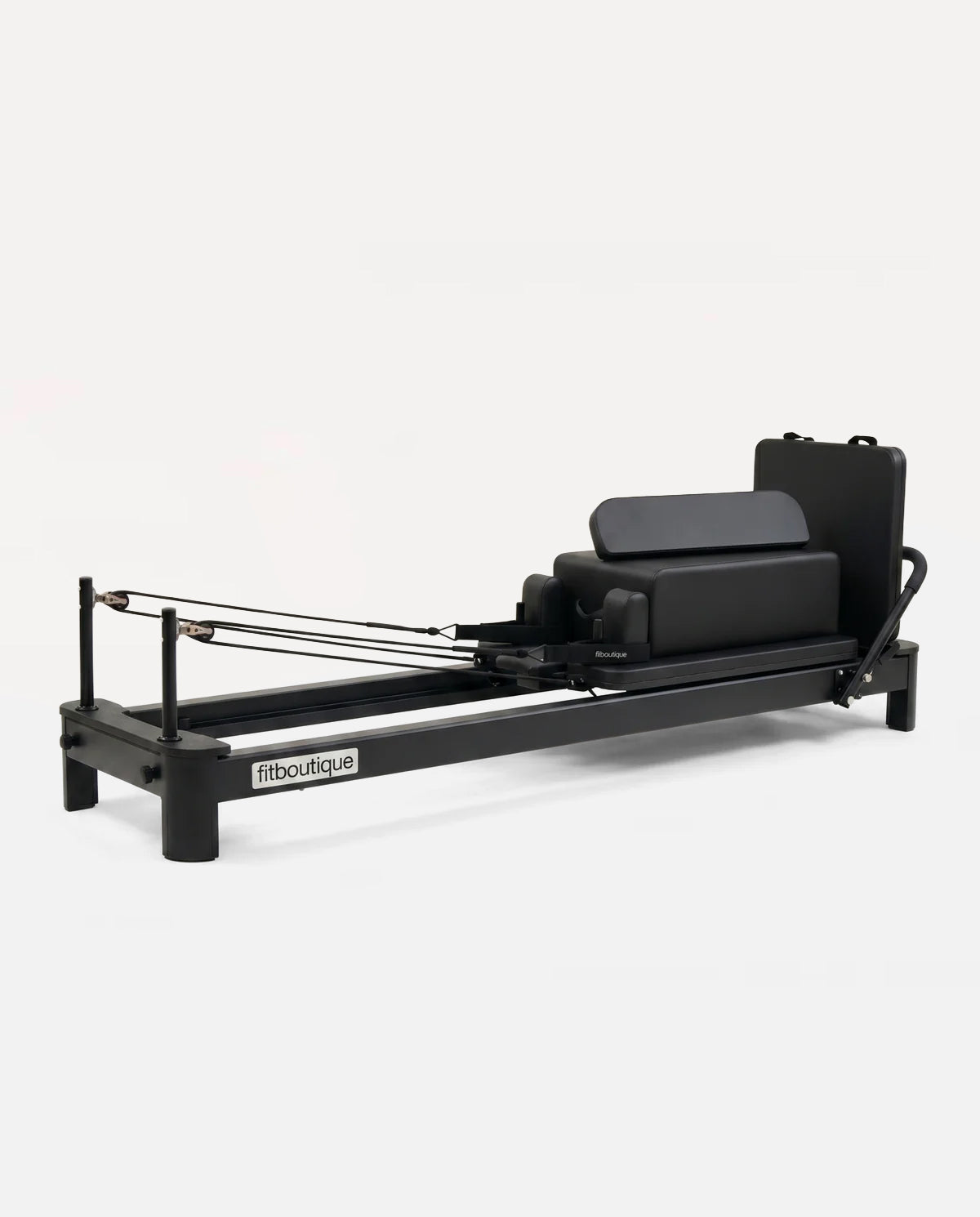
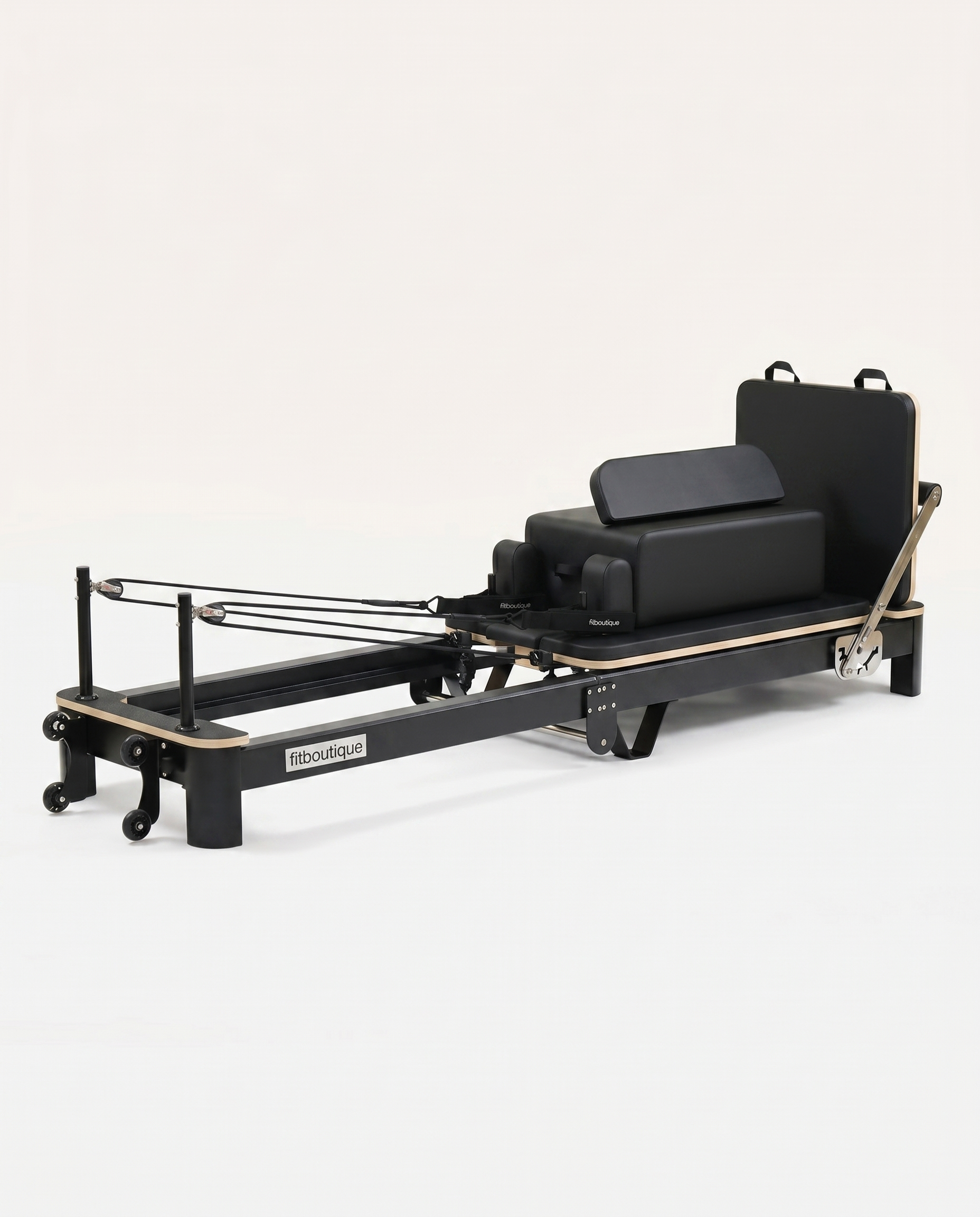
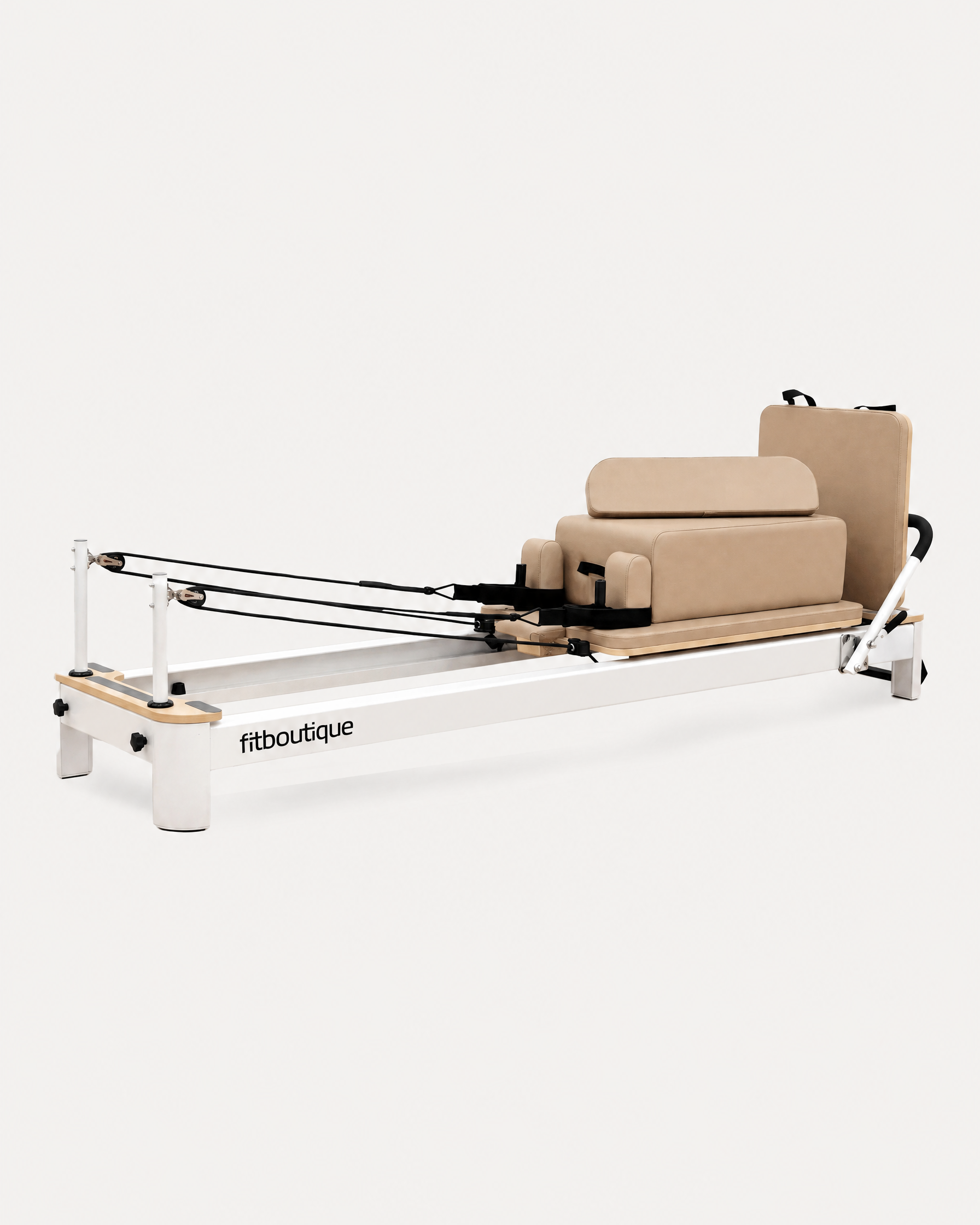
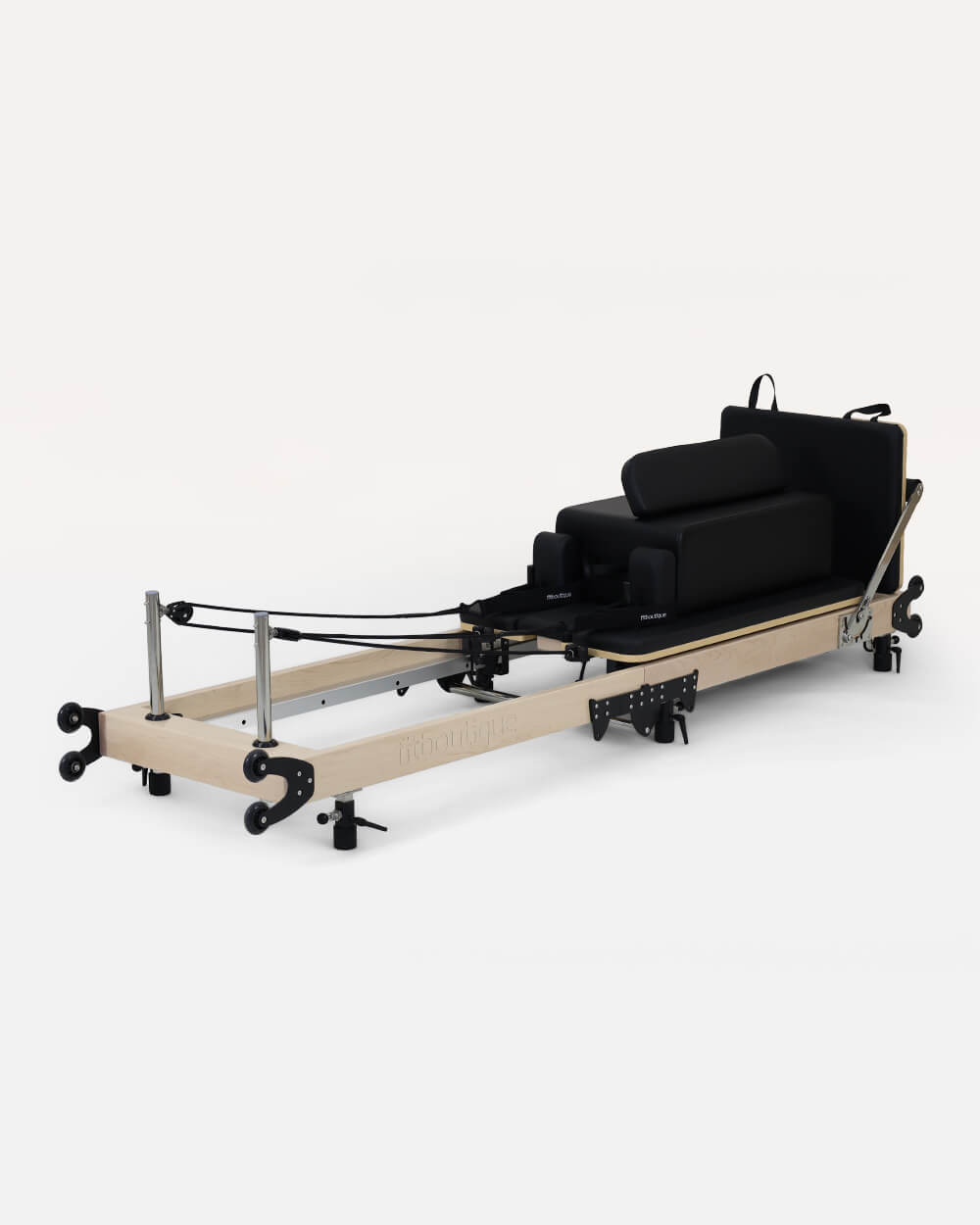
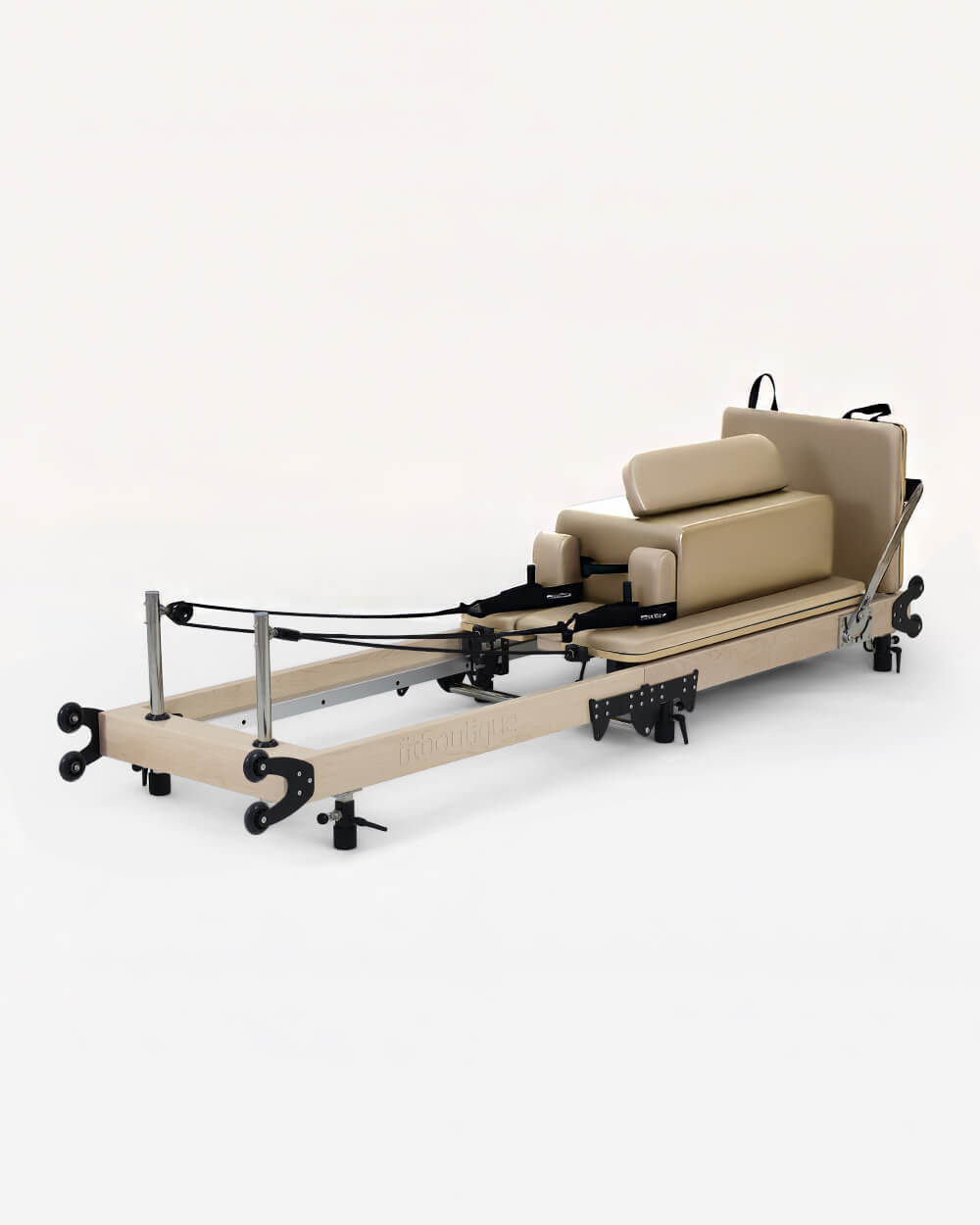
The Ivory Reformer and Onyx Fold Reformer carry 6 German made springs on a two tiered bar, 2 heavy, 2 medium and 2 light, which is what gives you somewhere to go for years rather than months. If you want to know what each component is doing, I went through every reformer part and its purpose separately.
What I would actually do
- If you are starting from scratch, start on the reformer. You will learn faster, you will be less discouraged, and you will build the base that makes mat work possible later.
- Keep some mat work in the mix anyway. Even one short session a week will show you exactly which things the machine has been doing for you, and that is uncomfortable and extremely useful.
- Reduce springs before you add repetitions. Most people plateau because they keep the same setting for a year. Take one spring off and the whole session is new.
- Judge a session by control, not by exhaustion. Feeling destroyed is easy to arrange and tells you very little. Doing the same exercise slower, with a longer range and no wobble, is progress.
A Note From Ayrah
I filmed myself once, for a completely unrelated reason, doing a mat session and a reformer session on the same afternoon. I have never been more annoyed by a piece of footage.
In the mat video I rested constantly. Not obviously, and not on purpose. A second on my back between repetitions, a hand on the floor that should not have been there, coming down out of a position slightly early and then setting up slowly for the next one. Over half an hour it added up to a genuinely large amount of doing nothing, and I had no idea I was doing it.
In the reformer video there was almost none of it, and the reason had nothing to do with willpower. The carriage will not sit still. If I had stopped working, the spring would have taken it home and I would have had to start again, so I simply did not stop.
That is when I stopped believing the reformer is harder in the way people mean it. It is not that the exercises are more difficult. It is that the machine removes the small escapes you did not know you were taking, and the honest version of a session turns out to be much harder than the version you thought you were doing.
If you want to test this on yourself, film one mat session. You will not enjoy it.
Frequently Asked Questions
Is reformer Pilates harder than mat Pilates?
It depends on your level. Mat Pilates is harder for a beginner because nothing supports you and the positions demand strength you may not have yet. The reformer is harder for an experienced person because you can keep removing springs, add instability and work in ways a mat cannot replicate. Neither is a beginner option or an advanced option by nature.
Which should I start with as a complete beginner?
The reformer, in most cases. The springs hold you in positions you cannot yet hold alone, which means you learn what a movement should feel like before you have the strength to produce it. People who find mat classes demoralising very often get on well with reformer work straight away.
Do the springs make the workout easier?
Only in one direction. A spring resists you when you push the carriage away and assists you when it returns, so most exercises are loaded on one half and supported on the other. Changing the spring setting changes which of those dominates, which is why the same exercise can feel supportive and punishing at once.
Why am I so sore after reformer Pilates but not after mat?
Reformer exercises involve long, controlled returns where the muscle is working as it lengthens, and that pattern produces more delayed soreness than body weight mat work does. It settles within a few weeks. If it does not settle, you are likely training on heavier springs than you need.
Are fewer springs easier or harder?
Harder, almost always. Heavier springs steady the carriage and give you something to push into, so removing them takes the assistance away and hands the work back to your own control. If a session has stopped challenging you, take a spring off before you add repetitions.
Do I still need mat Pilates if I have a reformer?
You do not need it, but it is worth keeping. A short mat session now and then shows you exactly which parts of a movement the machine has been quietly handling for you, which is useful information even though it is not especially enjoyable to receive.
Is reformer Pilates good for building strength?
Yes, particularly the deep stabilising muscles that other training tends to skip, and it does so with very little joint impact. It will not build size the way heavy lifting does, but for control, core strength and the muscles that hold your posture together it is unusually effective.
Which is better if I am coming back from an injury?
The reformer is generally the safer starting point, because the springs let you work at a load your body can currently tolerate and the carriage guides the line of the movement. That is a large part of why so many physiotherapists use them. Speak to your practitioner first about what is appropriate for your particular situation.
Try It On Your Own Machine
Full size reformers that arrive assembled with 6 German made springs, a jumpboard and box included. Free delivery Australia wide and a 5 year warranty.
Compare Every Reformer
Written by Ayrah Yuso
I'm part of the FitBoutique team and have a solid passion (and love) for all things exercise related, including Reformer Pilates
















Leave a comment