



Article: Pilates Reformer

Pilates Reformer
If you have only ever seen one in a photograph, a Pilates reformer looks like a strange piece of furniture. A low wooden or aluminium bed with a sliding platform, some springs underneath, a bar at one end and 2 ropes hanging off the other. It is not obvious what it does or why anyone would want one in a spare room.
I have trained on one almost every week for years and I sell them for a living, so I am not neutral. What I can do is explain the machine properly. What it is, where it came from, what it does to a body, and how to tell a good one from a bad one. Everything below about the history is checkable, and where the popular story is not actually supported by the record I have said so, because the Pilates world repeats a lot of folklore as fact.

In this article
- What a Pilates reformer actually is
- Why springs instead of weights
- How long Pilates has been around
- The story everyone tells, and what the record says
- Why anyone can call it Pilates
- Pilates in Australia
- What a reformer does for you
- Reformer or mat
- What to look for in a reformer
- The 4 we sell most of
- Starting out
- Frequently asked questions
What a Pilates reformer actually is
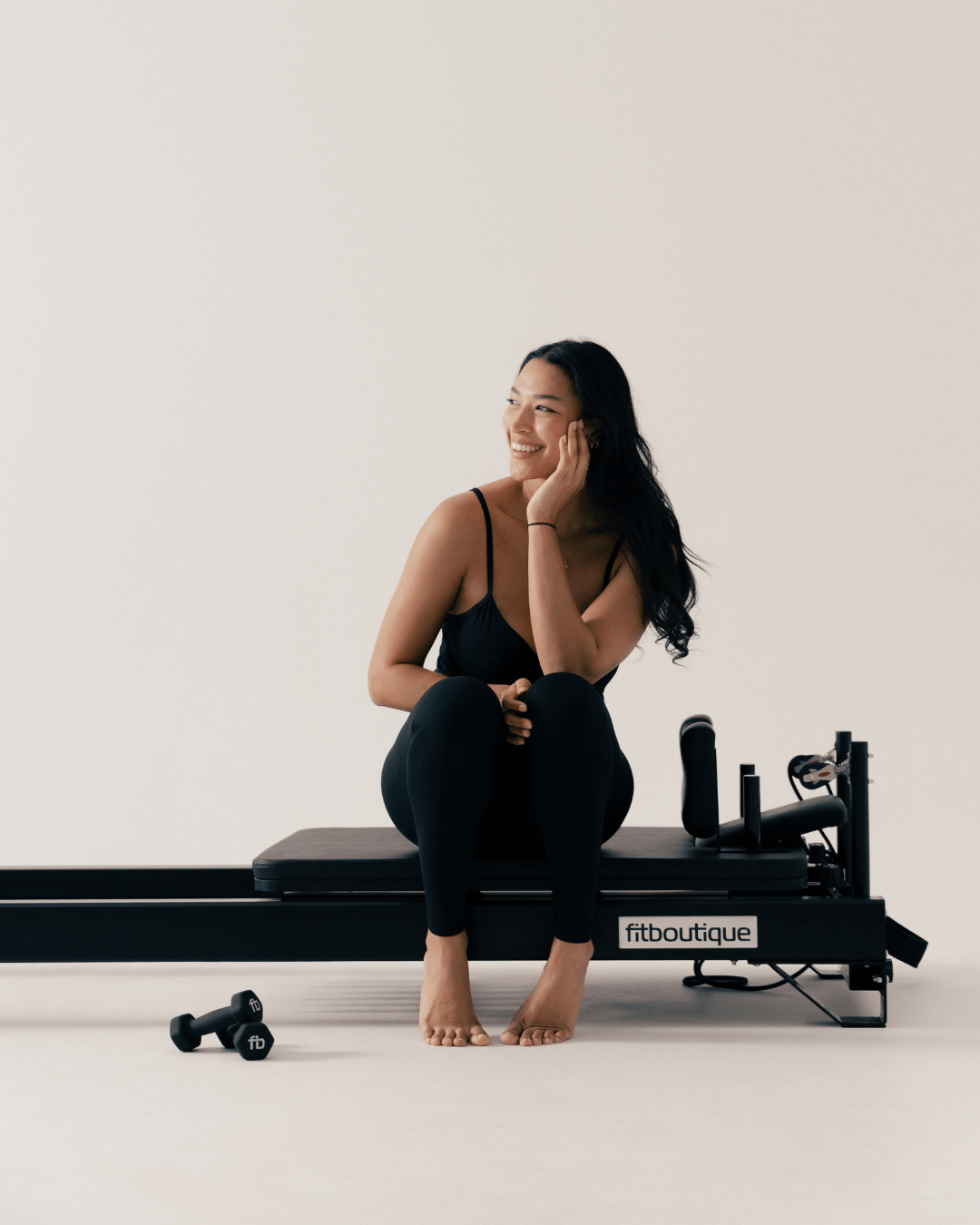
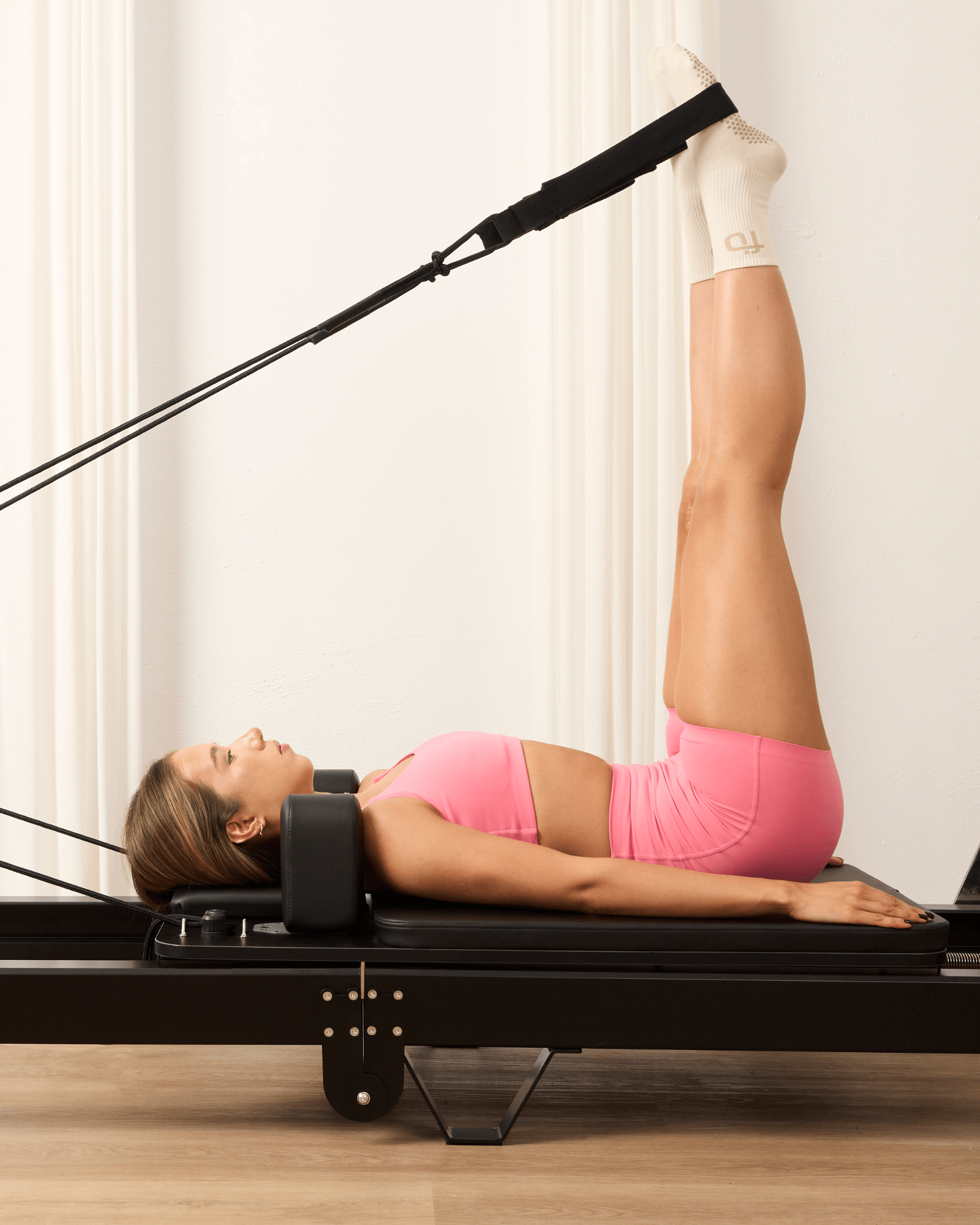
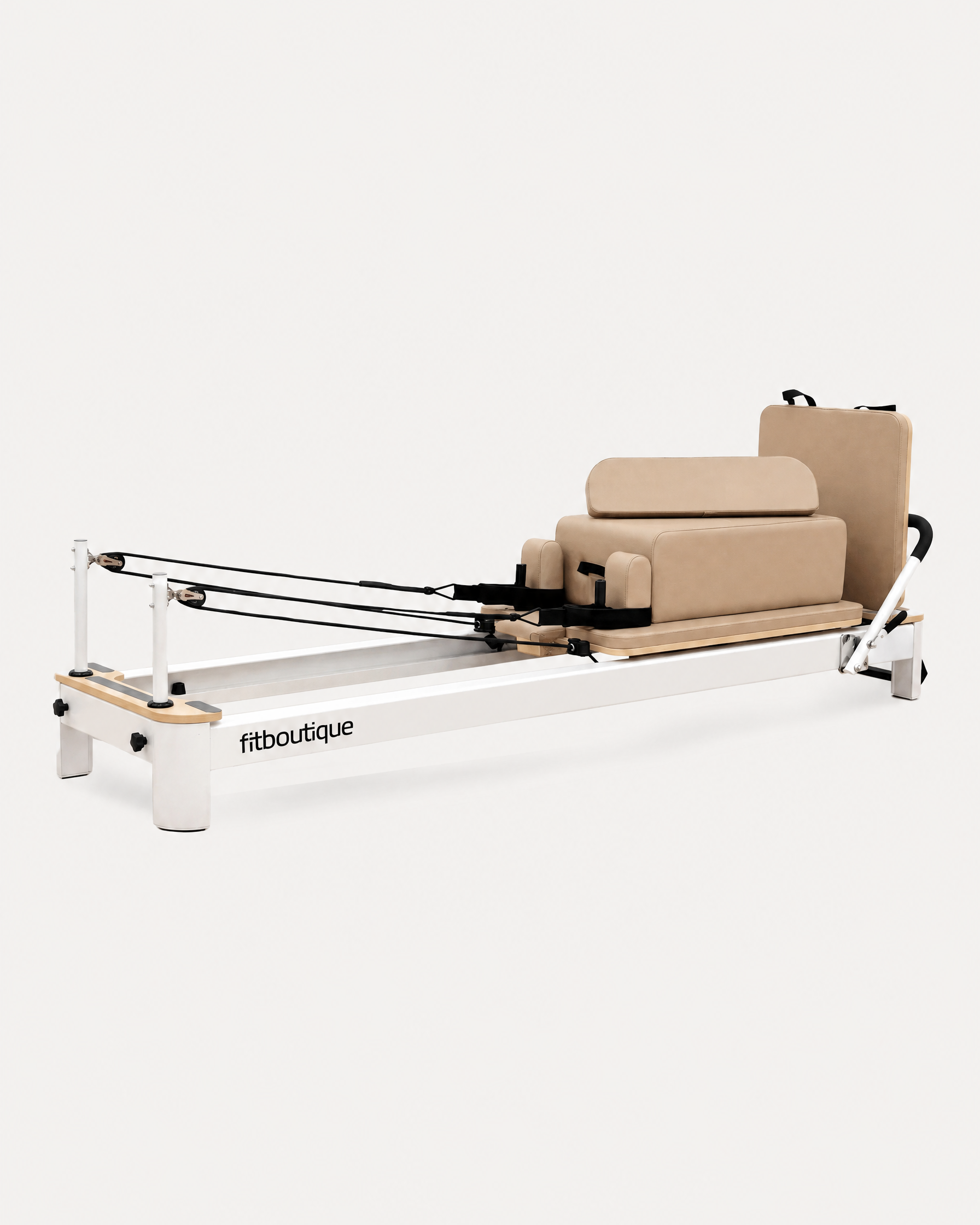
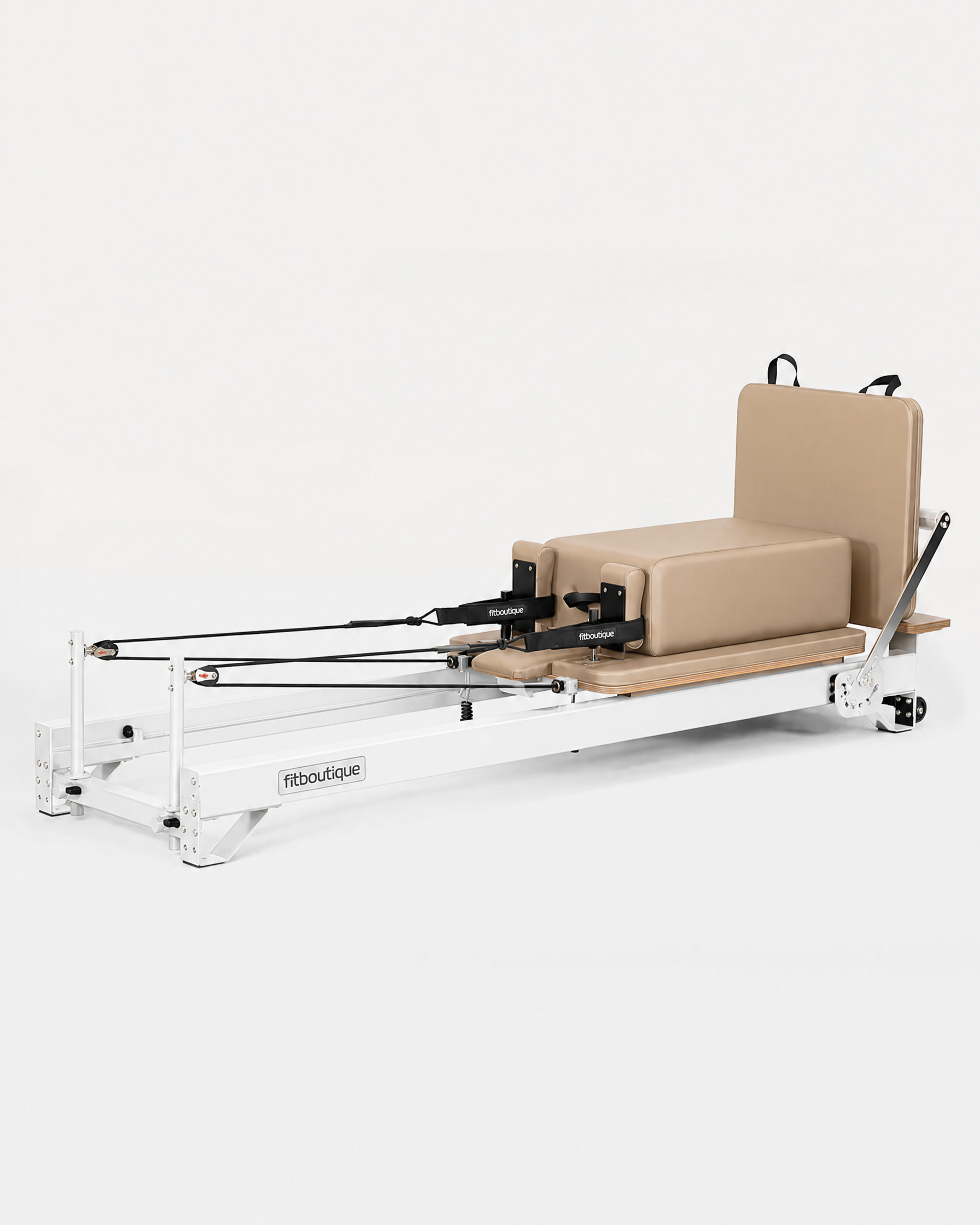
A reformer is a sliding bed on rails with adjustable spring resistance. That is the whole idea. Everything else is detail.
The parts, in the order you will meet them.
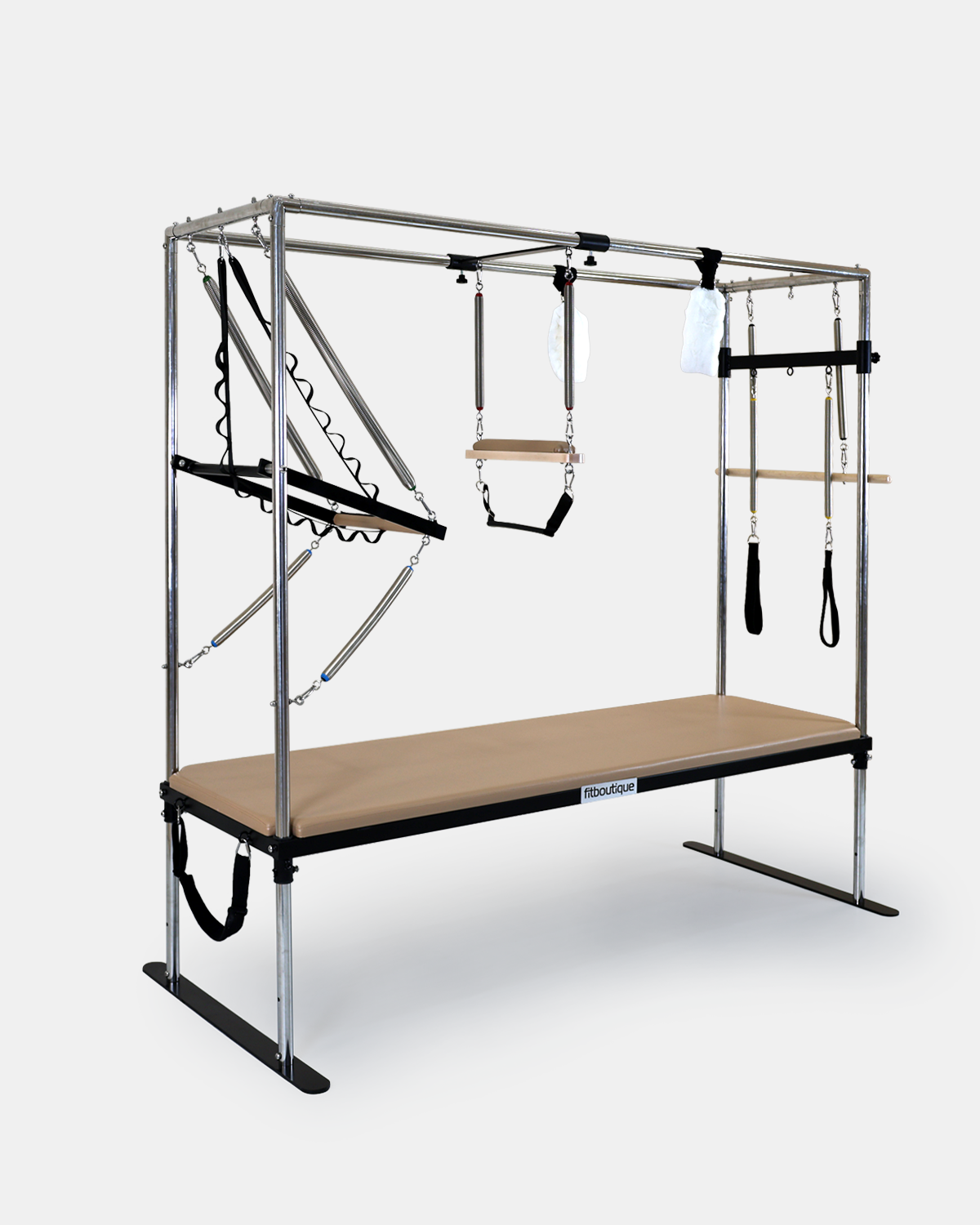
- The carriage. The padded platform you lie, sit, kneel or stand on. It runs on wheels along 2 rails and it is the thing that moves.
- The springs. They sit under the carriage and connect it to the frame. Clip more on and the carriage is harder to push away. Take them off and it slides almost freely, which is harder in a different way.
- The footbar. A padded bar at one end that you press against with your feet or hands. On a good machine it adjusts through several positions.
- The straps and ropes. They run over pulleys at the far end so you can pull the carriage towards the springs with your arms or legs, which is where most of the upper body work happens.
- The headrest and shoulder blocks. The headrest supports your neck and drops flat. The shoulder blocks stop you sliding off the carriage when you press hard through your feet.
- The jumpboard and box. A padded board that replaces the footbar so you can jump lying down, and a padded box that sits on the carriage to change the height and angle of dozens of exercises. Both come with every machine we sell.
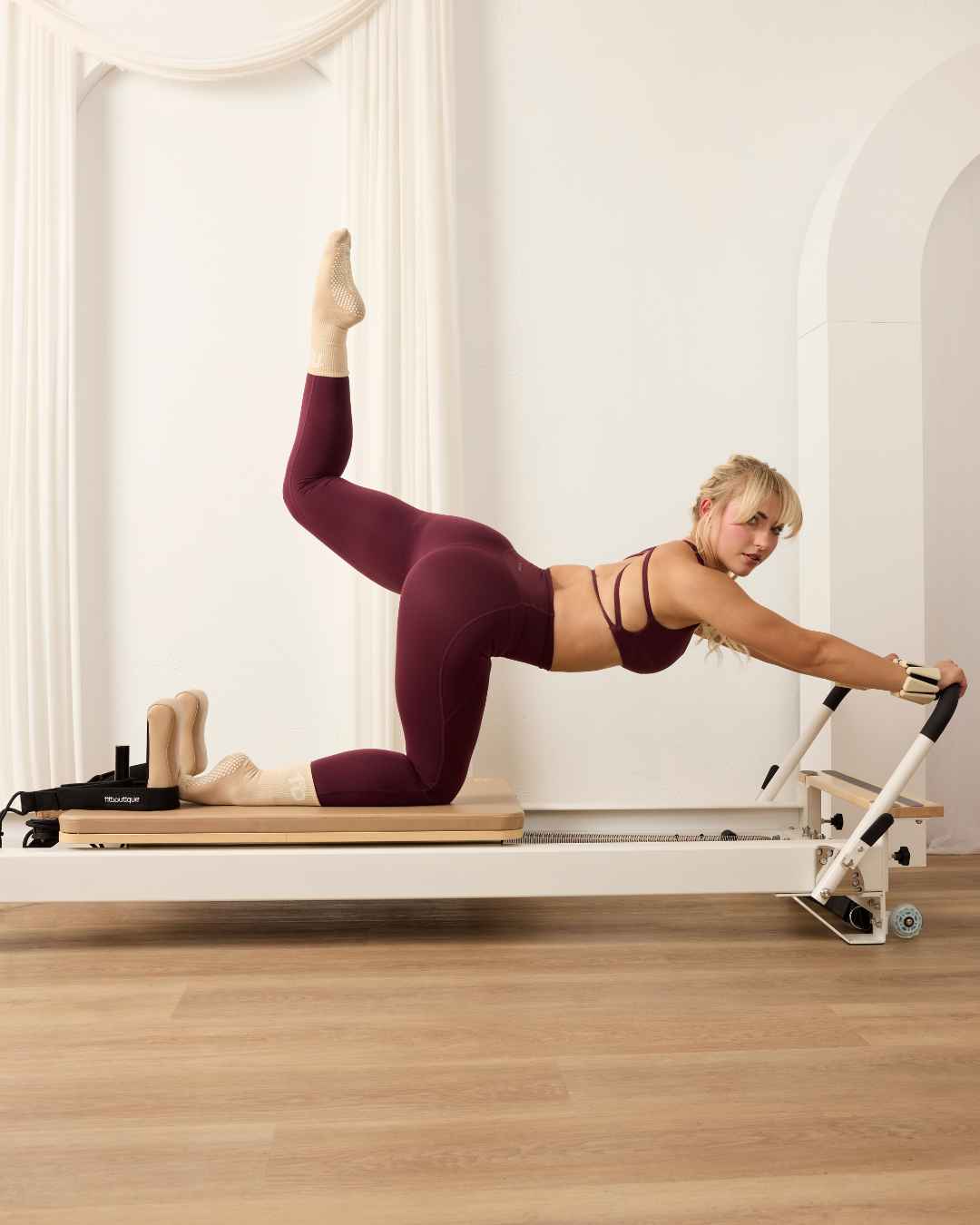
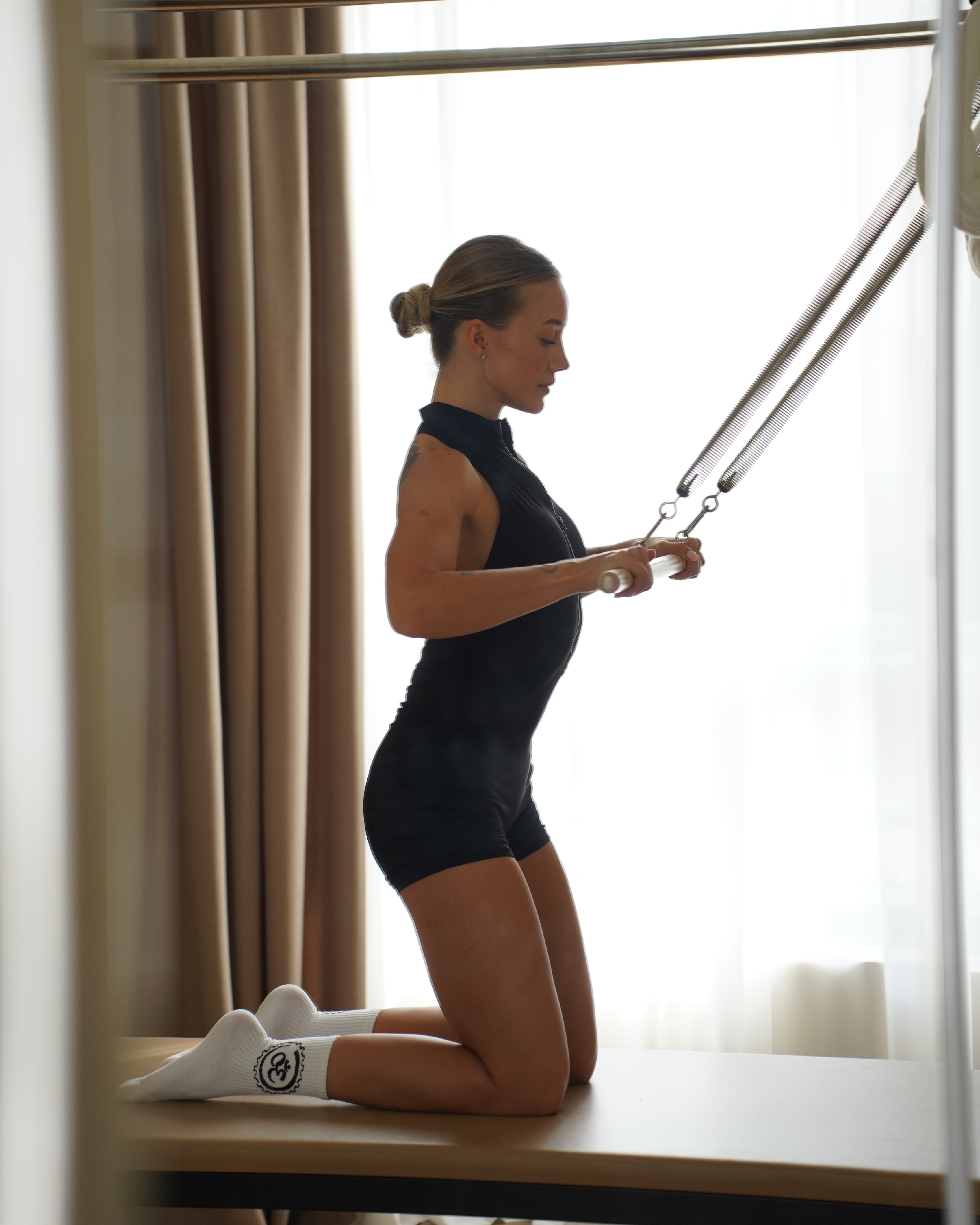
Put together, it lets you load almost any movement your body can make while lying down, sitting or kneeling, with your spine supported and the load adjustable in small steps. That combination is the reason it is used equally by athletes and by people recovering from surgery.
Why springs instead of weights
A dumbbell gives you the same load at every point of a movement. A spring does not. It gets progressively harder the further you push the carriage, and that changes the exercise in 2 useful ways.
First, the hardest part of the movement is not where you are weakest. Push a spring out and the resistance builds as you extend, which is generally where your body is strongest. Researchers have measured this on a reformer: in a 2011 study in the Brazilian Journal of Physical Therapy, the resistance from the spring peaked at a completely different joint angle from the point where the muscle was working hardest.
Second, and this is the part that surprises everyone, lighter springs make an exercise harder rather than easier. Less spring means a less stable carriage, and a less stable carriage means your own muscles have to do the stabilising. A 2024 study in the journal Healthcare put sensors on people doing core exercises on a reformer and found that lower spring resistance increased activation of the deep abdominal and spinal muscles. Heavier springs do more of the work for you.
The old objection to Pilates was that the load is too light to build anything. That has not aged well. A 2012 study from McMaster University had people train for 10 weeks at either 30% or 80% of their maximum, and measured by MRI the light group grew their muscles 6.8% against the heavy group 7.2%, a difference that was not statistically significant. What mattered was taking the set close to fatigue, not the size of the load.
How long Pilates has been around
Over a century, and the exact starting point depends on what you are counting.
Joseph Hubertus Pilates was born on 9 December 1883 in Mönchengladbach, in what was then Prussia, and died in New York on 9 October 1967 at the age of 83. When a US federal court reviewed the history of the method in 2000, it made a finding of fact that he began developing his system of conditioning in or around 1914. That makes the method 112 years old this year.
The machine is slightly younger and much easier to date, because he patented it. Joseph Pilates filed a patent for a "Gymnastic Apparatus" on 24 August 1925, and US Patent 1,621,477 was granted on 15 March 1927. The wording in the patent describes a "movable supporting member or carriage adapted to receive the user in a recumbent position and to be moved by him against the effort exercised by any suitable resistance members". That is a reformer, described a century ago, in almost the same terms I used at the top of this article.
He did not call it a reformer in the patent. The name it carried commercially was the Universal Reformer, and the Smithsonian National Museum of American History still catalogues its own example that way. That machine measures 80 by 26 by 14 inches, was made by Pilates Studios of Contrology, and was once owned by Nancy Sinatra.
He never called the method Pilates either. He called it Contrology, and he was still calling it that decades later. There is a letter he wrote to former President Herbert Hoover in late 1958, held by the Herbert Hoover Presidential Library, which reads in part "Give me an hour of your valuable time and I will convince you that Contrology can do more for world peace than anything else". His 1945 book, written with William John Miller, was titled Return to Life Through Contrology.
He emigrated to New York in 1926 and opened a studio at 939 Eighth Avenue, in a building full of dance rehearsal rooms. That address is the reason Pilates and dance grew up together. The 2000 court judgment records that during his lifetime the method "gained a positive reputation in the New York City dance community", and both George Balanchine and Martha Graham are reported to have sent injured dancers to him.

The story everyone tells, and what the record says
Here is the version you will find on every Pilates website, mine included until I checked it properly.
Joseph Pilates was interned in Britain during the First World War as a German national. While there he worked in the camp hospital and rigged springs from the hospital bed frames so that bedridden men could exercise against resistance without getting up, and that improvised contraption became the reformer.
It is a wonderful story. What is documented is thinner than the retelling suggests, and I would rather tell you the truth than the myth.
What is solidly on the record, from the Knockaloe Charitable Trust which holds the camp archive on the Isle of Man: he was held at Lancaster for about a year, arrived at Knockaloe on 12 September 1915 with a transfer of 660 internees, was assigned to Camp 4, and left in mid March 1919 after about 3 and a half years. He supervised sport and refereed boxing, which is recorded in the internees own camp newspaper, the Lager Zeitung, in January 1917, including a 10 round bout where he suspended a competitor for misbehaviour. Senior internees wrote praising him as an instructor of physical education.
What is not documented is the hospital. The Knockaloe archive states plainly that there is no confirmed evidence as yet of his involvement in the hospital, and researchers there have noted that internees largely slept on basic wooden beds, which would mean there were no bed springs to take. The story comes from Joseph Pilates himself, told decades later. National Geographic, reviewing the same question, concluded that it is plausible but that specific evidence is missing.
So the honest version is this. The method took shape in his head during 3 and a half years in an internment camp where he really was teaching physical training to other men. Whether the first spring was ever pulled off a hospital bed is his word, and only his word.
Why anyone can call it Pilates
This one is a genuinely good story and it is fully on the record.
For years a company held US trademarks on the word Pilates and tried to stop other people using it. On 19 October 2000, in Pilates, Inc. v. Current Concepts, Inc., Judge Miriam Cedarbaum of the US District Court for the Southern District of New York ruled that the word had become generic. Her judgment held that the primary significance of Pilates is as a method of exercise rather than as the source of a product, and that a company "cannot monopolize a method of exercise by asserting trademarks in the generic word used to describe it". Both registrations were cancelled.
That ruling is the reason there is a Pilates studio on your high street rather than a licensed franchise, and the reason I can sell you a Pilates reformer at all.
Pilates in Australia
Pilates arrived here late and then moved quickly. The first dedicated Sydney studio is generally credited to Allan Menezes in 1986, with early clients from the Australian Ballet and Sydney Dance Company, though that rests on trade press rather than an archive. The professional body is better documented: the Australian Pilates Method Association was established in 1996 by Penny Latey, Sandy Lauffenburger and Megan Williams.
As for how many of us do it now, the Australian Sports Commission runs the national participation survey, AusPlay. In its November 2025 release of 2024 to 2025 data, Pilates was named among the fastest growing physical activities in the country, alongside pickleball, padel, fishing, golf and tennis. That matches what I see from where I sit. Five years ago a reformer in a spare room was unusual. It is not unusual now.
What a reformer does for you
I want to be careful here, because Pilates marketing makes claims the evidence does not support. Here is what the research actually shows, with the weak spots named.
Core stability, and specifically timing. This is the strongest case and most of the underlying work is Australian. Professor Paul Hodges and Carolyn Richardson at the University of Queensland showed in a 1996 study in Spine that in people without back pain, the deepest abdominal muscle fires before the limb moves, bracing the spine ahead of the load, while in people with back pain it fires late every time. Reformer work is built around holding your spine and pelvis still while your limbs move against resistance on a surface that slides, which is precisely a drill for that timing.
Strength, including at the fibre level. A 2017 study in the Journal of Bodywork and Movement Therapies found significant strength gains in the scapular stabilisers and lumbar extensors after 12 weeks of reformer training, which are exactly the muscles that go quiet in a desk job. A 2025 randomised trial in Scientific Reports had women train on reformers 3 times a week for 8 weeks and found improvements in body composition, muscle mass, grip strength and every measure of trunk endurance tested.
Flexibility and balance. A 2011 systematic review in the Archives of Physical Medicine and Rehabilitation rated the evidence as strong for flexibility and dynamic balance in healthy people, and moderate for muscular endurance.
Lower back pain. A 2015 Cochrane review led by Tiê Yamato with Professor Chris Maher at the University of Sydney found Pilates probably more effective than minimal intervention for pain and disability in the short and medium term. It did not find Pilates better than other forms of well designed exercise. A reformer is not treatment, and if you have a back problem the first call is a physiotherapist.
Posture. Real but modest, and I would rather say so. A 2010 study from McGill University found 12 weeks of Pilates reduced rounding of the upper back during sitting. A 2009 University of Melbourne study in adults over 60 found small improvements that faded once training stopped. So it works, it takes 10 to 12 weeks, and it lasts as long as you keep going.
What it will not do. It is not a big calorie burn and it is not a weight loss tool. What people notice at 3 months is usually a change in shape and posture at more or less the same body weight, which is why the tape measure is a better instrument than the scales.

Reformer or mat
Mat Pilates is the same method without the machine, and it is genuinely good. The reformer adds 3 things a mat cannot.
Adjustable resistance, so you can make an exercise easier for a beginner or harder for an athlete without changing the exercise. Support, because lying on a moving carriage with your spine held lets people work who cannot get down on a floor at all. And instability, because the carriage moves under you, which recruits the stabilising muscles in a way a static floor never will.
What a mat gives you is that it costs nothing and travels. If you are deciding between them, the honest answer is that mat work is the better starting point for learning the vocabulary and the reformer is the better machine for progressing once you have it.
What to look for in a reformer
Buying advice, from someone who has taken a lot of these apart.
- The carriage glide. Push it with one hand. It should move like it is on rails, silently, with no catch and no side to side play. A carriage that hesitates will have you bracing against the machine instead of working.
- The spring system. Look for a proper graduated set rather than 3 identical springs, and ask where they are made. Ours are German made, in a set of 6, because springs are the part that wears and cheap ones lose their tension unevenly.
- Frame rigidity. Sit on the end and see whether anything flexes. Aluminium and steel are the usual commercial choices, timber is the premium look, and plastic anywhere structural is a bad sign.
- Adjustability. Footbar positions, headrest positions, rope length. A machine you cannot adjust is a machine that fits one body.
- Whether it folds, and whether you need it to. Foldables are the right answer for a shared room and the wrong answer for a dedicated space, because a fixed frame is always the steadier platform.
- What happens in 3 years. Ask where the spare parts are held and how long a replacement spring takes to arrive. This is the question almost nobody asks and the one that decides whether the machine is still in use in 2030.
The 4 we sell most of
These are the machines that leave here most often, and each one suits a different situation.
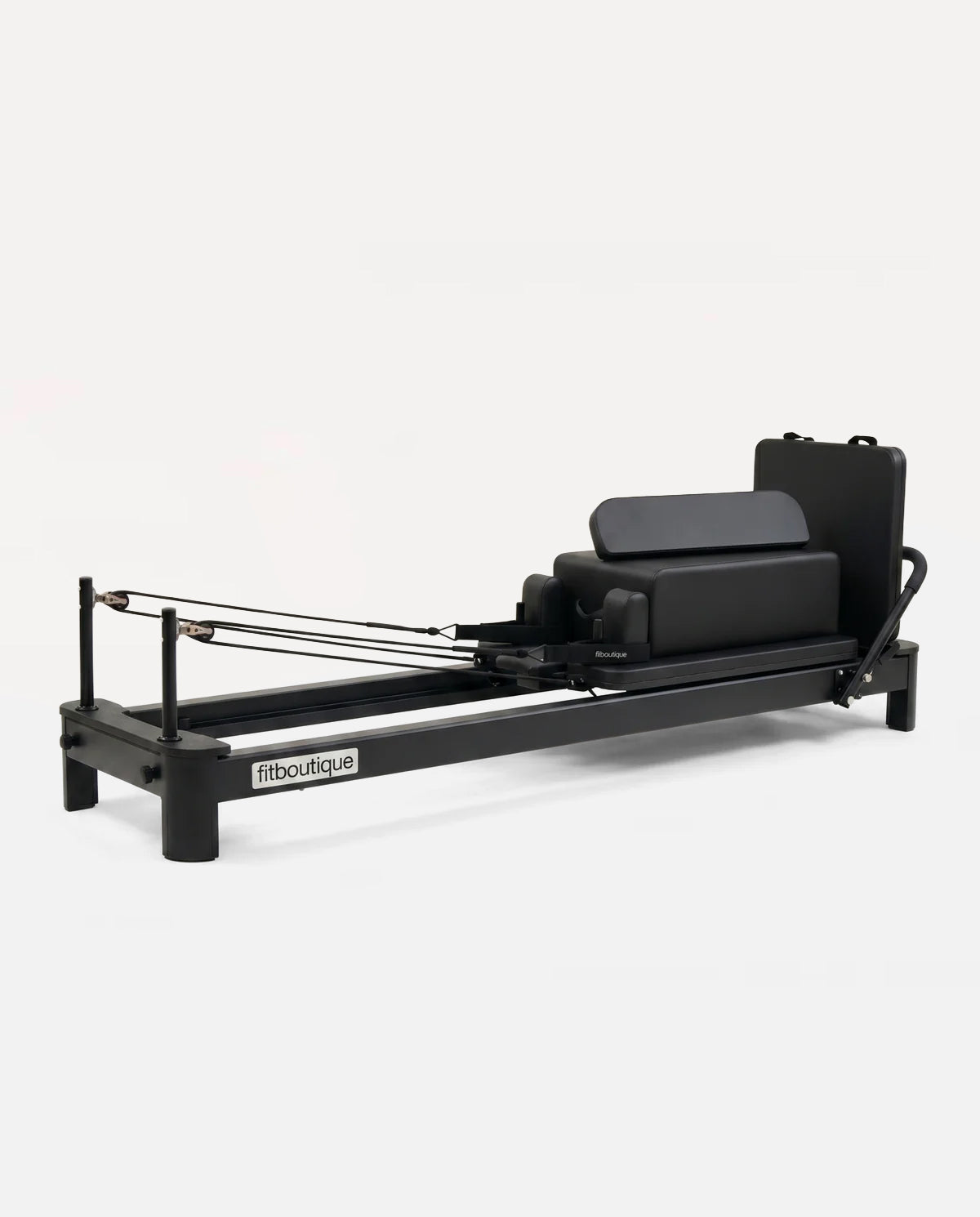
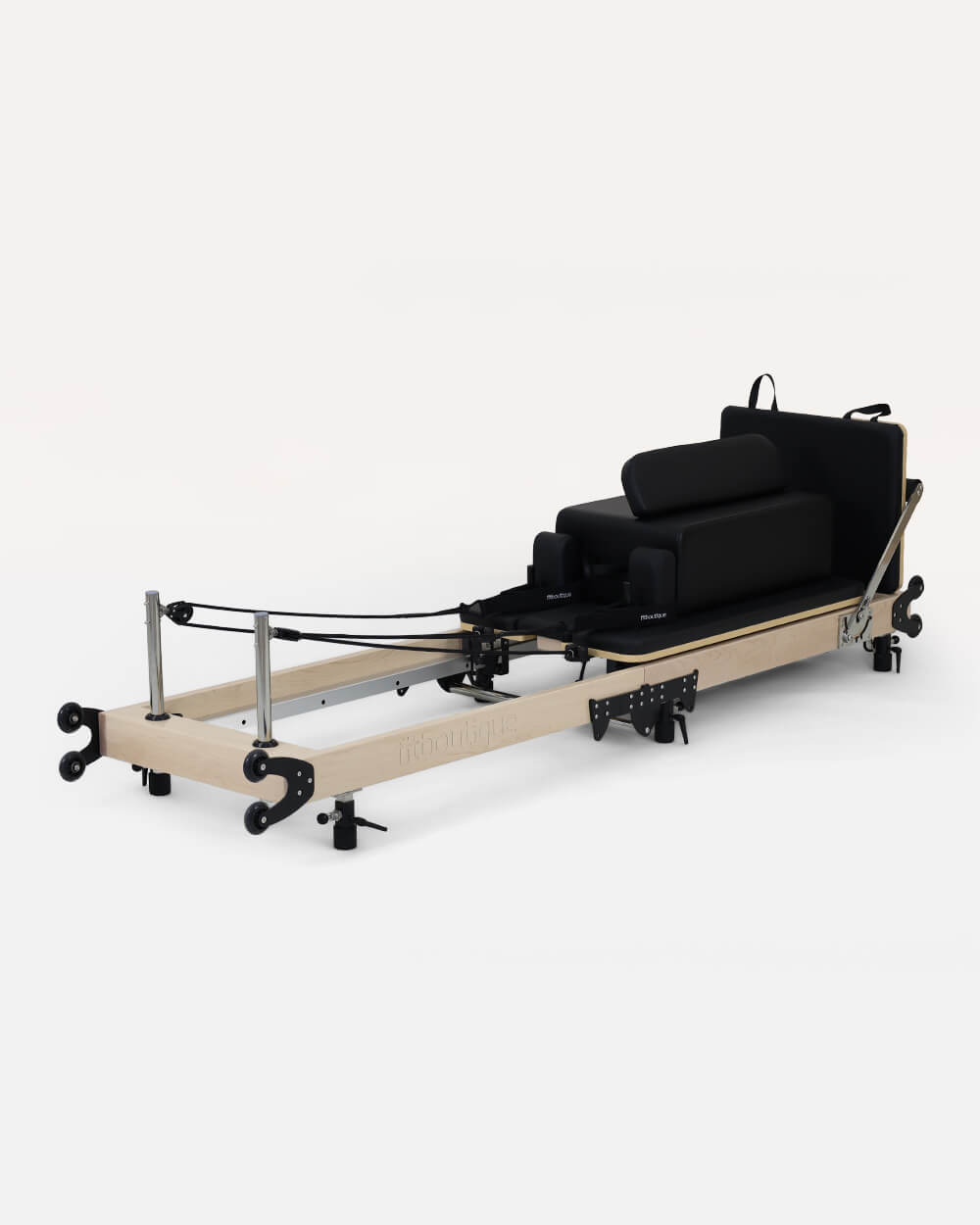
Onyx Reformer, $2,799. The fixed frame workhorse. All black, full aluminium, 6 springs, built for a permanent setup and the one most of our studios run. If the machine is never going to move, this is the one I would buy.
Onyx Fold Reformer, $2,499. The same look with a folding frame. It is 244 by 68 by 28 centimetres open, folds to 130 centimetres and stands upright on its wheels, and weighs 65 kilograms so one person can move it. This is the machine I train on at home.
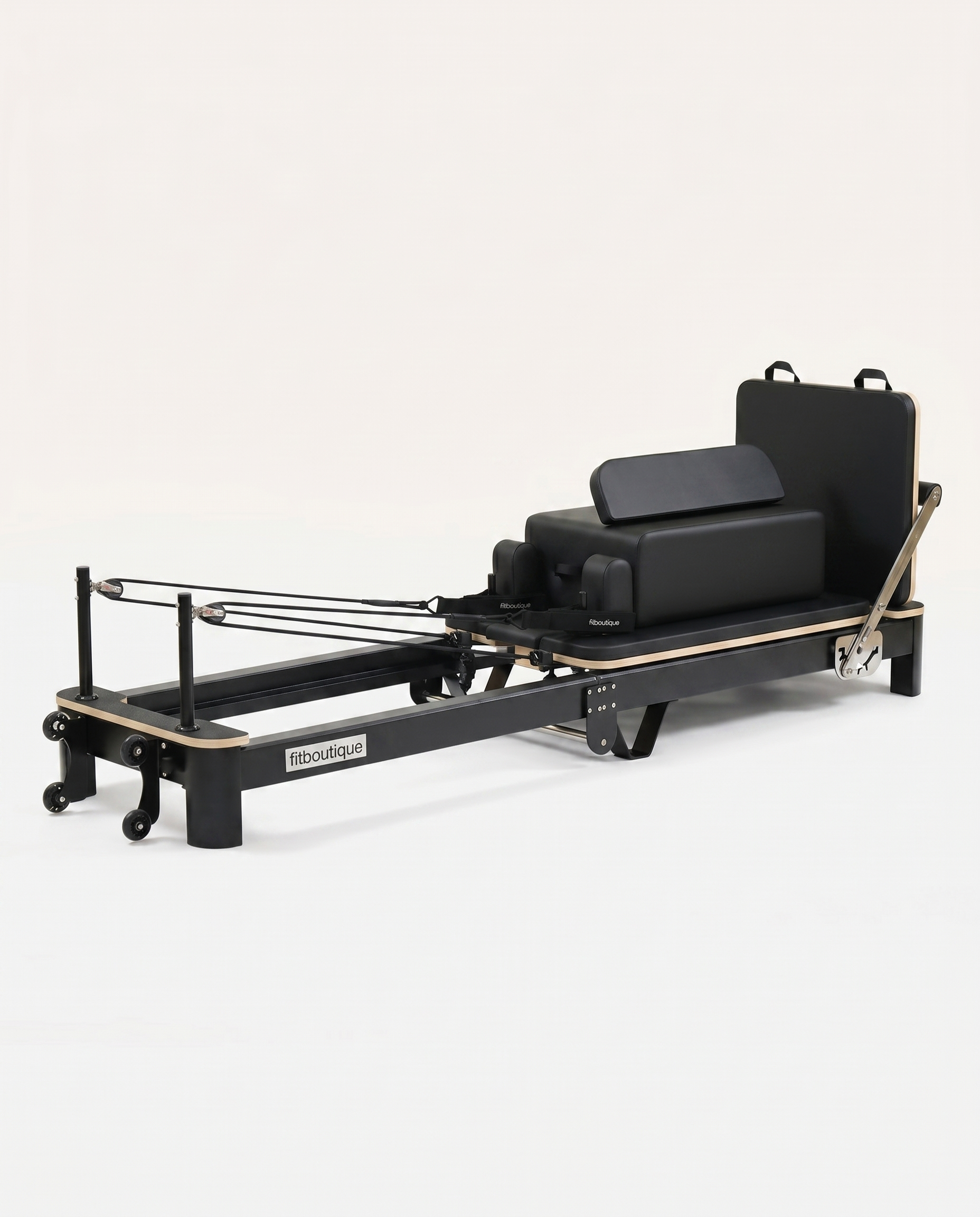
Ivory Reformer, $2,499. The Onyx Fold in ivory with beige upholstery. Identical frame, dimensions and spring system. It exists because a black machine can dominate a light room, and this one disappears into it.
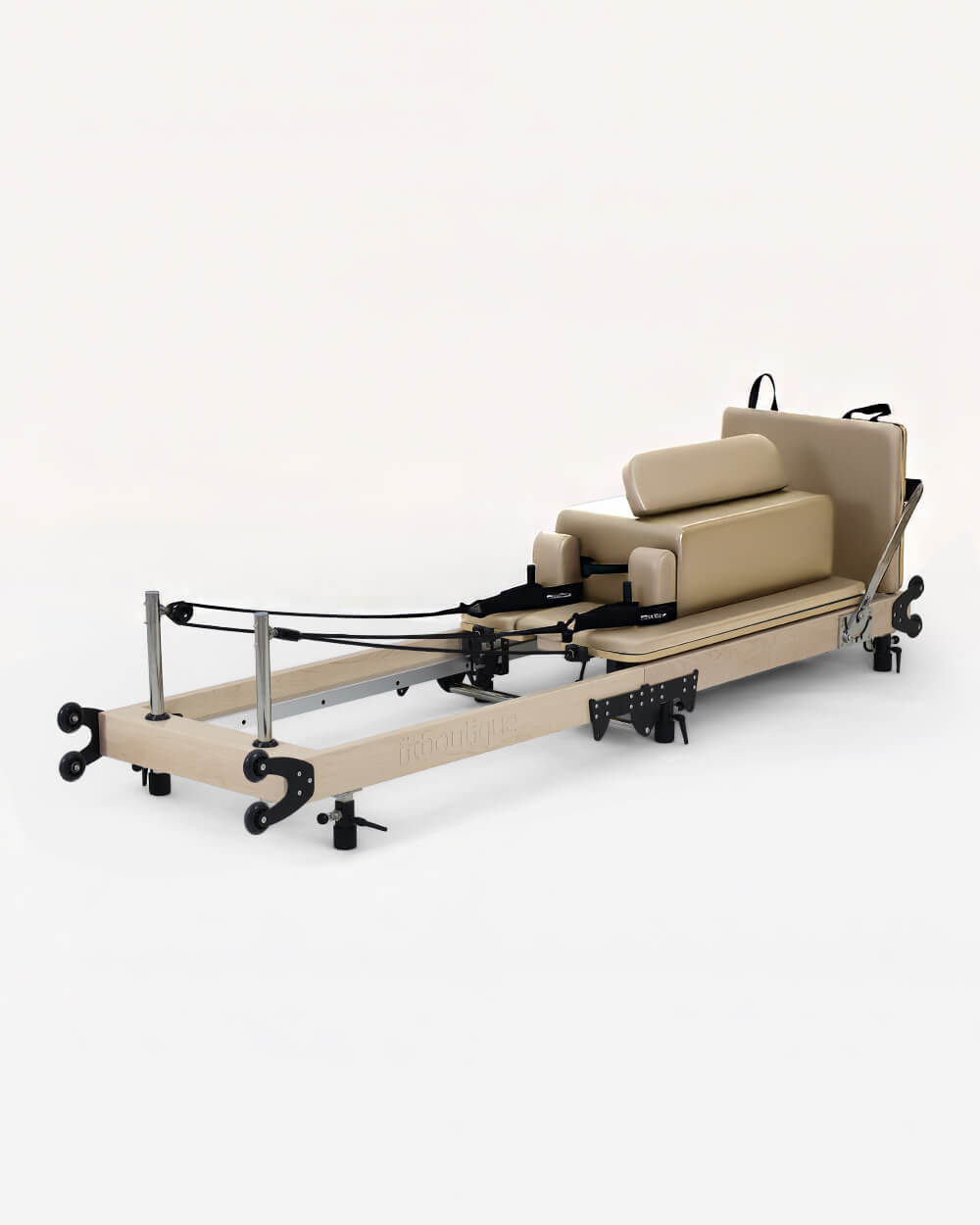
Maple Crest Reformer, $2,199. Full maple timber, foldable, 5 commercial grade springs, 234 centimetres long and 63 wide, folding to 129. It is the most affordable machine we make and the one visitors assume is the most expensive. If the reformer has to live in a room people sit in, this is the answer.
All 4 arrive fully assembled with a jumpboard and box included, free delivery Australia wide, a 5 year warranty and spare parts held in Melbourne. If you want the longer comparison including the studio machines, I wrote a full guide to which reformer fits your space and budget.

Starting out
Take a few classes first if you can, even if you intend to train at home. What a studio gives you that a machine does not is somebody watching your alignment, and a handful of sessions early is worth more than any amount of reading.
Then plan for 2 or 3 sessions a week rather than 5. The research on training frequency is clear that twice a week beats once for building muscle, and that your body is still adapting the day after a session, so a rest day between is doing work rather than wasting time.
Allow about a 2 by 3 metre zone for the machine, which covers the reformer plus room to get on and off from either side. Measure that before you order rather than after.
And give it 3 months before you judge it. The first fortnight changes how you feel, around 6 weeks is when other people start commenting, and about 12 weeks is where the change settles into something that stays. I have written about how long that timeline really takes and, for anyone who wants the physiology, why your body follows that schedule.
A Note From Ayrah
I spent a long time repeating the hospital bed story to customers before I ever checked it.
It is a great line. Prisoner of war camp, sick men who cannot get out of bed, an inventor pulling springs off the bed frames so they can exercise lying down, and a hundred years later the same idea is in my spare room. I must have said it 50 times.
Then I went and read the camp archive, and the archive says there is no confirmed evidence he ever worked in the hospital, and that the men mostly slept on wooden beds with no springs to take. The story comes from him, told decades afterwards, to a world that had already decided he was interesting.
What is documented is better anyway, and nobody tells it. He refereed boxing. There is a camp newspaper from January 1917 that records him running a 10 round bout and suspending a bloke for misbehaving. Three and a half years in a camp on the Isle of Man, and what survives in writing is a German physical training instructor keeping several thousand bored, frightened men moving.
That is the part I find genuinely moving, and it needs no embellishment. I stopped telling the bed spring story. I tell the boxing one now.
Frequently Asked Questions
What is a Pilates reformer?
A sliding padded carriage on rails, with adjustable spring resistance underneath, a footbar at one end and ropes and straps at the other. You lie, sit, kneel or stand on it and move the carriage against the springs. The design lets you load almost any movement with your spine supported and the resistance adjustable in small steps.
How long has Pilates been around?
Over a century. A US federal court reviewing the history found that Joseph Pilates began developing the method in or around 1914, which makes it 112 years old in 2026. The reformer itself is slightly younger and easier to date, because he filed the patent on 24 August 1925 and it was granted in March 1927.
Who invented the Pilates reformer?
Joseph Hubertus Pilates, born in Germany in 1883, died in New York in 1967. He called his method Contrology rather than Pilates, and he was still using that name in a letter he wrote in 1958. The machine was sold as the Universal Reformer, though his patent describes it more plainly as a "Gymnastic Apparatus".
Did he really invent it from hospital bed springs?
That is his own account, told decades later, and it is not documented. The archive that holds the internment camp records says there is no confirmed evidence he worked in the camp hospital, and notes that internees largely slept on basic wooden beds. What is on the record is that he supervised sport and refereed boxing in the camp, reported in the internees own newspaper in January 1917.
Why do lighter springs feel harder?
Because a lighter spring makes the carriage less stable, so your own muscles have to control it instead of the spring doing it for you. A 2024 study measuring muscle activity on a reformer found that lower spring resistance increased activation of the deep abdominal and spinal muscles during core exercises.
Is a reformer better than mat Pilates?
It is not better, it does more. The machine adds adjustable resistance, support for people who cannot work on the floor, and an unstable surface that recruits the stabilisers. Mat work is the better place to learn the vocabulary, and it costs nothing. Most people who do both would not give up either.
Will a reformer help me lose weight?
Not directly. It is not a large calorie burn compared with running or lifting. It builds lean muscle and changes how you carry yourself, so people often look noticeably different at 3 months while weighing the same. If weight loss is the goal, pair it with daily walking rather than expecting the machine to do it.
How much space does a reformer need?
Allow roughly a 2 by 3 metre zone, which covers the machine plus room to get on and off from the side. Our foldables are 244 centimetres long open and fold to about 130 centimetres, standing upright on their wheels, so the storage footprint is far smaller than the working one.
How often should I use it?
Two or 3 sessions a week for most people. Training research consistently shows twice a week beats once for building muscle, and your body is still adapting the day after a session, so rest days between are part of the work rather than time off.
Can beginners use a reformer?
Yes, and beginners often progress fastest because so much early improvement comes from coordination and posture. Take a few instructed sessions first if you can, so somebody experienced watches your alignment before it becomes a habit.
Bring One Home
Commercial grade reformers that arrive fully assembled, with German made springs, a jumpboard and box included, free delivery Australia wide and a 5 year warranty.
Compare Every Reformer
Written by Ayrah Yuso
I'm part of the FitBoutique team and have a solid passion (and love) for all things exercise related, including Reformer Pilates

















Leave a comment