


Article: Reformer Pilates For Osteoporosis
Reformer Pilates For Osteoporosis
Is reformer Pilates good for osteoporosis? It can be a very good part of the picture. It builds muscle strength, improves posture and balance, and lets you add resistance gradually. But it is not the whole answer for bone health, and a handful of classic Pilates exercises that round the spine forward should be changed or swapped if you have osteoporosis. Please speak with your doctor or a physio before you start, especially if you have had a fracture.
I am not a health professional, so this guide leans heavily on what the expert bodies actually recommend. My job here is to translate that into what it means on a reformer: what to keep, what to change, and how to make your sessions do more for your bones.
In this article
The short answer
Reformer Pilates is generally considered a helpful form of exercise for people with osteoporosis, with 2 important conditions. First, exercises that involve sustained, repeated or deep forward rounding of the spine should be modified or avoided. Second, it works best alongside progressive strength training and suitable impact exercise, rather than as your only bone exercise.
The reformer is particularly good for the strength, posture and balance side of things. Balance matters because preventing falls is one of the most practical ways to prevent fractures.

What the experts recommend
The clearest guidance I have found is the UK consensus statement Strong, Steady and Straight, developed with the Royal Osteoporosis Society. A few points stand out.
Exercise is encouraged, not feared. The statement says physical activity and exercise is not associated with significant harm, including vertebral fracture, and that people with osteoporosis should be encouraged to do more rather than less.
Strength training matters. It recommends progressive muscle resistance training on 2 or 3 days a week, building up to moderate or high intensity.
Impact matters too. It recommends moderate impact exercise, such as jogging or low level jumping, for people who can tolerate it, and lower impact options like brisk walking for people with vertebral fractures or multiple fractures.
Forward flexion should be adjusted. It advises that movements involving sustained, repeated or end range forward bending should be amended or avoided, and specifically suggests considering alternatives to Pilates exercises like the roll down and the curl up. Twisting is described as safe if done smoothly and comfortably.
Pilates has a place. The same statement suggests Pilates, yoga and similar programmes be considered to help with posture and pain, and recommends classes led by instructors trained to work with people with osteoporosis for those with vertebral fractures.
In Australia, Healthy Bones Australia sets out a similar prescription for people with osteoporosis: 3 exercise sessions a week combining progressive resistance training, progressive impact training and balance work, with higher intensity training supervised.
What the research says about Pilates and bone density
A 2021 meta analysis in PLoS ONE looked at Pilates and yoga for bone density in adult women, pooling 11 studies and 591 participants aged 45 to 78.
Compared with control groups, it did not find a significant improvement in bone mineral density. It did find a small positive change within the Pilates and yoga groups over time, and the authors suggested that simply maintaining bone density in postmenopausal women, who would otherwise be expected to lose bone, may itself be a worthwhile outcome.
My honest read is this. Pilates is not a proven way to build bone density on its own. It is a well supported way to build strength, posture and balance, and it may help hold on to what you have. That is why the expert guidance pairs it with heavier resistance and impact work rather than relying on it alone.
For a broader look at bones and reformer training, our post on reformer Pilates and bone health covers the general picture.
Exercises to modify or avoid
The common thread is forward rounding of the spine, especially under load, held for a while, repeated many times or taken to the end of your range. On a reformer, these are the ones I would talk through with your physio before doing as written.
- Ab curls and the hundred with the head lifted. Lifting the head and shoulders off the headrest rounds the upper spine forward, and these are usually repeated many times in a class.
- Roll downs and roll ups. Named directly in the consensus statement as exercises to find alternatives for.
- Rolling like a ball. Repeated rounding with body weight rolling through the spine.
- Short spine, long spine and similar overhead rolls. These take the spine into deep loaded flexion with the legs overhead.
- Deep forward folds on the box or seated. Seated round back work and spine stretch forward taken to the end of range. Keep the spine long and hinge from the hips instead.
- Anything forced into a twist. Smooth, comfortable rotation is described as safe. Pushing a twist hard with momentum or load is a different thing.
If you have had a vertebral fracture, get individual advice before doing any of these, and ideally train with an instructor experienced in osteoporosis.
Reformer exercises that suit osteoporosis
There is still a huge amount you can do. These keep the spine in a long, neutral position while working the muscles that matter.
Footwork. Lying with the head down, pressing the carriage out with the legs. Great for the legs and hips with a neutral spine.
Hip lifts in neutral. Lift the hips as a single unit rather than peeling the spine up bone by bone, with the feet on the footbar.
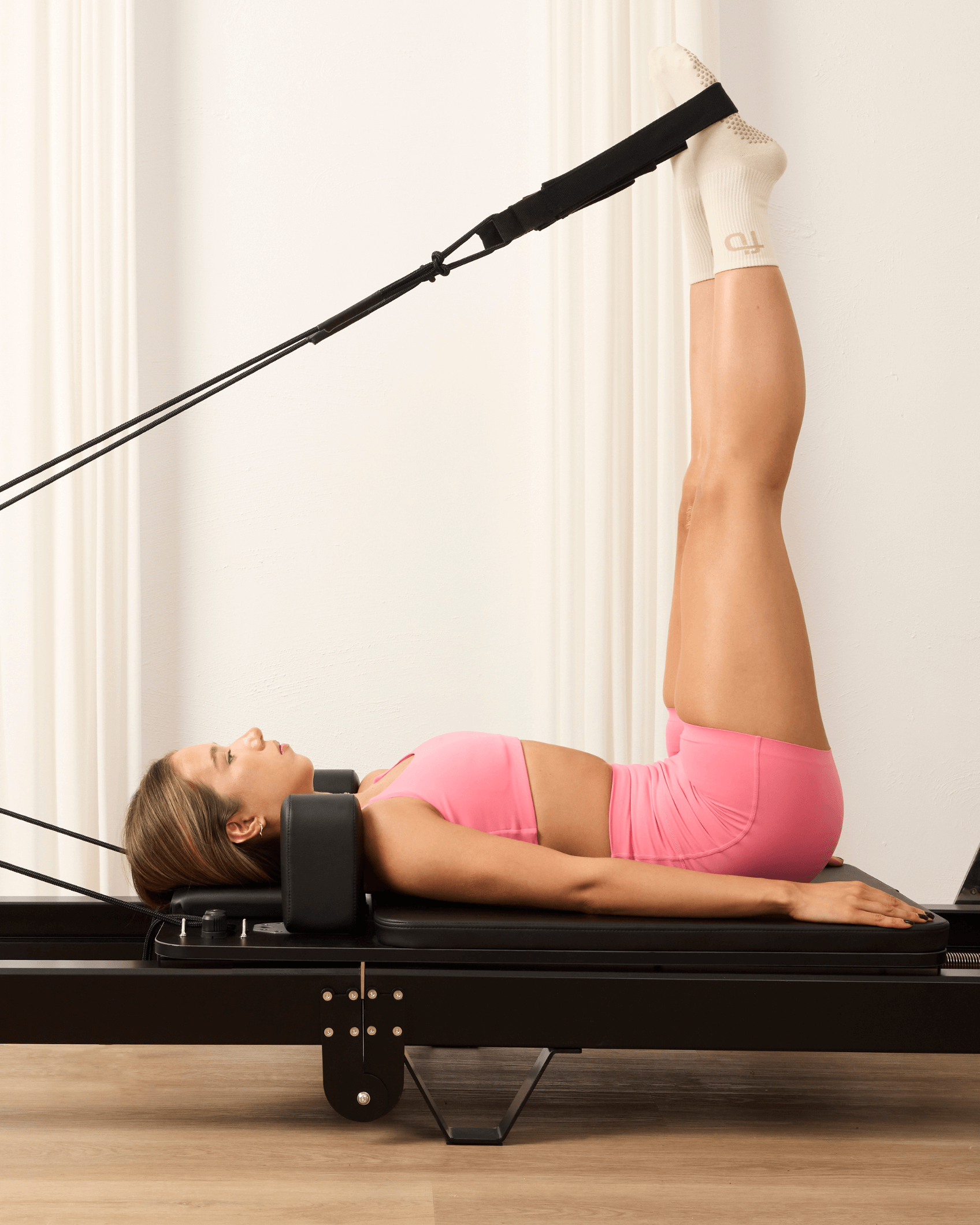
Feet in straps with the head down. Leg circles, frogs and openings work the hips and inner thighs without lifting the head.
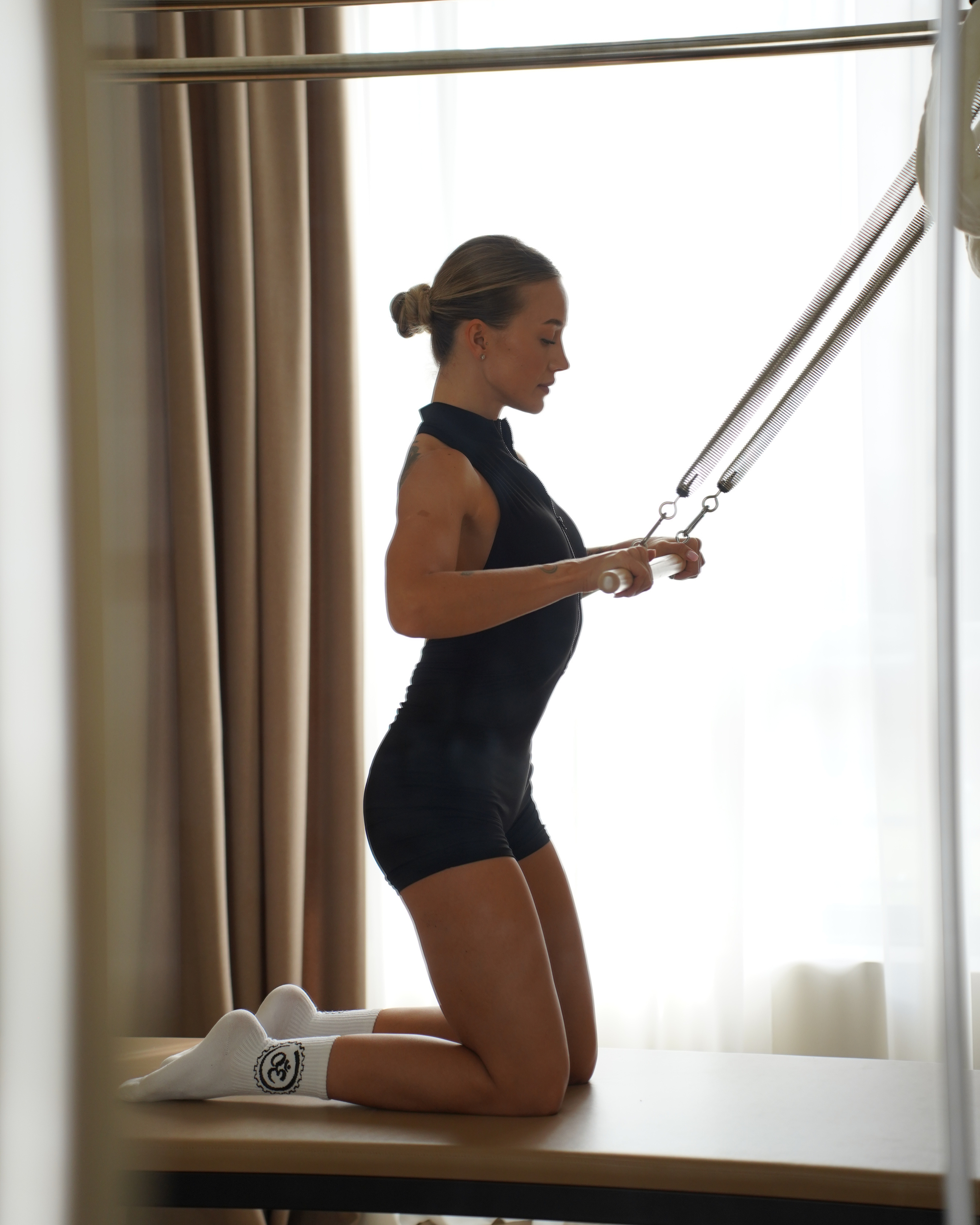
Rowing and arm work with a tall spine. Seated or kneeling, sitting tall rather than rounding, to strengthen the upper back and shoulders. Strong back extensors support posture.
Back extension work. Lying face down on the box and gently pulling the straps or lifting the chest to work the back muscles, within a comfortable range.
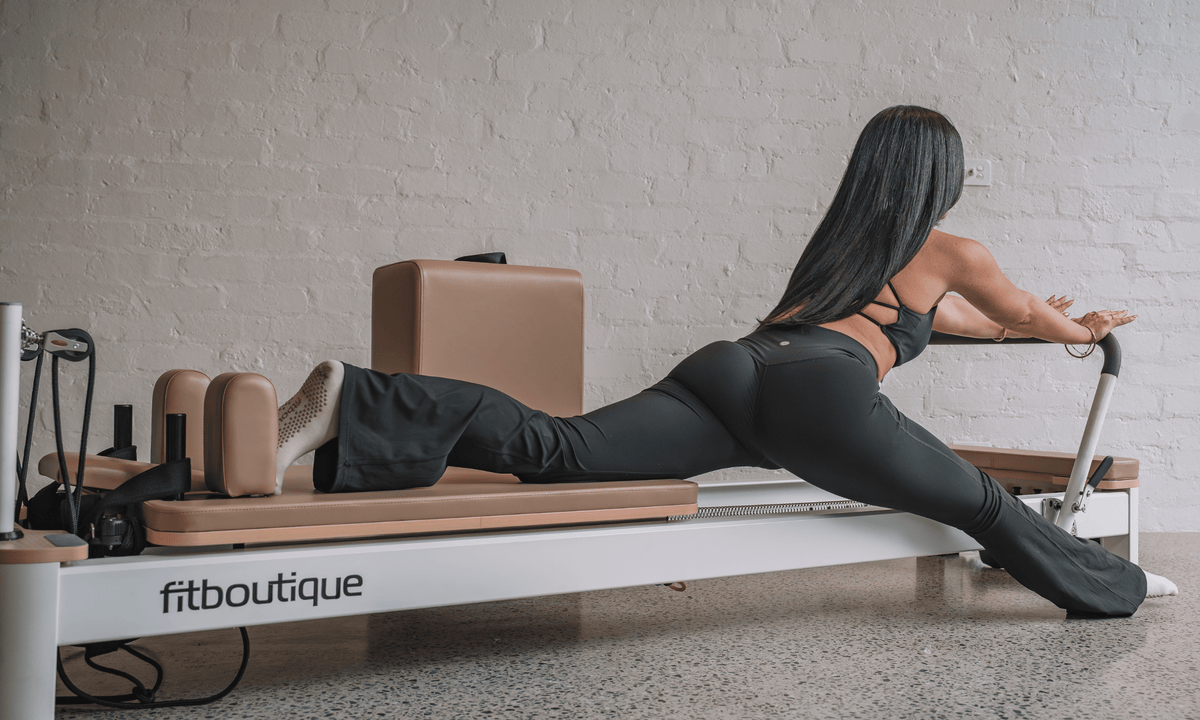
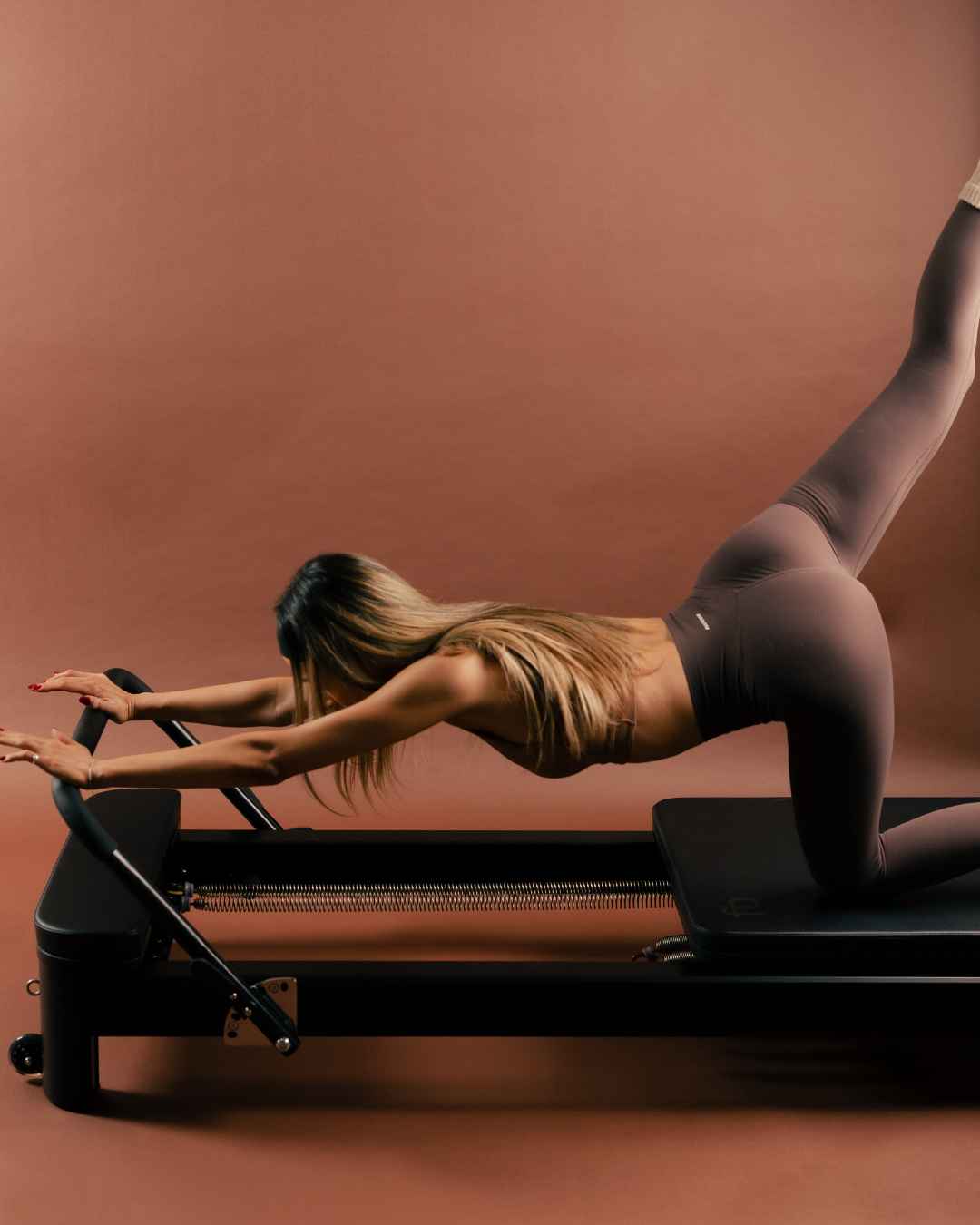
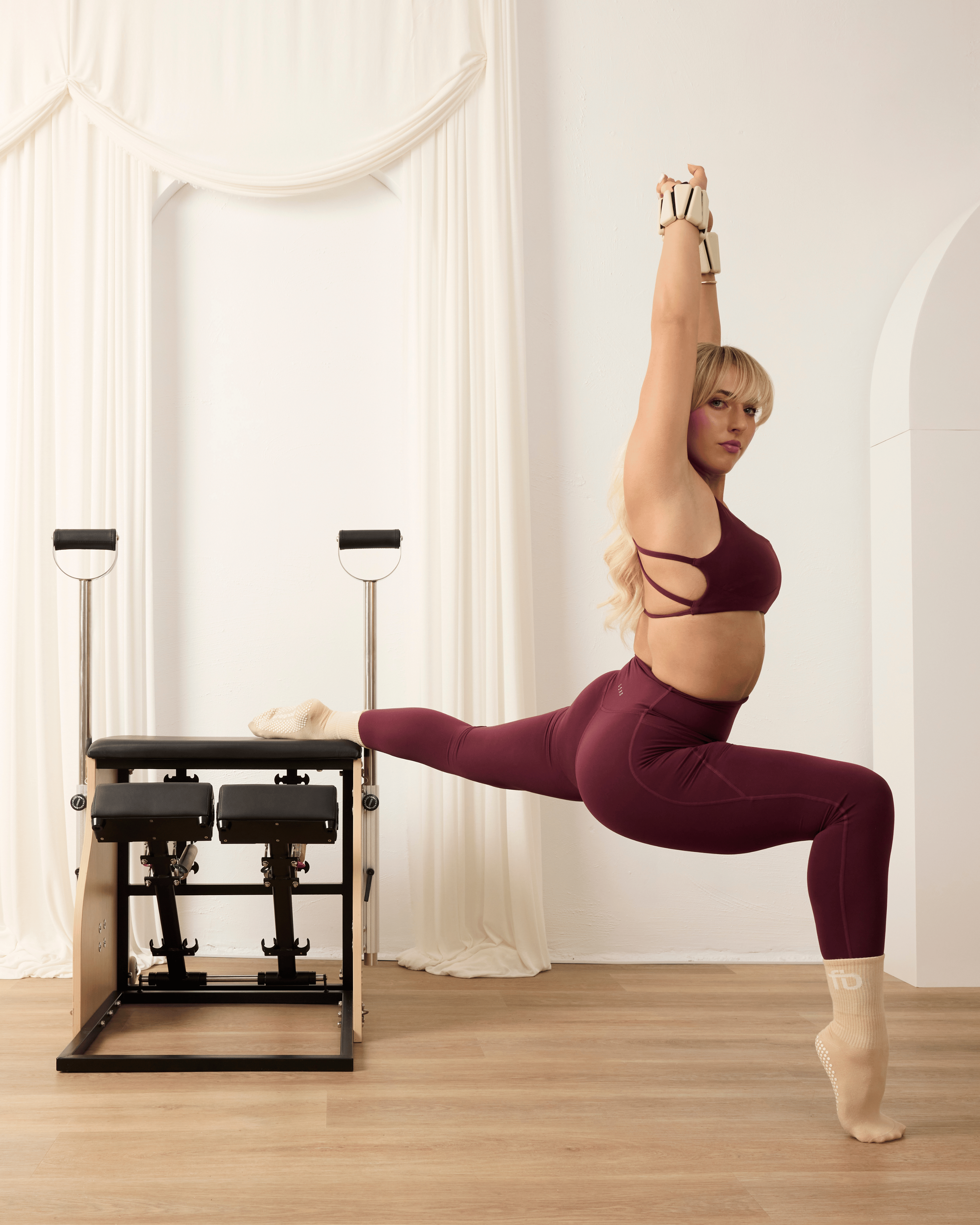
Standing and kneeling work. Standing side splits, lunges and kneeling arm work add balance challenge and load through the legs and hips. Use a hand support until you are steady.
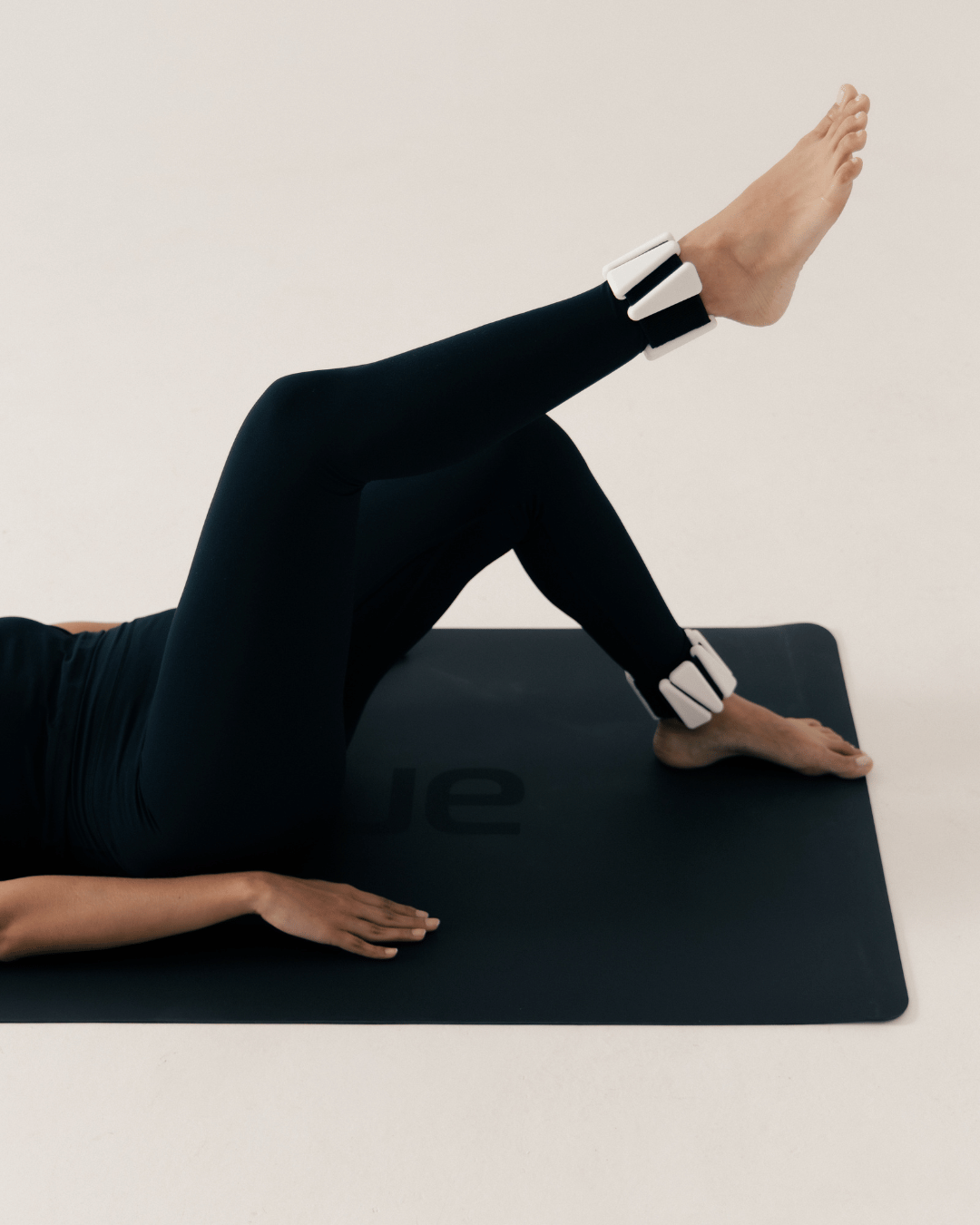
Side lying leg work. Hip and glute strength without any spinal flexion.
For ideas on building your sessions around exercises like these, our guide to reformer Pilates in your 50s and our post on reformer Pilates through perimenopause and menopause are good next reads.
How to make your reformer sessions do more for your bones
Make it genuinely challenging. The guidance points to moderate to high intensity resistance for bone. On the reformer, that means springs heavy enough that the final reps of a set are hard while your form holds. Our guide to Pilates reformer spring settings explains how to judge it.
Add standing work. Much reformer work is done lying down. Standing exercises put load through the hips and spine the way daily life does and challenge your balance at the same time.
Pair it with impact and heavier strength work. If your physio or doctor agrees, add suitable impact exercise and progressive strength training on other days. The reformer then becomes your strength, posture and balance base.
Get on and off carefully. Kneel or sit on the carriage first and move slowly. Falls are a bigger risk than any exercise, so take your time with transitions.
Get supervised help early. A physio or instructor experienced with osteoporosis can tailor your exercises and spring settings, then you can keep training at home with confidence.
A Note From Ayrah
The simplest change I would make for anyone with osteoporosis is this: keep your head down.
So much reformer ab work starts with lifting the head and shoulders off the headrest, and that is exactly the forward curl the guidance says to avoid. Leaving your head resting on the headrest and doing the leg part of the exercise, legs in tabletop, slow toe taps, leg lowers within control, still works the deep abdominals hard.
You keep almost all of the benefit, you lose most of the flexion, and you do not need to learn a whole new set of exercises to do it.
Frequently Asked Questions
Is reformer Pilates good for osteoporosis?
It can be a helpful part of your exercise, particularly for strength, posture and balance. Expert guidance recommends modifying exercises that round the spine forward and pairing Pilates with progressive strength and suitable impact training. Speak with your doctor or physio first.
What Pilates exercises should you avoid with osteoporosis?
Exercises with sustained, repeated or deep forward rounding of the spine, such as roll downs, curl ups, the hundred with the head lifted, rolling like a ball and overhead rolls like short spine. Forced or loaded twisting should also be approached with care.
Can reformer Pilates increase bone density?
The evidence does not show that Pilates on its own significantly increases bone density. A 2021 meta analysis found no significant improvement compared with control groups, though it may help maintain bone density. Progressive resistance and impact training have a stronger role for bone.
Is the reformer safer than mat Pilates for osteoporosis?
The reformer lets you adjust resistance precisely and offers support through the carriage and straps, which many people find helpful. The same rule applies to both: avoid deep or loaded forward rounding of the spine.
How often should I exercise if I have osteoporosis?
Healthy Bones Australia suggests 3 sessions a week that combine progressive resistance training, impact training and balance work. The UK consensus recommends muscle strengthening on 2 or 3 days a week. Your physio can tailor this to you.
Can I do reformer Pilates after a spinal fracture?
Only with individual advice from your doctor or physio. The UK consensus recommends classes led by instructors trained to work with people with osteoporosis for anyone with vertebral fractures.
Is it safe to twist on the reformer with osteoporosis?
The UK consensus describes rotation as safe when it is done smoothly and comfortably. Avoid forcing a twist with momentum or heavy load.
Train Strong, Train Safely
Adjustable spring resistance, a supportive carriage and room to progress at your own pace, at home.
Compare Every Reformer
Written by Ayrah Yuso
I'm part of the FitBoutique team and have a solid passion (and love) for all things exercise related, including Reformer Pilates

















Leave a comment