





How Reformer Pilates Changes Your Muscles: The Science
I have written 2 pieces on this blog about when reformer Pilates results show up. Feel it in about 2 weeks, see it at about 6, settled by 3 months. I wrote those from experience, mine and the people I train with, and I stand by them. But after the second one went up I had a slightly uncomfortable thought, which was that I did not actually know why the timeline looked like that. I knew it was true. I could not have told you what was happening inside a muscle in week 2 that was different from week 6.
So I spent a couple of weeks reading. Not blog posts, the actual research, going back as far as the 1970s and forward to reformer specific trials published in the last year. What follows is what I found, written for people who train rather than people who publish. I have linked every study so you can check me, and where the evidence is thin or mixed I have said so, because a science post that only quotes the flattering findings is just marketing with footnotes.
The short version is that the timeline is not a Pilates thing. It is a muscle thing. Your nervous system, your muscle fibres, your deep stabilisers and your connective tissue all adapt on their own clocks, and the results you see are those clocks running in sequence.

In this article
- The timeline, and what is happening at each stage
- Weeks 1 to 2: your nervous system learns first
- Why you are sore, and why it stops
- The deep core switches back on
- Weeks 3 to 6: the muscle itself starts to grow
- Why light springs still build muscle
- Why the scales lie to you
- Months 3 and beyond: what the Pilates research shows
- Why 2 to 3 sessions a week is the number
- What happens when you stop
- It is never too late to start
- What all of this means for how you train
- Frequently asked questions
The timeline, and what is happening at each stage
Here is the map for the rest of the article. Each stage below has its own section with the research behind it.
- Weeks 1 to 2. Your nervous system adapts. You get stronger and more controlled before your muscles have grown at all, because your brain learns to recruit more of the muscle you already have and fire it more efficiently. This is the science behind feeling different while looking the same.
- Weeks 1 to 3. Your deep stabilisers switch on. The small muscles that hold your spine and pelvis still, which most of us have stopped using properly, start firing on time again. This is where posture comes from, and it is why other people notice before you do.
- Weeks 3 to 6. Muscle fibres start to grow. Measurable growth in muscle cross section appears from about week 3 and becomes clearly visible in the studies by weeks 5 to 8. This is the stage where the mirror starts to cooperate.
- Weeks 8 to 12. The growth is real and the habit is built. Early size gains include some swelling. By around week 10 the research shows growth at the level of individual fibres, which is the change that lasts. Most Pilates trials run 8 to 12 weeks for exactly this reason.
- Beyond 3 months. Durability. Muscle acquires a kind of memory that makes regained strength faster than first time strength, and consistency, not intensity, is what the frequency research rewards.
Weeks 1 to 2: your nervous system learns first
This is the finding that explains the most, and it is nearly 50 years old.
In 1979, Toshio Moritani and Herbert deVries published a study in the American Journal of Physical Medicine that followed people through 8 weeks of strength training and measured 2 things separately: how much stronger they got, and how much their muscles grew. The 2 did not move together. In the early weeks, strength went up while muscle size barely moved. Their conclusion was that neural factors accounted for most of the early strength gain, and that muscle growth only became the dominant factor after the first 3 to 5 weeks.
What "neural factors" means in practice is that your brain gets better at using the muscle you already have. Digby Sale summarised the mechanisms in a 1988 review in Medicine and Science in Sports and Exercise: training teaches the nervous system to activate more of the muscle at once, to fire it faster, and to coordinate the muscles around a movement so they stop fighting each other. That last one is the reformer in a sentence. Most of what feels like weakness in your first sessions is muscles that have not learned to work together yet.
The modern version of this research is more precise about the timeline. In 2019, a team led by Alessandro Del Vecchio and Dario Farina published a study in The Journal of Physiology that recorded individual motor units, the nerve cells and the fibres they control, before and after just 4 weeks of training. After 4 weeks, motor units were being recruited at lower thresholds and firing faster, and the whole of the strength gain in that period could be explained by those changes in the nervous system rather than by any change in the muscle itself. A 2021 review in the European Journal of Applied Physiology from Jakob Škarabot and colleagues confirms the picture: the initial increase in force with resistance training is attributed to neural adaptation, even though the exact location of the change, brain, spinal cord or both, is still debated.
The Victorian Government says the same thing in plainer language on its Better Health Channel: most of your initial increase in strength is due to neural adaptation, where the nerves servicing the muscles change their behaviour before the muscle grows.
So when you feel taller after 3 sessions, when the carriage stops wobbling in week 2, when an exercise that felt like chaos suddenly feels like something you are doing on purpose, that is not imagination and it is not muscle. It is your nervous system learning the reformer. It is real progress, it is the foundation for everything after it, and it is invisible in a mirror, which is exactly why week 2 and 3 are when people wrongly decide nothing is happening.

Why you are sore, and why it stops
The other thing week 1 delivers is soreness in places you did not know were places. The inner thighs after footwork, between the shoulder blades after strap work, the sides of the waist. It is worth knowing what that actually is, because a lot of what people believe about it is wrong.
It is not lactic acid. That idea has been dead in the research for decades. Robert Armstrong laid out the mechanism in a 1984 review in Medicine and Science in Sports and Exercise: delayed onset muscle soreness is pain and stiffness appearing 1 to 5 days after unaccustomed exercise, caused by tiny structural damage to muscle fibres under high tension, particularly the lengthening part of a movement, followed by an inflammatory response that sensitises the nerve endings in the muscle. The Cleveland Clinic puts it simply: it starts 1 to 3 days after a workout, rarely lasts more than 5 days, and comes from tiny tears in the fibres.
On a reformer the lengthening phase is everywhere. Every time the carriage returns under spring tension and you control it back rather than letting it slam, your muscles are working while they lengthen. That is why a session that felt gentle can leave you sore 2 days later, and it is the same mechanism that makes reformer work so good at building control.
The reassuring part is what happens next. A 2017 review in Exercise and Sport Sciences Reviews co authored by Professor Kazunori Nosaka at Edith Cowan University in Perth describes the repeated bout effect: after one exposure to a damaging exercise, the muscle adapts in several ways that protect it from the same damage next time. In plain terms, the soreness of week 1 is a one off. Doing the same movements in week 2 produces far less of it, and by week 3 it has largely gone. If you are still badly sore in week 4 you have changed something, added springs or a new exercise, rather than failed to adapt.
One more thing the research is clear on, which I did not want to hear: soreness is not a measure of a good session. It measures novelty, not progress. The best sessions I have now leave me almost nothing the next day, and the science says that is the point.
The deep core switches back on
Everyone in Pilates talks about the core. Almost nobody explains what they mean by it, so here is the research, and most of it comes from Brisbane.
In 1996, Professor Paul Hodges and Carolyn Richardson at the University of Queensland published a study in Spine comparing people with lower back pain to people without. They measured the timing of the transversus abdominis, the deepest abdominal muscle, which wraps around the waist like a corset. In people without back pain, it fired before the arm moved, in every direction, to brace the spine ahead of the load. In people with back pain it fired late, every time. A 1997 study in Physical Therapy found the same pattern with leg movements: in healthy people the transversus abdominis was invariably the first muscle active, before the leg had even begun to move, and a 1998 paper in the Journal of Spinal Disorders confirmed the delay in people with pain.
That is the core. Not a 6 pack, and not how many crunches you can do. It is whether the muscles that stabilise your spine fire a fraction of a second before you move, automatically, without you thinking about it. When that timing is right, your spine is braced before the load arrives. When it is late, the load arrives first.
The companion muscle is the multifidus, a set of small muscles running along the spine. Julie Hides and colleagues, also at Queensland, showed in a 1996 study in Spine that after a first episode of back pain the multifidus wastes, and does not recover on its own even when the pain goes away. People who did specific stabilising exercise recovered it. People who did not were still down at 10 weeks. Their 2001 follow up is one of the more striking numbers in the whole field: a year on, 30% of the exercise group had another episode of back pain, against 84% of the group who had not trained those muscles.
What this has to do with the reformer is direct. Reformer exercises are built around exactly this: holding the spine and pelvis still while the limbs move against a load, on a surface that moves. That is a transversus abdominis and multifidus timing drill, whether or not anyone calls it that. And a 2024 study in the journal Healthcare measured what happens when you change the springs during core exercises on a reformer: lighter springs, which make the carriage less stable, increased activation of the rectus abdominis, internal oblique, erector spinae and multifidus. Less spring, more core. That is the mechanism behind the thing every reformer instructor tells you and nobody believes at first, which is that lighter is harder.
This is also the answer to why other people notice your posture before you notice anything. Once those deep muscles fire on time again, you carry yourself differently without deciding to. It happens in the first 2 or 3 weeks, and it reads as taller and leaner even when nothing else has changed yet.

Weeks 3 to 6: the muscle itself starts to grow
Now the second clock. While your nervous system has been learning, your muscle fibres have been quietly responding, and from about week 3 that response becomes measurable.
The cleanest study of the early timeline is by Olivier Seynnes, Maarten de Boer and Marco Narici, published in the Journal of Applied Physiology in 2007. They trained people 3 times a week for 35 days and scanned their thigh muscles as they went. Significant growth in muscle cross section appeared after 20 days. By day 35 the muscles were 6.5% to 7.4% larger in cross section and strength was up nearly 39%. Three times a week, 5 weeks, measurable muscle.
A 2011 study by Jason DeFreitas and colleagues in the European Journal of Applied Physiology scanned people every week for 8 weeks and found something important about the very early numbers. Muscle cross section rose after just 2 sessions, but that early increase was almost certainly swelling rather than growth. Once they accounted for it, true growth appeared around weeks 3 to 4, which was also the first week with a significant strength increase from the muscle itself. Over the full 8 weeks the muscles grew by about 9.6%.
Then there is the 2016 study that changed how I think about all of this. Felipe Damas, working with Professor Stuart Phillips at McMaster University, published in The Journal of Physiology a careful separation of swelling from real growth. In the first weeks, muscles looked bigger on ultrasound partly because they were inflamed. Muscle protein synthesis, the process that actually builds new muscle, was highest in week 1, but in week 1 it was not building anything, it was repairing damage. It was only at week 3, once the damage response had settled, that protein synthesis started to correlate with growth, and only by week 10 did they see a significant increase in the size of individual muscle fibres.
Put those 3 studies side by side and you have the middle of the timeline. Week 1 is repair. Week 3 is where building starts. Weeks 5 to 8 is where it becomes visible. Week 10 is where it is real at the level of the fibre. Which is, to within a week, what I have been telling people from experience.
The mechanism at the fibre level, for those who want it: muscle fibres are repaired and enlarged by satellite cells, which sit dormant on the fibre and are activated by training. John Folland and Alun Williams note in their 2007 review in Sports Medicine that satellite cells are activated in the very early stages of training and that hypertrophic processes begin at the onset, even though the neural changes dominate what you can measure at first. The growth is starting in week 1. You just cannot see it yet.

Why light springs still build muscle
The objection I hear most from people who lift weights is that a reformer cannot build muscle because the load is too light. Ten years ago the research would have half agreed with them. It does not now.
In 2012, Cameron Mitchell and Stuart Phillips at McMaster University published a study in the Journal of Applied Physiology with a blunt title: resistance exercise load does not determine training mediated hypertrophic gains in young men. They had people train for 10 weeks at either 30% or 80% of their maximum, working to the point where they could not do another repetition. Measured by MRI, the light load group grew their muscles by 6.8%, the heavy load group by 7.2%, and the difference was not statistically significant. Light and heavy built the same muscle, provided the set was taken close to the point of failure.
Brad Schoenfeld at Lehman College then pooled 21 studies in a 2017 meta analysis in the Journal of Strength and Conditioning Research and reached the same conclusion: changes in muscle size were similar between low and high loads, and hypertrophy can be achieved across the full spectrum of loading. Heavy loads were better for one thing, which is lifting the heaviest possible weight once. If your goal is muscle, tone and strength you can use, the load matters far less than the effort.
The reformer adds something else, which is time under tension. A 2012 study led by Nicholas Burd in The Journal of Physiology compared a slow tempo, 6 seconds out and 6 seconds back at 30% of maximum, with a fast tempo doing the same total work. The slow version produced a greater muscle building response over the following 24 to 30 hours. Slow, controlled, light and close to fatigue is a description of a well taught reformer set. It turns out it is also a description of what the research says builds muscle.
The springs themselves behave differently from a weight, and there is biomechanics research on this too. A weight is the same load at every point of a movement. A spring gets harder the further you push the carriage, and a 2011 study in the Brazilian Journal of Physical Therapy measured how that plays out in a Pilates hip extension: the resistance from the spring peaked at a different joint angle from the point where the muscle was working hardest. Jefferson Loss and colleagues, whose lab did that work, also published EMG analysis of reformer exercises showing that simply changing where a spring attaches shifts which muscles do the work, with the multifidus more active on a high attachment and the obliques more active on a low one. That is why the same footwork on a different spring feels like a different exercise. It is a different exercise.
There is a caveat here I want to be honest about. Nobody has published a peer reviewed force curve for a commercial reformer spring, so the numbers you see quoted for how many kilograms a spring equals are manufacturer figures, ours included. What the research does show is that the resistance varies through the movement and that the muscle building effect of light load depends on effort, and both of those you can feel for yourself.
Why the scales lie to you
This one is short because the numbers do the work.
Human skeletal muscle has a density of about 1.06 grams per cubic centimetre, a figure that has been standard since the 1960s and was confirmed by Samuel Ward and Richard Lieber in the Journal of Biomechanics in 2005. Fat tissue, measured directly in a 1994 study in the International Journal of Obesity, comes in between 0.925 and 0.97. Muscle is denser. A kilogram of it takes up noticeably less room than a kilogram of fat.
So if 3 months of reformer work replaces some fat with some muscle, which is what the trials show it does, you can end up smaller at exactly the same weight. Kylie Rogers and Ann Gibson ran an 8 week Pilates study published in 2009, 3 sessions a week, and measured a 2.7 centimetre reduction in waist circumference alongside a 1.2% drop in body fat. A 2025 randomised trial in Scientific Reports, reformer specific this time, had women train 3 times a week for 8 weeks and found significant improvements in body fat percentage, muscle mass, grip strength and every measure of trunk endurance they tested.
If the scales are the only instrument you are using, you are measuring the one number that is designed not to move. Use a tape, use photos, use your springs.

Months 3 and beyond: what the Pilates research shows
Everything above is muscle science that applies to any resistance training. Here is what the trials that used Pilates specifically have found, including the mixed results, because there are some.
The most cited 12 week study is June Kloubec's 2010 randomised trial in the Journal of Strength and Conditioning Research. Fifty adults did an hour of Pilates twice a week for 12 weeks. Abdominal endurance, upper body endurance and hamstring flexibility all improved significantly. Balance and posture did not reach significance in that study, which I mention because it is the kind of result that gets left out.
The posture evidence is better in other trials, but it is modest and I would rather you know that. A 2010 study from McGill University in Clinical Biomechanics found that 12 weeks of Pilates reduced the rounding of the upper back during sitting and improved abdominal strength. A 2009 University of Melbourne study in Spine found small improvements in spinal posture in adults over 60 after 10 weeks, twice a week, that faded once they stopped. So the honest summary is that Pilates can modestly improve upper back posture over 10 to 12 weeks, and the improvement lasts as long as you keep training. That matches what I see. It does not match the before and after photos on Instagram.
The reformer itself has been studied less than mat work, but the studies that exist point the same way. A 2017 pilot study in the Journal of Bodywork and Movement Therapies found significant strength gains in the scapular stabilisers and lumbar extensors after 12 weeks of reformer training, which are the muscles between your shoulder blades and along your lower back, and precisely the ones that go quiet in a desk job. The 2025 reformer trial in Scientific Reports I mentioned above is the most complete recent evidence, and it found improvements across body composition and trunk endurance in 8 weeks.
For back pain, the picture is clear at one level and unclear at another. A 2015 Cochrane review, led by Tiê Yamato with Professor Chris Maher at the University of Sydney, pooled 10 trials and concluded that Pilates is probably more effective than minimal intervention for pain and disability in the short and medium term. An Australian systematic review by Cherie Wells and colleagues, published in PLOS ONE in 2014, found the same benefit over usual care between 4 and 15 weeks. What neither review found was that Pilates beats other forms of exercise. It works. So does other well designed exercise. What the Queensland research says is that the specific thing Pilates trains, deep stabiliser timing, is the specific thing that goes wrong.
And a broad systematic review of Pilates in healthy people, published in the Archives of Physical Medicine and Rehabilitation in 2011, rated the evidence as strong for flexibility and dynamic balance and moderate for muscular endurance, while noting that the quality of many Pilates trials is not high. That is a fair criticism of the field, and it is why I have leaned on the muscle physiology research above, which is far larger and more rigorous, to explain the timeline rather than on Pilates trials alone.

Why 2 to 3 sessions a week is the number
I have said in both timeline posts that once a week maintains and 2 to 4 times a week builds. Here is why.
Brad Schoenfeld again, with a 2016 meta analysis in Sports Medicine on training frequency and muscle growth. Across 10 studies, training a muscle twice a week produced meaningfully more growth than once a week even when the total amount of work was the same. The recommendation was that major muscle groups be trained at least twice a week to maximise muscle growth. A 2018 analysis of 22 studies by Jozo Grgic and colleagues found that for strength specifically, once the total work was equal, frequency mattered less, which is a useful nuance: what matters most is that the work gets done, and 2 or 3 sessions is simply the most reliable way to get it done.
The reason a rest day helps is in a 1995 study by Duncan MacDougall and colleagues, who measured how long muscle protein synthesis stays elevated after a hard session. It was up around 50% at 4 hours, roughly doubled at 24 hours, and had come back close to baseline by about 36 hours. Your muscle is still building the day after you train. Training the same muscles hard every single day interrupts that. This is why every day is not faster than 4 times a week, and why the Mayo Clinic advises resting a full day between sessions for the same muscle group.
There is also a dose response. A 2017 meta analysis by Grant Ralston and colleagues found that strength gains rose with weekly volume, from fewer than 5 sets a week up through 10 or more, with the biggest jump between the lowest dose and the middle one. Doing something is far better than nothing. Doing a bit more than something is better again, with diminishing returns after that.
The Australian Government's physical activity guidelines recommend muscle strengthening activity on at least 2 days each week. According to the Australian Institute of Health and Welfare, only around 4 in 10 Australian adults meet that. If you are on a reformer 2 or 3 times a week, you are in the minority who do, and the research above is why it matters.
What happens when you stop
Everybody stops for a while at some point. A holiday, an illness, a busy month. The research on this is more reassuring than I expected.
Iñigo Mujika and Sabino Padilla published a 2 part review of detraining in Sports Medicine in 2000. Part 1 found that strength is generally retained for up to 4 weeks of inactivity. Cardiovascular fitness drops much faster. Part 2 found that beyond 4 weeks, strength declines slowly and usually stays above where you started for a very long time. A fortnight off costs you almost nothing. A month costs you a little. You do not go back to zero.
The reason you do not go back to zero is one of the more remarkable findings in muscle science. In 2010, Kristian Gundersen and colleagues at the University of Oslo published a study in the Proceedings of the National Academy of Sciences showing that when a muscle is trained, it acquires extra nuclei inside its fibres, and that those nuclei are not lost when the muscle shrinks from disuse. Gundersen's 2016 review in the Journal of Experimental Biology suggests these nuclei may be stable for at least 15 years and possibly for life. This is the cellular basis of what people call muscle memory, and the Cleveland Clinic gives a good plain language summary of it. The honest caveat is that the strongest evidence is from animal studies and the human picture is still being argued about. But it fits what everyone who has come back to training after a break has felt: the second time is faster.
It also connects back to the Queensland back research. In the Hides study, the group who trained their stabilisers had far fewer recurrences 2 to 3 years later, not because they kept training forever but because the muscle and the timing had been rebuilt. Some of what you build on a reformer stays built.
It is never too late to start
A lot of the people reading this are not 25, and the question I get from them is whether the timeline still applies.
Muscle does decline with age. A 2012 quantitative review in Frontiers in Physiology by William Mitchell and colleagues put the median loss at around 0.47% of muscle per year in men and 0.37% in women through middle age, accelerating after 75. That is roughly 4% to 5% per decade, which is slower than the figures often quoted but real and cumulative.
The counter evidence is a study I would make everyone over 60 read. In 1990, Maria Fiatarone and colleagues published in JAMA the results of 8 weeks of strength training in people aged 90 and over, living in a care facility. Their strength increased by an average of 174%. Their thigh muscle area grew by 9%. Their walking speed improved by 48%. Ninety year olds, 8 weeks, muscle growth in line with what the young adult studies above show. The adaptation machinery does not switch off. It just needs to be asked.
Harvard Medical School's health publication put out a piece this year titled Pilates: a good workout option, even as we get older, and the Melbourne posture study I mentioned earlier was done entirely in adults over 60. Gundersen's point about muscle nuclei cuts the other way too: the nuclei are harder to acquire later in life, which is his argument for starting strength training earlier rather than later. Whatever age you are now is the youngest you will be.
What all of this means for how you train
Research is only useful if it changes what you do. Here is what it changed for me.
- Judge the first 3 weeks by control, not by the mirror. The nervous system research says that is where the change is. If the carriage is quieter and your posture is correcting itself, it is working, whatever the mirror says.
- Do not chase soreness. The damage research says week 1 soreness is repair, not growth, and the repeated bout effect means it fades because you adapted. A session that leaves you nothing the next day is not a wasted session.
- Take your sets close to fatigue, slowly. The McMaster and Lehman research says light load builds muscle when the set is taken near the point where you cannot do another controlled rep. Slow tempo makes that arrive sooner and builds more. Rushing to finish the count is the opposite of what works.
- Use lighter springs for core work than feels comfortable. The reformer EMG research says the less stable carriage recruits more of the deep muscles. If it is easy, add instability before you add spring.
- Train 2 or 3 times a week and rest between. Twice beats once for muscle growth. Protein synthesis is still elevated the next day. Every day is not faster.
- Measure with a tape and your springs, not the scales. Muscle is denser than fat. You can get smaller at the same weight, and the studies show that is exactly what happens.
- Do not panic about a break. Four weeks off costs very little. What you build partly stays built.
- Give it 10 to 12 weeks before you judge it. That is when the fibre level growth is confirmed in the physiology research and when nearly every Pilates trial takes its measurements. Anything less is judging the foundation by the house.
None of this requires a reformer, to be clear. It requires resistance, control, effort, and turning up 2 or 3 times a week for 3 months. The reformer is the tool I have found makes those 4 things easiest to do at home, and if you want to see how the models differ, my guide to which reformer fits your space and budget covers it. If you want the practical version of this timeline without the citations, how long reformer Pilates takes to show results gives the numbers by frequency and goal, and what changes first, week by week tells you what to look for. And if you want to know which muscles each exercise is actually hitting, I mapped that in what muscles reformer Pilates works.
A Note From Ayrah
The study that changed my sessions was the McMaster one from 2016, the one that separated swelling from growth.
For years I used soreness as my receipt. If I could feel a session 2 days later I had trained properly, and if I could not, I had gone easy. I would deliberately add a spring or a new exercise every week, partly for progress and partly, if I am honest, to make sure I hurt.
Then I read that the protein synthesis in week 1 was all going into repairing damage and none of it into building, and that growth only correlated with training once the damage response had calmed down. I had been spending a portion of every week manufacturing damage and then paying to repair it, and calling that progress.
I stopped. I kept my exercises the same for 3 or 4 weeks at a time, worked them slowly to the point where the carriage started to shake, and let the soreness go. I got stronger faster. My springs went down on the core work and up on the footwork over the following 2 months, which is the first time I had ever been able to point to a measurable change in that short a time.
Nobody had told me that the burn was optional. It turns out it had been in the literature the whole time.
Frequently Asked Questions
Does reformer Pilates actually build muscle?
Yes. Meta analyses of low versus high load training show that muscle growth is similar across loading ranges provided sets are taken close to fatigue, and reformer specific trials over 8 to 12 weeks have found significant gains in muscle mass, trunk endurance and the strength of the scapular and lumbar stabilisers. The load on a reformer is lighter than a barbell, but the research says load matters far less than effort and control.
Why do I get stronger before I look different?
Because the first adaptations are in your nervous system, not your muscles. Studies going back to 1979 and confirmed with modern motor unit recordings show that in the first 2 to 4 weeks your brain learns to recruit more of the muscle you have and fire it more efficiently. Strength and control improve before the muscle has grown. Visible growth follows from about week 3 and becomes obvious by weeks 5 to 8.
Is being sore a sign of a good session?
No. Soreness measures novelty, not progress. It comes from small structural damage to fibres during unfamiliar movement, and the repeated bout effect means the same exercise produces far less of it next time. Research separating swelling from growth found that the repair work of week 1 does not build muscle. A session that leaves you nothing the next day can be a very good session.
Why do lighter springs feel harder?
Because a lighter spring makes the carriage less stable, and a 2024 EMG study on a reformer found that lower spring resistance increased activation of the deep abdominal and spinal muscles during core exercises. Heavier springs do more of the stabilising for you. Lighter springs hand that job back to you.
How often should I train for results?
Two to 3 sessions a week. A meta analysis of training frequency found that working a muscle twice a week produced more growth than once, and protein synthesis remains elevated for roughly 36 hours after a session, which is why a rest day between sessions helps rather than hurts. Training the same muscles hard every day is not faster.
Why has my weight not changed after 2 months?
Muscle has a density of about 1.06 grams per cubic centimetre and fat about 0.92 to 0.97, so replacing fat with muscle makes you smaller at the same weight. An 8 week Pilates trial measured a 2.7 centimetre reduction in waist circumference. Measure with a tape and photos, not the scales.
How much do I lose if I take a month off?
Less than you fear. Detraining reviews show strength is largely retained for up to 4 weeks of inactivity and declines slowly after that, usually staying above your starting point for a long time. Muscle also appears to keep extra nuclei acquired through training, which is why regaining strength is faster than building it the first time.
Am I too old for this to work?
No. A JAMA study trained people aged 90 and over for 8 weeks and recorded a 174% average increase in strength and 9% growth in thigh muscle. Muscle declines with age at roughly 4% to 5% per decade, but the machinery that builds it works at every age.
Does Pilates fix back pain?
The evidence says Pilates is probably better than doing nothing for short to medium term pain and disability, and that specific stabiliser training reduces recurrence, but it has not been shown to beat other well designed exercise. A reformer is not treatment. If you have a back problem, see a physiotherapist first and use the reformer as part of what they recommend.
Put The Research To Work At Home
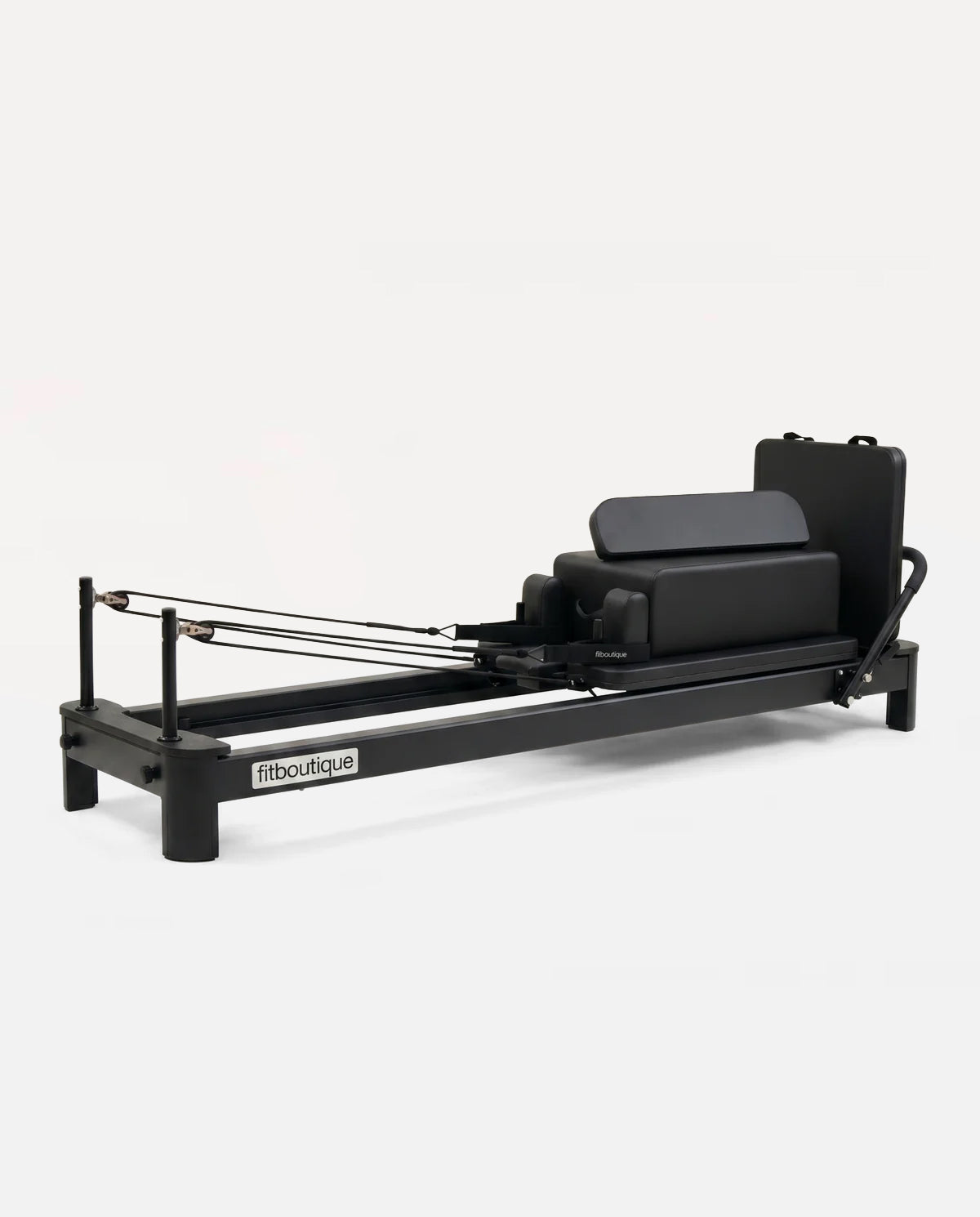
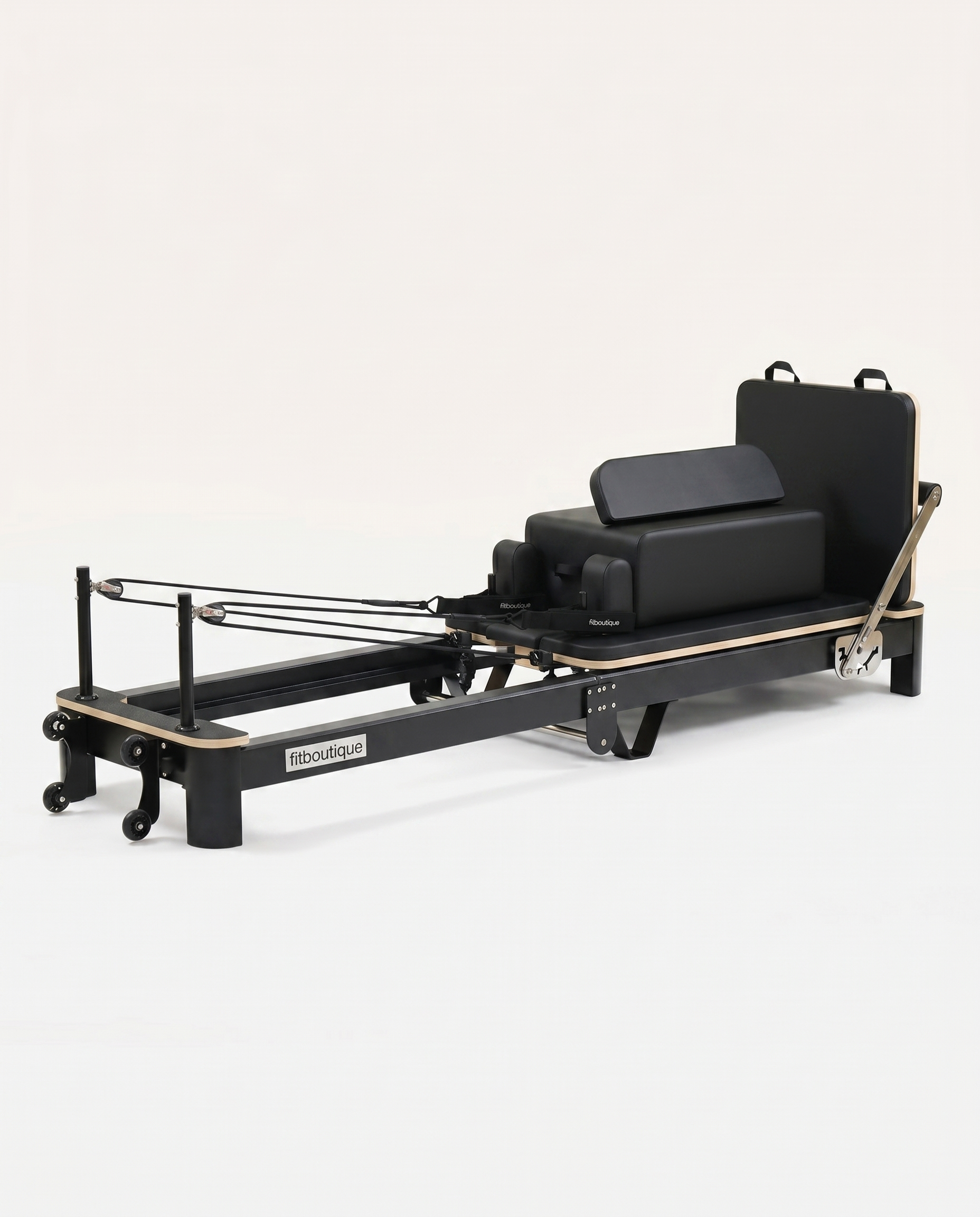
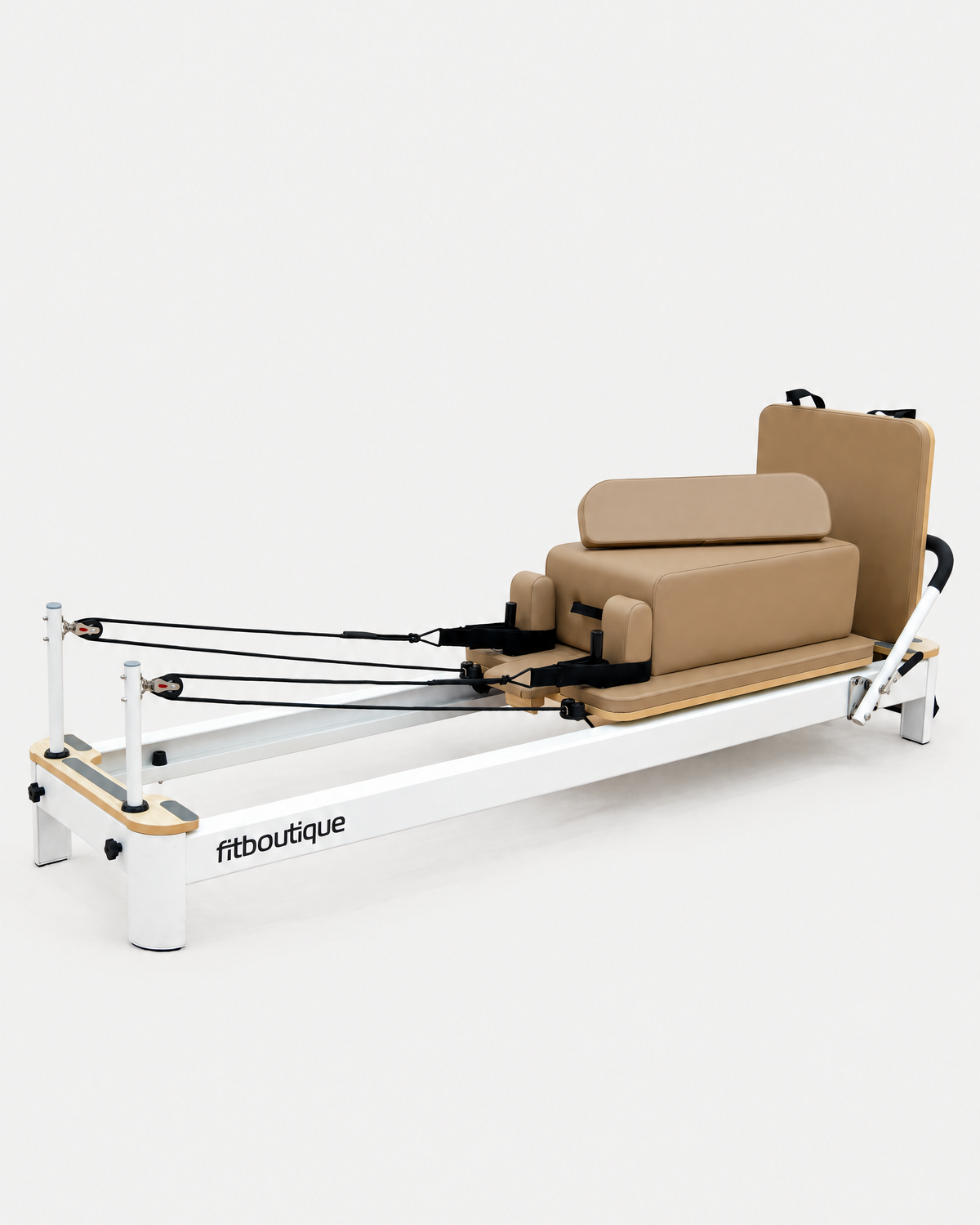
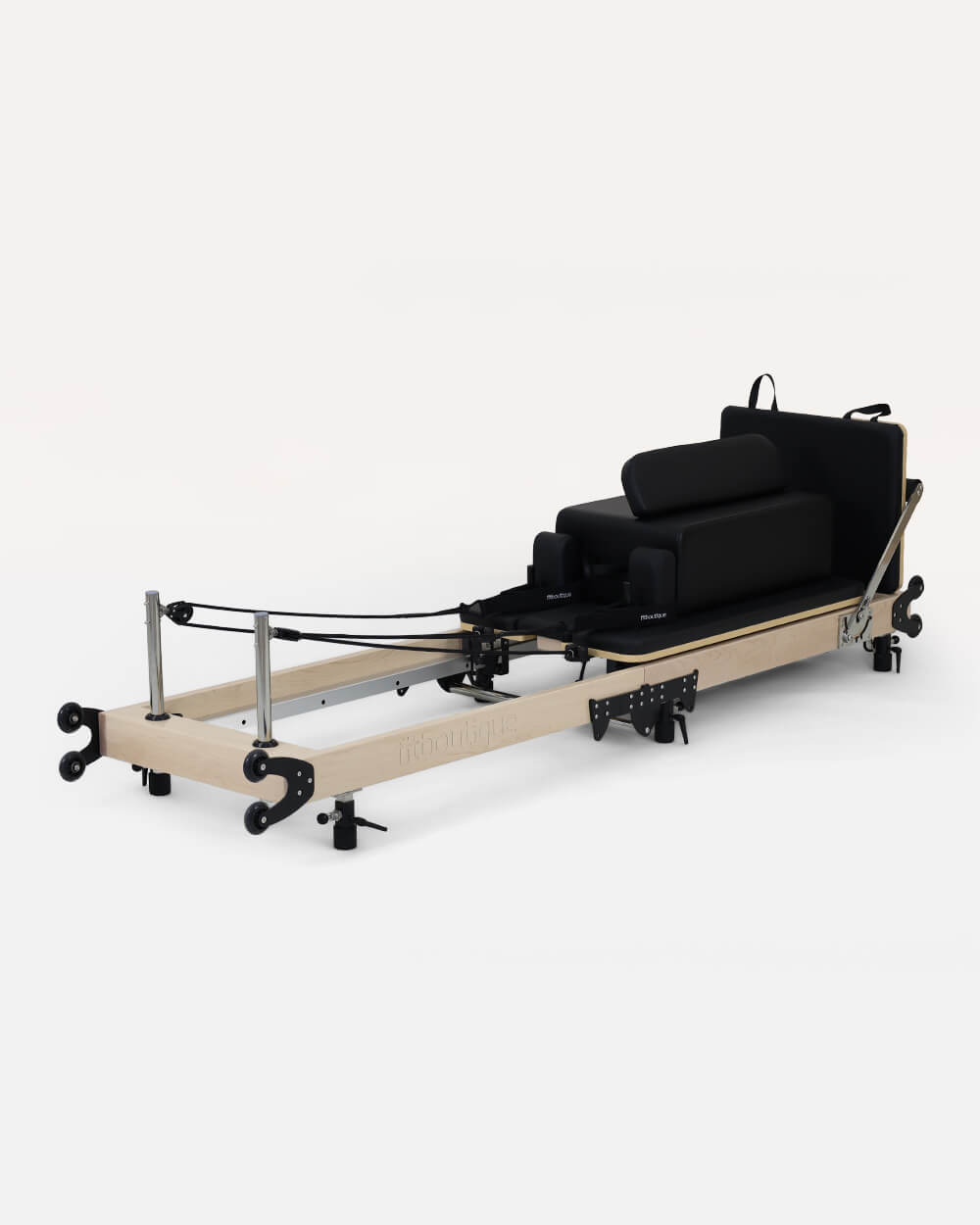
Every FitBoutique reformer arrives assembled with 6 German made springs, a jumpboard and box included, free delivery Australia wide and a 5 year warranty.
Compare Every Reformer
Written by Ayrah Yuso
I'm part of the FitBoutique team and have a solid passion (and love) for all things exercise related, including Reformer Pilates



















Leave a comment