


Is Reformer Pilates a Good Workout? An Honest Look
I get asked this in a slightly sceptical tone, usually by someone who lifts or runs and suspects reformer Pilates is stretching with extra steps. The honest answer is that it is an outstanding workout for three specific things and a fairly average one for two others, and almost all the disappointment I see comes from people buying it expecting the second list. So rather than defend it, here is what it actually trains, what it does not, and how to tell whether it is the right thing for you.
In this article
- The short answer, and the better question
- The three things it is genuinely excellent at
- The two things it is not
- Is it actually hard, or does it just look hard?
- Reformer Pilates against the gym
- Is it enough on its own?
- Who it suits, and who it does not
- What a complete week looks like
- Frequently asked questions
The short answer, and the better question
Yes, it is a good workout. That answer is useless on its own, because good at what is the part that decides whether you keep doing it.
Most people asking this are really asking one of two things. Will it be enough, or will I have wasted my time. Both of those depend entirely on what you are training for, and reformer Pilates has an unusually lopsided profile. It is close to best in class at some things and genuinely ordinary at others, which is rarer than it sounds. Most forms of exercise are moderately good at most things.
So the useful version of this question is not is it good. It is does what it is good at happen to be what I need.

The three things it is genuinely excellent at
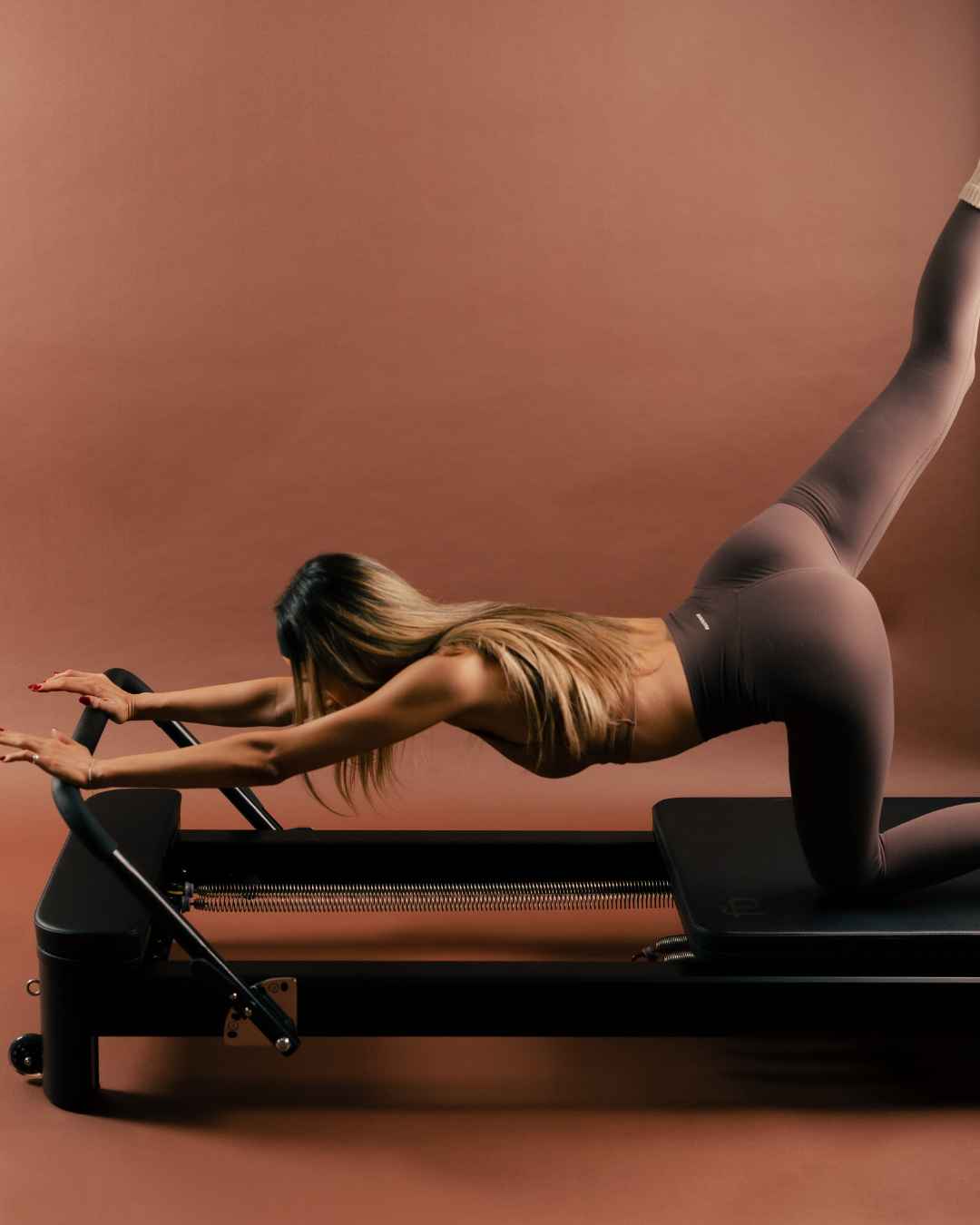
Control and stability. This is the one nobody expects and the one that matters most. The carriage moves, so every exercise is performed on an unstable surface with your own body deciding how fast it travels. That trains the deep stabilisers, the small muscles around the hips, spine and shoulders that hold you together and that almost no other training reaches. You cannot cheat it with momentum, because momentum is exactly what the carriage punishes.
Posture. Not as a nice side effect, as a direct outcome. Almost every reformer exercise requires you to keep your ribcage down and your pelvis neutral while your arms or legs move. You are not doing posture drills, you are doing footwork, and correct posture is simply the entry price. After a couple of months it stops being something you think about and starts being how you stand.
Strength without joint cost. Spring resistance loads a muscle through its entire range with constant tension and no impact. That combination is unusual. It means people who cannot tolerate loading, whether through age, injury or a body that objects to running, can still build real strength.
Add a fourth if you want it, which is range of motion. The long controlled movements improve mobility faster than most training, particularly through the hips and spine.
The two things it is not
I would rather tell you this than have you find out in month three.
It is not serious cardio. A standard reformer session is a moderate effort. Your heart rate goes up, it does not stay up. The jumpboard changes this genuinely, and one comes included with every machine we make, but a normal class or session is not doing what a run or a bike ride does for your cardiovascular system.
It is not maximal strength training. Springs have a ceiling. Once you are working comfortably on the heaviest setting there is nowhere further to go, whereas a barbell keeps accepting more weight indefinitely. If your goal is to get as strong as possible in absolute terms, reformer Pilates is a support act rather than the main event.
Neither of those is a flaw. They are just the shape of the tool, and both are easy to cover with something else in the same week.
Is it actually hard, or does it just look hard?
It is hard, but not in the way people brace for, which is why strong people are so often caught out.
Gym training mostly measures output. How much, how many, how fast. Reformer training measures control, which is a completely separate quality, and being good at the first tells you nothing about the second. I have watched people who deadlift comfortably fail to hold their pelvis level through ten slow repetitions on a light spring.
The other thing worth knowing is that lighter springs are usually harder, not easier. A heavy spring partly stabilises the carriage for you. A light one leaves that job entirely to your own body. So a session that looks gentle from the outside, slow tempo and minimal resistance, is frequently the most demanding one in the room.
Reformer Pilates against the gym
This gets framed as a competition and it really is not.
A gym is better for maximal strength, for progressive loading with no ceiling, and for cardiovascular conditioning. It gives you more equipment and more directions to grow in.
The reformer is better for the deep stabilising muscles, for movement quality, for posture, and for building strength when your joints will not tolerate heavy load. It is also considerably better at finding what is weak, because you cannot compensate your way through it.
People who do both tend to find the reformer makes their gym work better rather than replacing it. The control transfers. Squats feel more stable, running feels more efficient, and old niggles show up less.
Is it enough on its own?
For a lot of people, yes, and I say that carefully.
If what you want is to be strong in a functional sense, move well, stand properly, protect your back and feel capable in daily life, then three reformer sessions a week genuinely covers it. You do not need anything else, and pretending otherwise would be selling you something you do not need.
Add walking, because it costs nothing and it covers most of the cardiovascular gap. That combination, three reformer sessions and a daily walk, is a complete and sustainable programme for a very large number of people.
Where it is not enough on its own is if you are training for a specific outcome that needs what it lacks. Meaningful fat loss, endurance for an event, or maximal strength all need something added.

Who it suits, and who it does not
It suits people coming back from injury, people whose joints have opinions, anyone who sits for a living, anyone over about forty who has noticed things stiffening, and athletes who need the stability work their sport does not provide.
It suits beginners unusually well, because the springs can support you into positions rather than only resisting you. That is the opposite of most equipment, where being weaker just means you cannot do the exercise yet.
It suits men considerably more than the marketing suggests, and the ones who try it are usually surprised by how much their stability lags their strength.
Who it does not suit, honestly. Anyone whose main goal is running a faster time or lifting a bigger number, unless it is sitting alongside the training that actually drives those. And anyone who wants to switch off for an hour, because reformer work demands attention the entire time. If you like training with your mind elsewhere, this will frustrate you.
What a complete week looks like
If you want reformer Pilates to be the backbone of your training, this is how I would build around it.
- Three reformer sessions. Non consecutive. Two full intensity, one lighter and slower with more range work. This is your strength, control and posture work, and it is the part that changes how you move.
- Walk daily. Unglamorous, and it covers most of what the reformer does not do for your cardiovascular system without competing for recovery.
- Use the jumpboard once a week. This is your genuine cardio option on the machine, with none of the joint impact of running. Included with every reformer we make, and badly underused.
- Add loaded work only if you need it. If maximal strength is a real goal, one or two sessions with weights. If it is not, skip this entirely rather than adding it out of obligation.
- Judge it on movement, not the scale. Stairs, getting off the floor, how your back feels after a long drive. Those change first and they are the point.
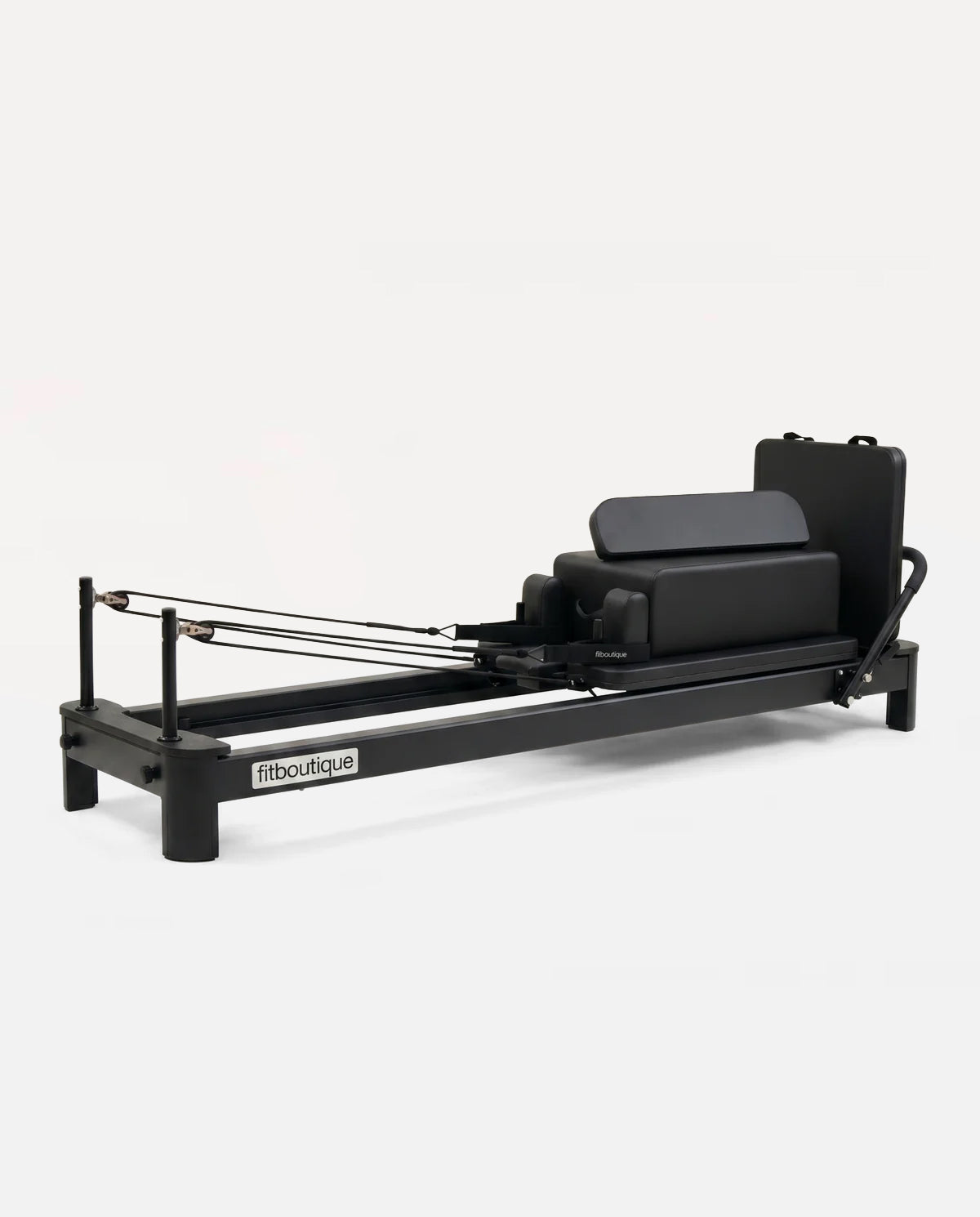
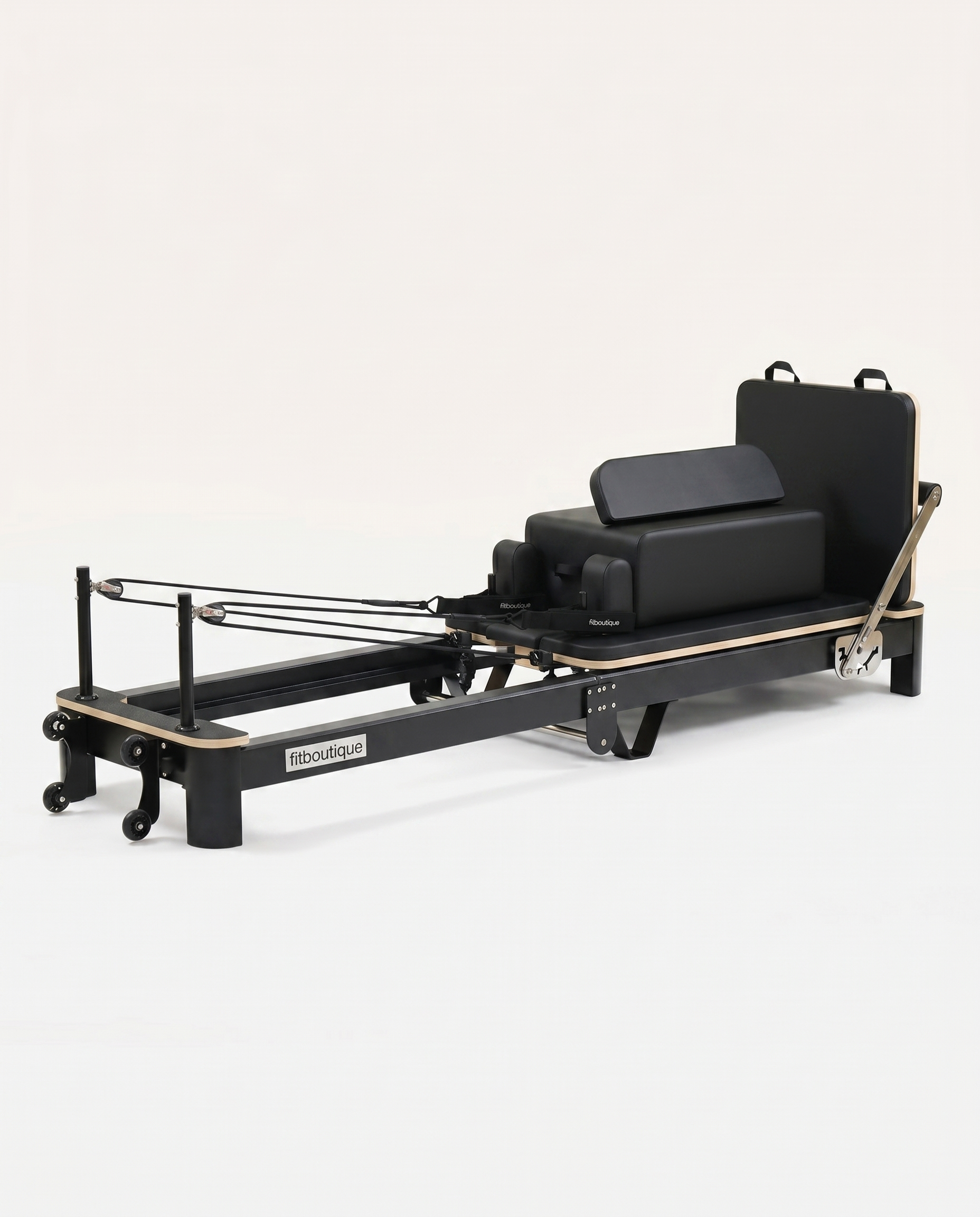
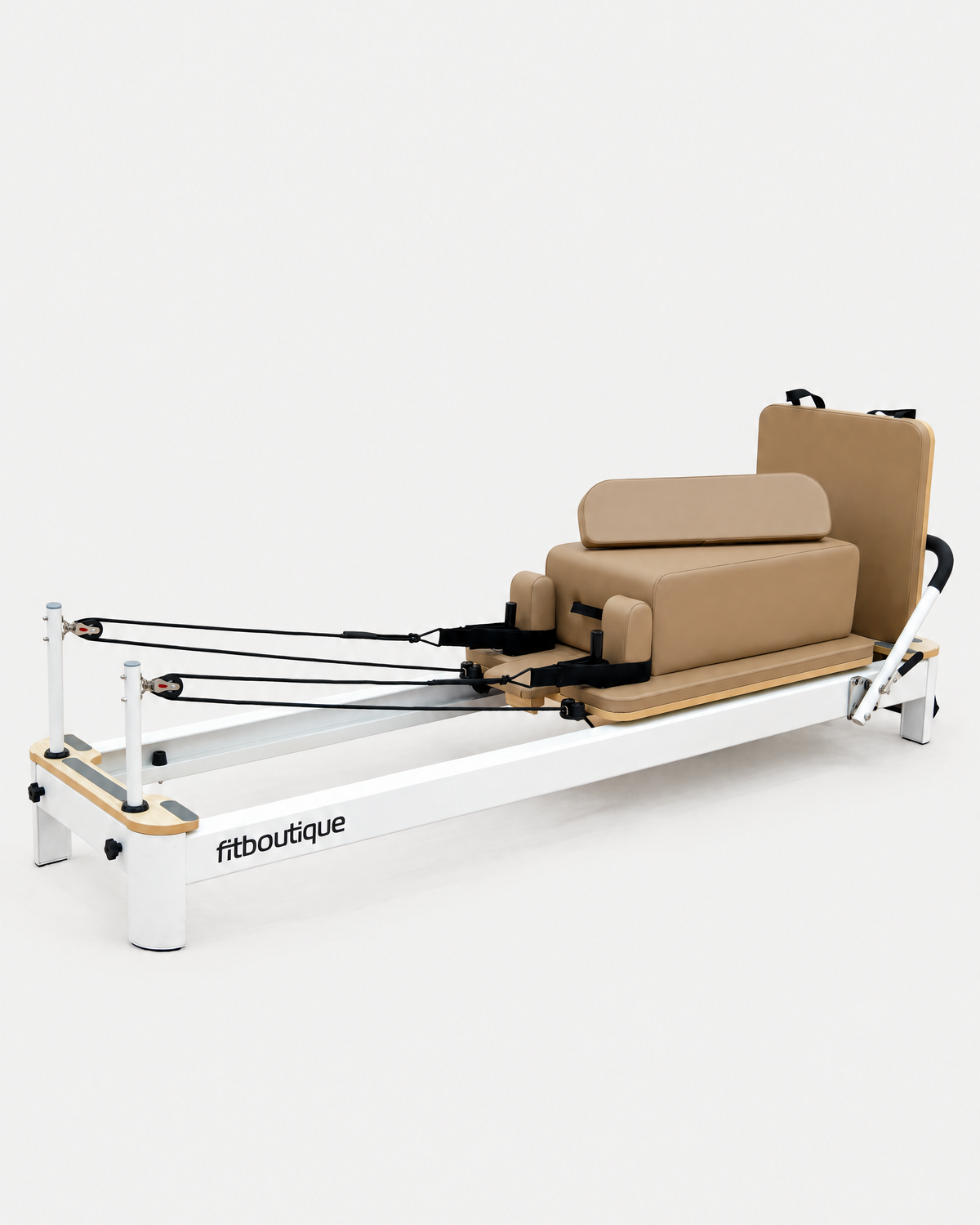
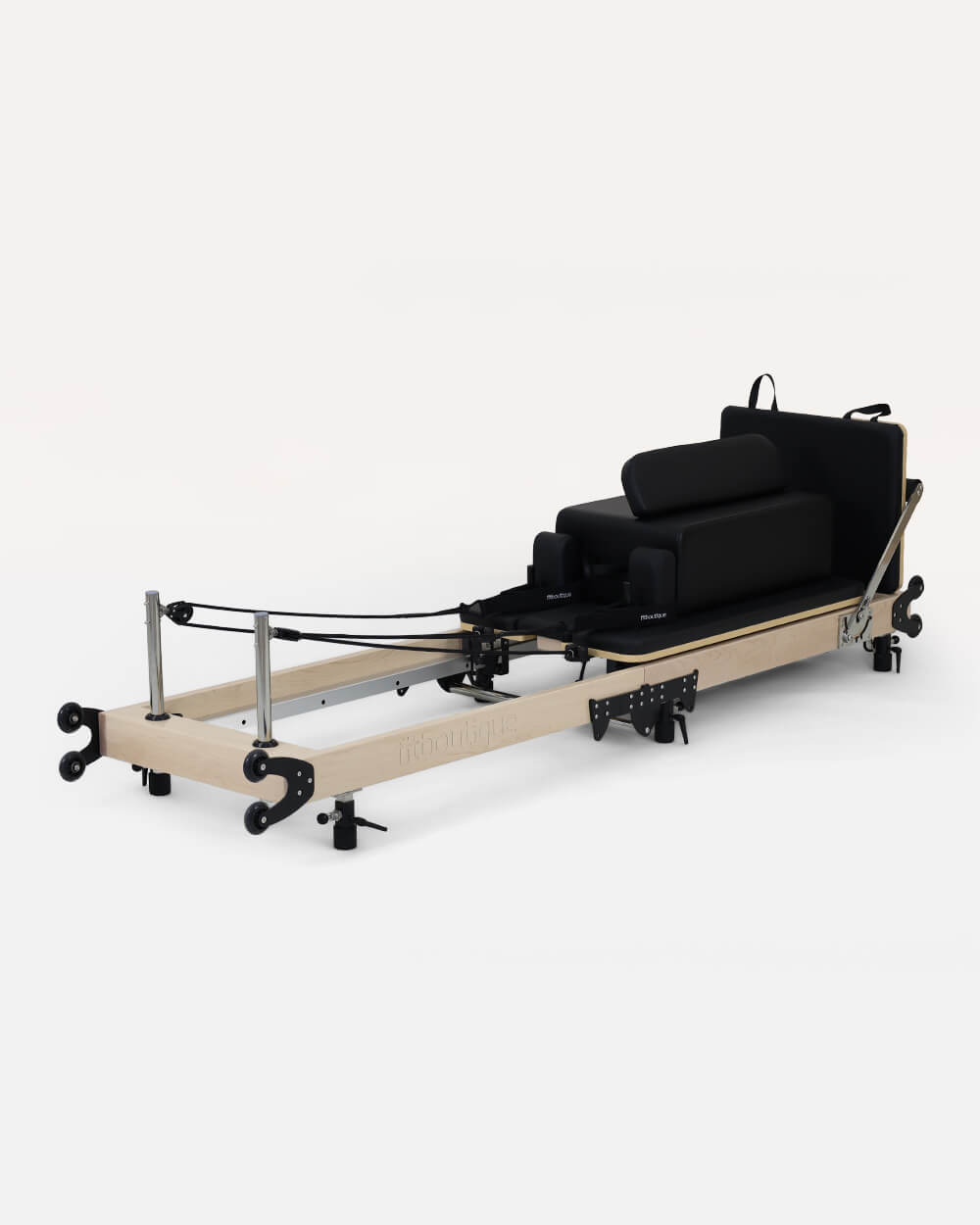
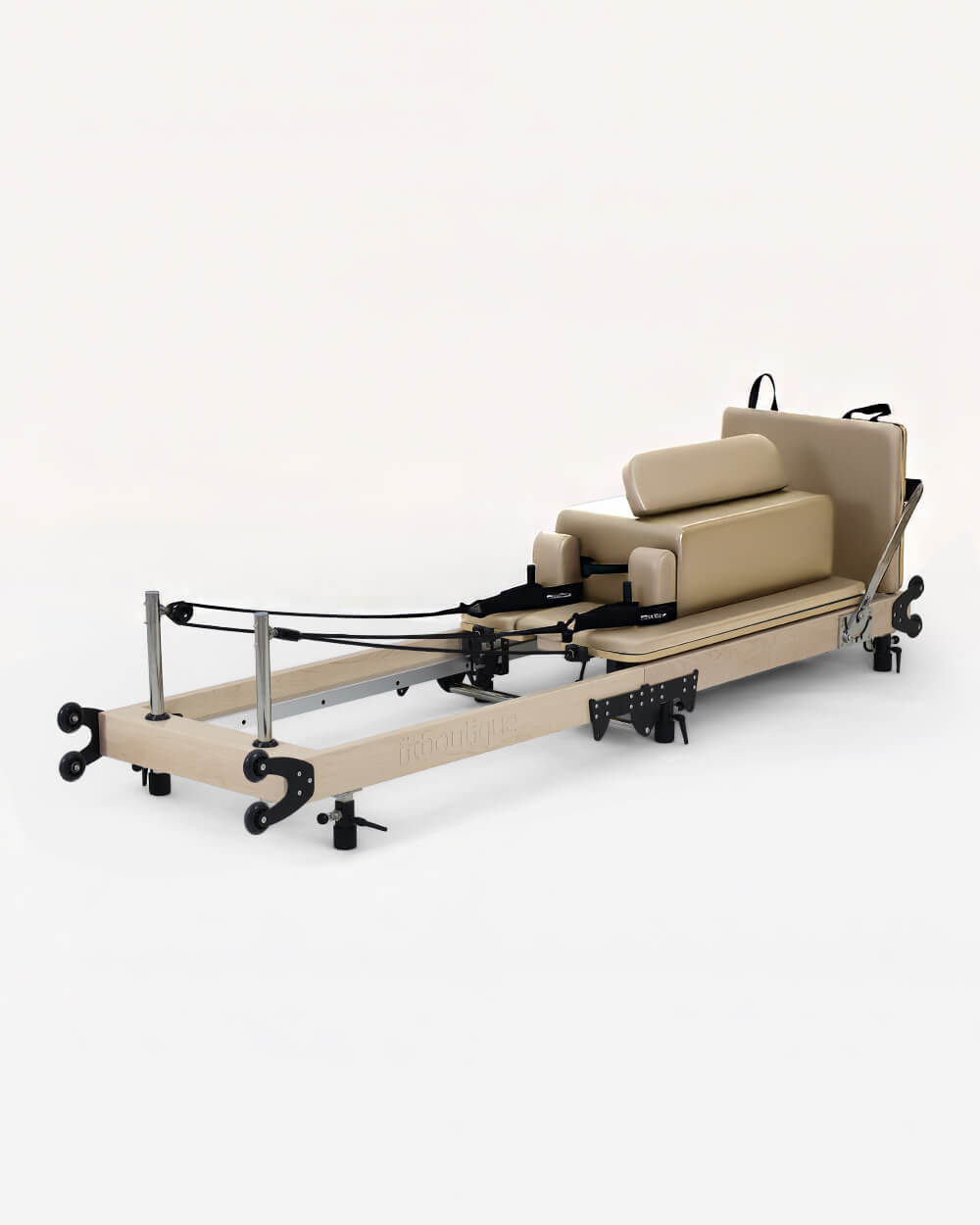
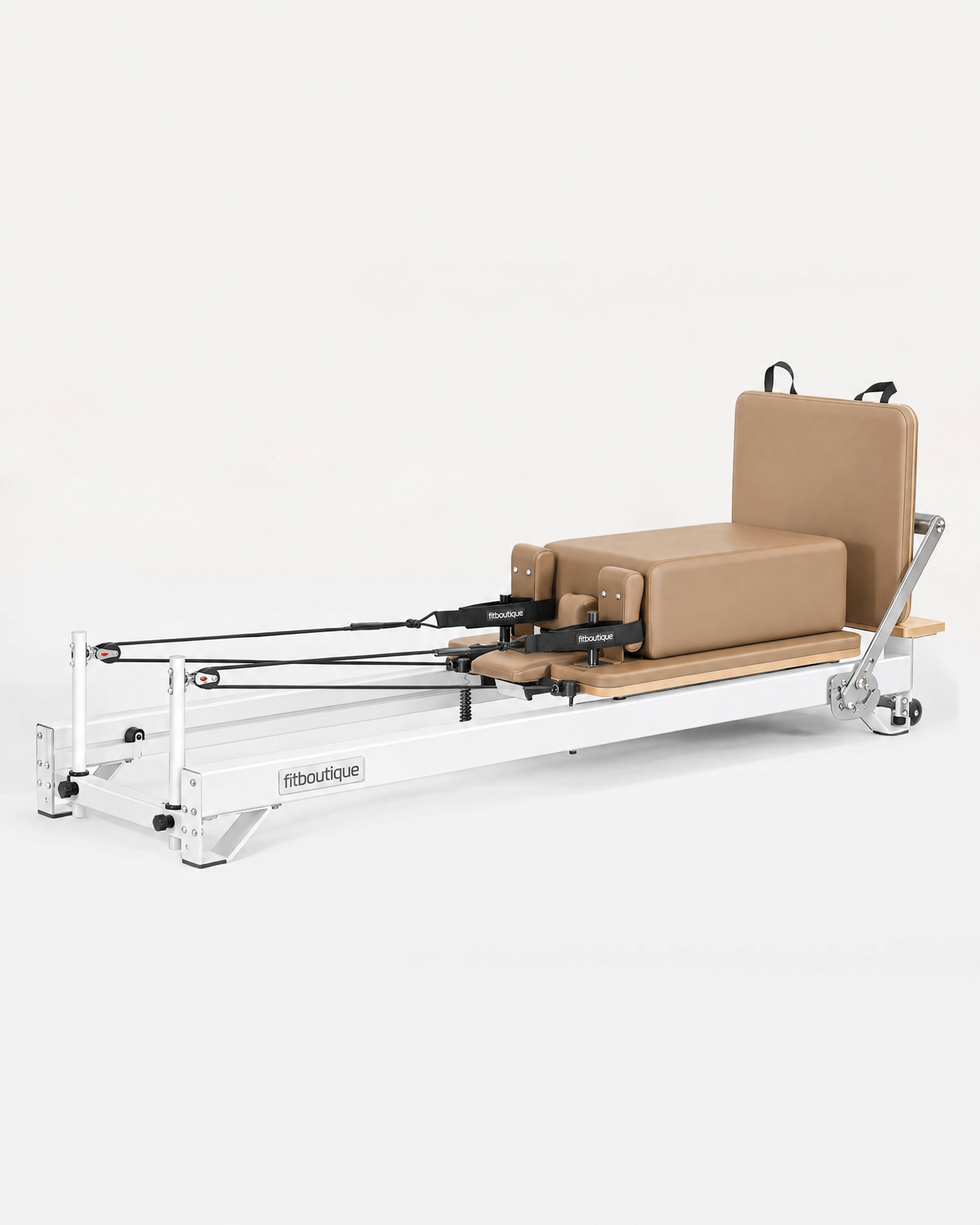
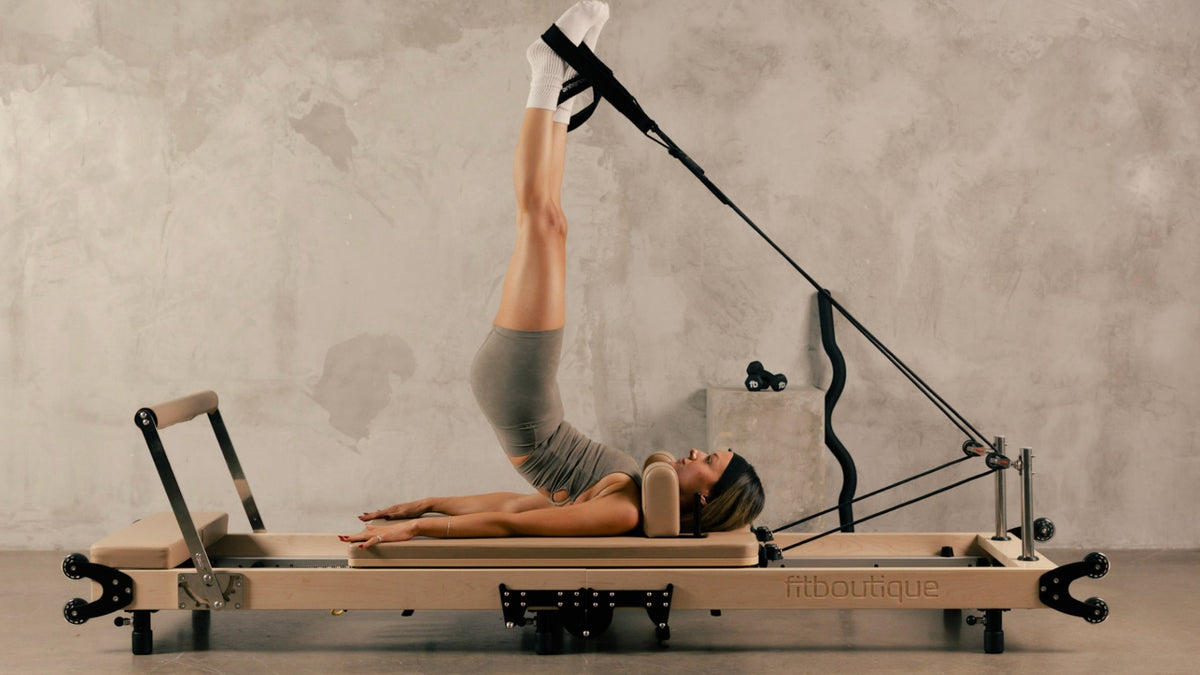
If you are setting up at home, the Ivory Reformer and Onyx Fold Reformer are the same commercial grade machine in different finishes and fold upright between sessions. The Onyx Reformer is the one I use most, and if the machine gets a permanent home, The Studio Reformer gives you that planted commercial feel.
A Note From Ayrah
I did not take reformer Pilates seriously until it embarrassed me, and I want to be specific about how.
I had come from running and lifting. I could run 10km without thinking about it and I was reasonably strong. I walked into my first proper reformer session quietly confident that the hard part would be boredom.
I lasted about ten minutes. Not because anything was heavy, it was footwork on a light spring, which is roughly the gentlest thing on the machine. What broke me was that I could not keep my pelvis still. Every time I pushed the carriage out, my lower back arched and my hips rocked, and the instructor kept putting a hand there and asking me to stop doing it, and I genuinely could not.
That was the moment it clicked. I was strong and I had almost no control, and I had never once noticed, because nothing I had ever done had tested it. Running does not. Lifting does not, not really, because a barbell lets you brace and grind through.
So when somebody asks me whether it is a good workout, I think about that session. It is not a question of good or bad. It is that the reformer measures something most training never looks at, and quite a lot of people discover they are much worse at it than they assumed.
Frequently Asked Questions
Is reformer Pilates a good workout?
Yes, and it is excellent at three things in particular. Control and stability through the deep muscles around your hips, spine and shoulders. Posture, which it trains directly rather than as a side effect. And strength through a full range with no joint impact. It is average at cardiovascular conditioning and limited for maximal strength, which is worth knowing before you start.
Is reformer Pilates enough on its own?
For functional strength, posture, mobility and back health, yes, three sessions a week genuinely covers it. Add a daily walk and that combination is a complete programme for most people. It is not enough on its own if you are chasing meaningful fat loss, endurance for an event, or maximal strength.
Does reformer Pilates count as strength training?
Yes. Spring resistance loads muscles through their full range with constant tension, which builds real strength and lean muscle. The difference from weights is the ceiling, since springs have a maximum and a barbell does not. For most people that ceiling is far higher than they will ever reach.
Is reformer Pilates cardio?
Not really, in a standard session. Your heart rate rises but it does not stay elevated the way it does with running or cycling. The jumpboard is the exception and turns a reformer session into genuine cardio without the joint impact. One is included with every machine we make.
Is it hard, or does it just look hard?
It is hard, but it measures control rather than output, which is why strong people are often caught out. Lighter springs are usually harder than heavy ones, since a heavy spring partly stabilises the carriage for you and a light one leaves that entirely to your body. A session that looks gentle is frequently the most demanding one in the room.
Is reformer Pilates better than the gym?
They are different tools rather than competitors. A gym wins on maximal strength, unlimited progressive load and cardiovascular work. The reformer wins on deep stabilising muscles, movement quality, posture, and building strength when your joints will not tolerate heavy load. People who do both usually find the reformer improves their gym work.
Is it a good workout for weight loss?
It contributes but it is not the main driver, because it is not a large calorie burn compared with running or heavy lifting. What it does well is build lean muscle and change your posture, which alters your shape. If fat loss is the specific goal, pair it with daily walking and adequate protein rather than relying on the sessions alone.
Is reformer Pilates good for beginners?
Unusually good, yes. The springs can support you into a position rather than only resisting you, so somebody who cannot yet hold a plank on the floor can build toward one in stages. That is the opposite of most equipment, where being weaker simply means you cannot do the exercise.
Is reformer Pilates a good workout for men?
Considerably more than the marketing implies. The men who try it are usually surprised by how far their stability lags their strength, and it tends to improve their lifting and running rather than competing with either.
Find Out Where Your Control Is
Commercial grade reformers with a 6 spring system and a jumpboard included. Free delivery Australia wide, spare parts held in Melbourne and a 5 year warranty.
Compare Every Reformer
Written by Ayrah Yuso
I'm part of the FitBoutique team and have a solid passion (and love) for all things exercise related, including Reformer Pilates


















Leave a comment